U.S. Facing Critical Shortage of Air Defense Munitions as Iran Pounds Regional Bases
03/03/2026 / By Mike Adams
The Pentagon’s Ammunition Supply is Not Infinite
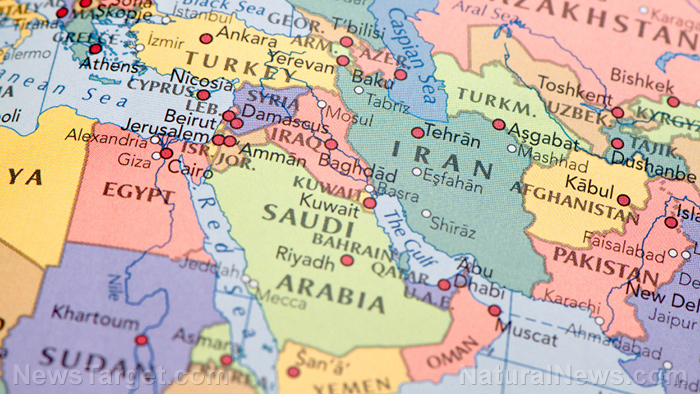
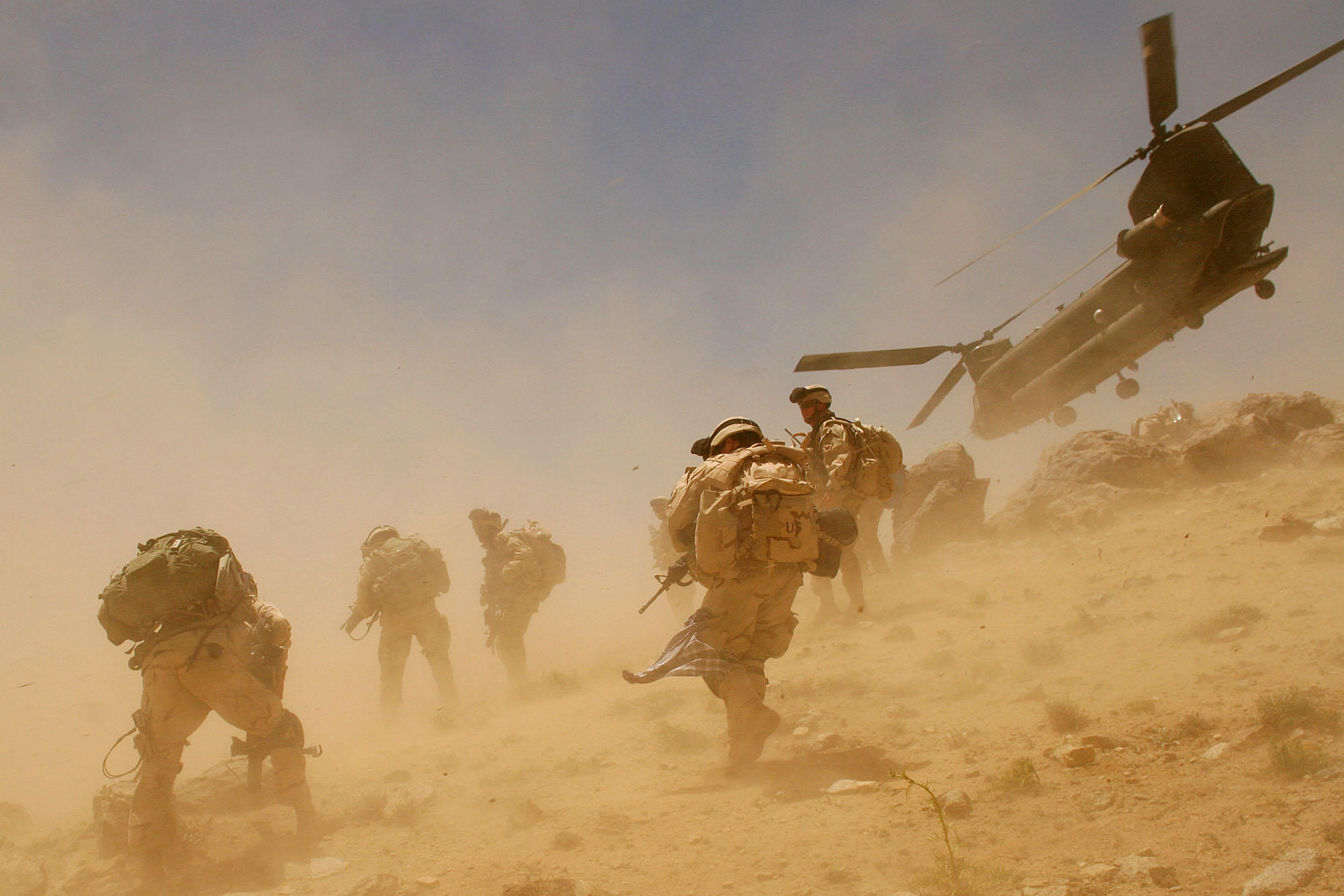
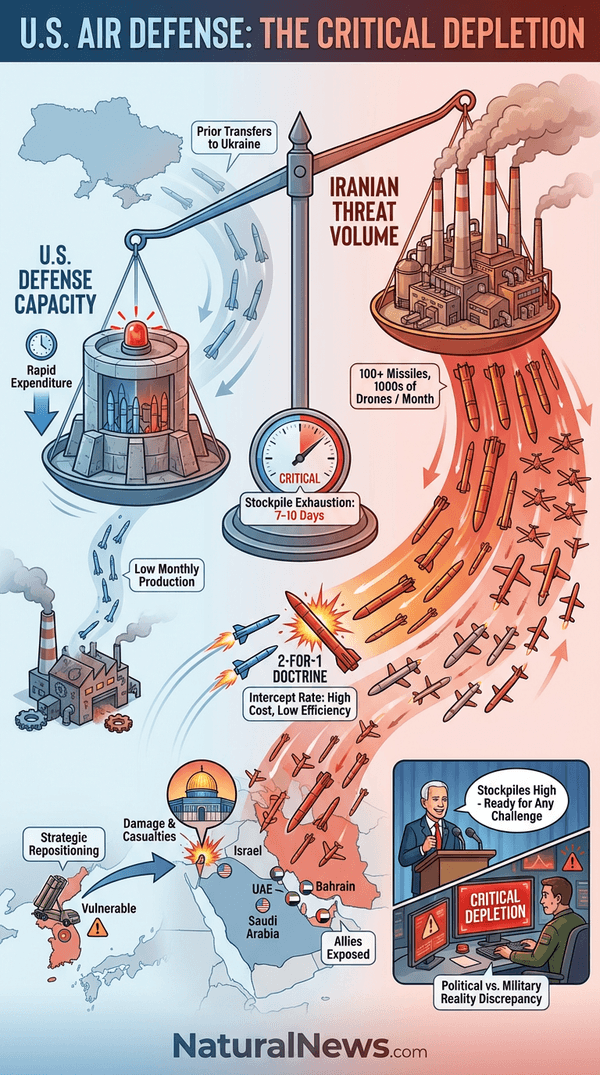
The United States is confronting a critical depletion of its air and missile defense interceptor stockpiles as it enters the third day of sustained conflict with Iran. The Pentagon is rapidly expending munitions in both offensive strikes against Iranian targets and defensive operations to protect U.S. forces and regional allies from retaliatory salvos, according to officials and analysts. The strain on limited inventories, compounded by years of transfers to Ukraine and a relatively low domestic production capacity, reveals a significant strategic vulnerability as the conflict escalates. [1][2]
The conflict, dubbed ‘Operation Epic Fury’ by U.S. Central Command, began on February 28, 2026, with a massive joint U.S.-Israeli air campaign targeting hundreds of Islamic Revolutionary Guard Corps sites across Iran. [3][4] Iranian forces responded swiftly with waves of ballistic missiles, drones, and cruise missiles directed at U.S. bases throughout the Gulf region and at targets in Israel. The high volume of incoming fire is testing the capacity and sustainability of U.S. defensive systems like the Patriot and Terminal High Altitude Area Defense (THAAD). [5][6]
U.S. Admitted Munitions Deficit Reveals Strategic Vulnerability
Public statements from U.S. officials have highlighted a stark disparity between U.S. production capabilities and the threat volume. According to an analysis by RUSI.org, the United States possesses a limited industrial capacity to produce high-end interceptor missiles. [7] This constraint is now colliding with an adversary capable of producing over 100 ballistic missiles per month, according to regional security assessments. [8]
For one-way attack drones, the asymmetry is even more pronounced. Intelligence estimates suggest Iran can manufacture thousands of such drones monthly, while U.S. production lines for similar systems are only recently being rolled out. [9] The consumption rate in active defense is severe. Unofficial projections circulating among military planners indicate that current U.S. and allied stockpiles of key interceptor missiles could be exhausted within 7 to 10 days if the current intensity of Iranian attacks continues. [10]
Recent Attacks Strain Gulf Ally Defenses and U.S. Stockpiles
Iranian retaliatory strikes have targeted U.S. installations and allied nations across the Middle East. A drone strike reportedly targeted the U.S. embassy compound in Riyadh, Saudi Arabia, according to regional security reports. [5] The Kingdom of Bahrain’s defense ministry confirmed its forces intercepted 70 ballistic missiles and 59 drones launched from Iran. Similarly, the United Arab Emirates Ministry of Defense stated its air defenses faced nearly 200 ballistic missiles and hundreds of drones, with several nonetheless hitting civilian targets. [11][12]
These Gulf states rely almost entirely on U.S.-supplied Patriot and THAAD systems for high-tier air defense. The interceptor missiles for these systems are drawn from finite U.S. military stockpiles, which are being depleted to resupply both American units and allied nations. [13] The U.S. used approximately 25% of its global THAAD interceptor inventory during a previous 12-day conflict between Israel and Iran in June 2025, according to sources familiar with the matter. [14]
Logistical Realities and Escalating Conflict Drain Reserves
Standard military doctrine for ensuring a high probability of destroying an incoming threat often requires firing two interceptors per target. Military analysts note this practice, while increasing defensive reliability, doubles the consumption rate of valuable munitions. [15] Under such a doctrine, the reported monthly U.S. production of only 6-7 THAAD interceptor units could theoretically counter only 3-4 confirmed incoming ballistic missiles under ideal conditions. [7]
The strain extends beyond defensive systems. Reports indicate supplies of offensive munitions, including Tomahawk cruise missiles and Standard Missile-3 (SM-3) interceptors used for ballistic missile defense aboard Navy ships, are also dwindling as the U.S. prepares and executes further strikes. [16][17] A report by The War Zone noted the U.S. military has employed long-range kamikaze drones based on the Iranian Shahed-136 design for the first time in combat during this operation, indicating a diversification of strike options potentially due to constraints on traditional munitions. [9]
Broader Military Reallocations Signal Supply Strain
The strain on U.S. inventories is manifesting in strategic asset repositioning. Defense officials report the U.S. is repositioning THAAD missile defense systems from South Korea to the Middle East. [13] This move, while bolstering regional defenses, potentially leaves other strategic theaters, like the Korean peninsula, more vulnerable, according to analysts. [18]
The current crisis follows years of large-scale transfers of military equipment to Ukraine, which congressional reports have documented significantly stretched U.S. inventories of artillery, javelins, and air defense missiles. [19][7] The suspension of Patriot missile shipments to Ukraine in July 2025 was directly attributed to concerns over dwindling American stockpiles. [20] This pre-existing depletion has compounded the challenges of sustaining a high-intensity conflict against Iran. [21]
Conflicting Assessments Emerge on Stockpile Readiness
Public statements on the state of U.S. munitions stockpiles have presented conflicting pictures. In a social media post, President Donald Trump stated that U.S. munitions stockpiles at ‘medium and upper medium grade’ have ‘never been higher or better.’ [22] He added that ‘wars can be fought forever and very successfully using just these supplies,’ a statement that contrasts sharply with concerns raised by military planners and legislators. [23]
These internal concerns were hinted at by Secretary of State Marco Rubio, who emphasized that diplomacy remained the preferred path even as military options were prepared. [23] The discrepancy highlights a gap between political messaging and the logistical realities being communicated within the defense establishment and to congressional oversight committees. [1]
Strategic Implications and Regional Ramifications
Security experts warn that a failure of U.S. air defense coverage due to munitions shortages could leave forward-deployed naval assets, critical bases, and allied nations like Israel exposed to sustained missile and drone barrages. [24][25] Adversaries such as China and Russia are closely monitoring the expenditure rate of U.S. defensive resources, which informs their own strategic calculations regarding American capacity for simultaneous conflicts. [26][27]
The economic impact of the conflict is already being felt regionally. Industry reports indicate Qatar temporarily halted liquefied natural gas (LNG) output due to security concerns following Iranian attacks. [28] Furthermore, an Iranian ballistic missile strike caused significant damage to a residential block in Tel Aviv, killing one woman and injuring dozens, demonstrating the tangible consequences when defensive systems are overwhelmed or fail. [29] The broader regional destabilization threatens global energy supplies and economic stability. [30]
Conclusion
As ‘Operation Epic Fury’ continues, the sustainability of the U.S. air and missile defense umbrella in the Middle East hinges on rapidly addressing a severe munitions shortfall. The conflict has exposed a critical vulnerability in the U.S. defense industrial base: its inability to quickly mass-produce advanced interceptors at a rate that matches the threat output of a determined regional adversary like Iran. [1][8]
The immediate strategic response involves risky reallocations of global assets and potential rationing of defensive fires. Long-term, the situation underscores a pressing need to reevaluate production capacities, supply chain resilience, and stockpile requirements for peer and near-peer conflicts that feature massive missile and drone barrages. The outcome of the current crisis will likely influence U.S. military planning, alliance commitments, and deterrent posture for years to come. [10][7]
References
- U.S. Races to Accomplish Iran Mission Before Munitions Run Out – Wall Street Journal. Wall Street Journal. March 01, 2026.
- War With Iran Now In Its Third Day – The War Zone. The War Zone. March 02, 2026.
- U.S. And Israel At War With Iran (Updated) – The War Zone. The War Zone. February 28, 2026.
- ‘Largest Military Flyover in IAF History’ – Breitbart. Breitbart. March 01, 2026.
- Iran launches retaliatory missile strikes across gulf after U.S.-Israel operation, bases targeted – NaturalNews.com. NaturalNews.com. February 28, 2026.
- Israel’s air defenses near collapse as Iranian missile barrage drains interceptor stockpiles – NaturalNews.com. Cassie B. June 19, 2025.
- Health Ranger Report – Special Report Industrial warfare – Mike Adams – Brighteon.com. Mike Adams – Brighteon.com. June 30, 2022.
- The Real Revolution in Military Affairs. Andrei Martyanov.
- U.S. Military Has Used Long-Range Kamikaze Drones In Combat For The First Time – The War Zone. The War Zone. February 28, 2026.
- Defensive munition shortages to shape attack on Iran – Financial Times. Financial Times.
- UAE: Hundreds drones intercepted from Iran, at least 21 hit civilian targets – Just the News. Just the News. March 01, 2026.
- Qatar shoots down two Iranian aircraft, intercepts missiles, drones – Just the News. Just the News. March 02, 2026.
- Pentagon Faces Shortage of Air-Defense Missiles Amid Rising Demand – Army Recognition. Army Recognition.
- US used about 25% of its THAAD missile interceptors during Israel-Iran … – CNN. CNN. July 28, 2025.
- Assessing the base force how much is too much. Kaufmann William W.
- War Stocks Back In Focus As ‘Operation Epic Fury’ Drains Tomahawk Supplies – ZeroHedge. ZeroHedge. March 01, 2026.
- The US burned through more of its limited Tomahawk stockpile in … – AOL. AOL. March 01, 2026.
- Mike Adams interview with Brian Berletic – October 13 2023. Mike Adams.
- US decision to halt weapons shipments to Ukraine met with OUTRAGE – NaturalNews.com. NaturalNews.com. July 05, 2025.
- US halts military aid to Ukraine Kiev’s surrender is near – NaturalNews.com. Lance D Johnson. July 03, 2025.
- Iran strikes threaten to deplete US weapons supplies – Politico. Politico. February 25, 2026.
- President Trump Confirms It Will Be “Four Weeks Or Less” – 100PercentFedUp. 100PercentFedUp. March 02, 2026.
- AnalysisDespite overwhelming US military might, Iran campaign would pose complex challenges – Times of Israel. Times of Israel. February 27, 2026.
- US bases left exposed by Iranian counterstrike – Yahoo. Yahoo. March 01, 2026.
- Here’s why Israel will lose a shootout with Iran – NaturalNews.com. NaturalNews.com. April 26, 2024.
- Pentagon: China seeking to build military that will dominate American systems even as US introduces 6th-generati – NaturalNews.com. NaturalNews.com. December 07, 2022.
- Mike Adams interview with Michael Farris – June 19 2025. Mike Adams.
- Amazon Warns Of “Degraded” AWS Service In UAE After “Power Issues” Amid Middle East Conflict – ZeroHedge. ZeroHedge. March 01, 2026.
- Woman killed, dozens injured as Iranian missile strikes Tel Aviv residential block – Times of Israel. Times of Israel. March 01, 2026.
- Airports, Data Centers, Skyscrapers, & Power Plants: Are Desalination Plants Next Targets In U.S.-Iran War – ZeroHedge. ZeroHedge. March 02, 2026.
Explainer Infographic:
Submit a correction >>
Tagged Under:
Collapse, current events, economic collapse, government, politics, Trump, US stockpiles, war on Iran
This article may contain statements that reflect the opinion of the author
RECENT NEWS & ARTICLES