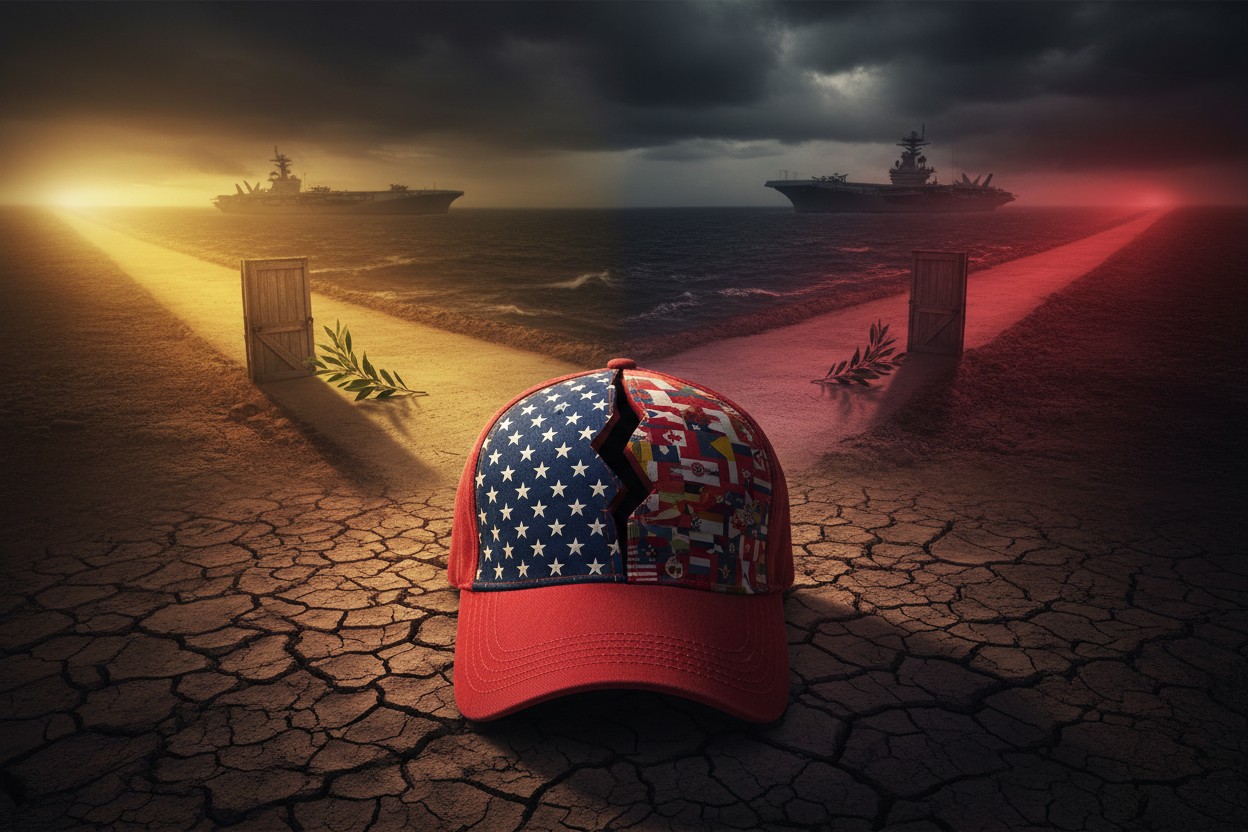
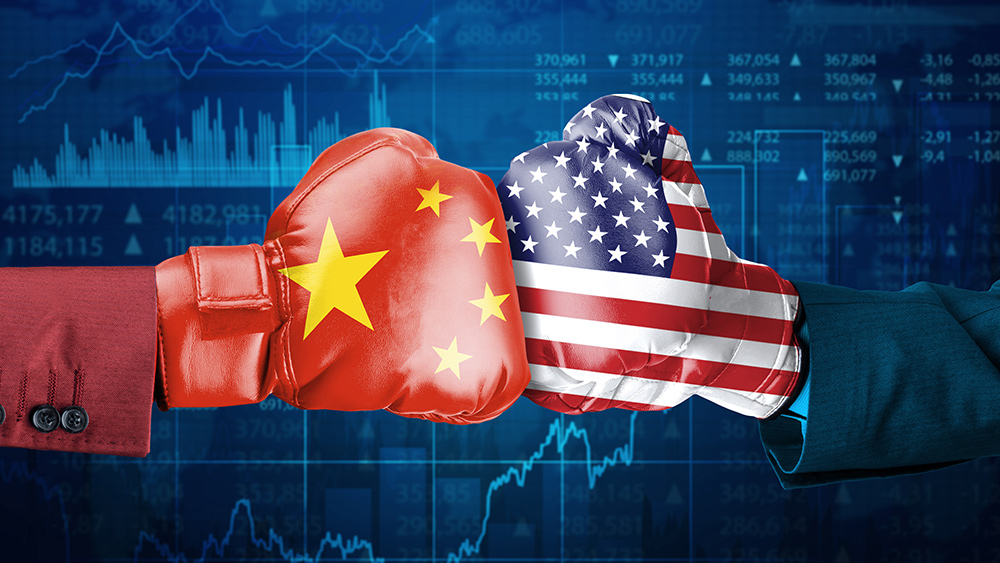
Trump pivots to 10% global tariff after Supreme Court defeat – and threatens to push it even higher
02/25/2026 / By Cassie B.
- President Trump’s new universal 10% tariff on imports has taken effect, reshaping global trade.
- The tariff uses a 1970s law as a temporary tool to address trade imbalances.
- Confusion reigns as the rate was briefly threatened to be 15% and may still increase.
- The move has sparked international criticism and frozen some trade deals.
- Businesses face higher costs and uncertainty while preparing for legal battles over refunds.
A sweeping new economic reality for global trade clicked into place at 12:01 a.m. Tuesday, as President Donald Trump’s universal 10% tariff on imports took effect. This bold move, a direct response to a Supreme Court ruling that dismantled his previous tariff architecture, immediately reshuffled the deck for nearly every U.S. trading partner. Implemented under a rarely used 1970s trade law, the tariff is a temporary but potent tool the administration is wielding to recalibrate what it sees as unbalanced international trade relationships, with a clear warning that the rate could soon jump even higher.
The new surcharge replaces the so-called reciprocal tariffs the Supreme Court invalidated on Friday. The court found Trump overstepped his authority by imposing those sweeping, country-specific levies under a 1977 emergency powers act without congressional approval. In a swift tactical pivot, the administration turned to Section 122 of the Trade Act of 1974, a statute never before used for this purpose, which allows a president to impose duties of up to 15% to address “large and serious” balance-of-payments deficits.
A temporary measure with immediate impact
This legal mechanism permits the tariffs to last only 150 days unless Congress grants an extension. According to the president’s proclamation, the temporary 10% levy targets imports from all countries but exempts certain essential items. These exemptions include pharmaceuticals, critical minerals, aerospace products, beef, and tomatoes. The tariff also does not apply to imports already subject to longstanding national security tariffs on items like steel and automobiles.
However, for goods not covered by those exemptions or sectoral tariffs, the new 10% charge will stack on top of any preexisting duties. This layering means import costs for many American companies could actually be higher now than they were before the Supreme Court’s ruling. The financial burden falls on U.S. importers, and economists widely expect these increased costs will be passed on to American consumers.
Confusion and a looming threat
The rollout has been marked by significant confusion. Just one day after announcing the 10% tariff on Friday, a furious Trump declared on social media that he was raising it “effective immediately” to the “fully allowed, and legally tested, 15% level.” Yet hours before the policy took effect, U.S. Customs and Border Protection informed importers the rate would begin at 10%. A White House official confirmed this, noting the administration is working on a separate order to raise it to 15%, with no clear timeline for when that will happen.
This back-and-forth has sparked international concern and frustration. “Pure tariff chaos from the U.S. administration,” wrote Bernd Lange, a top European Union lawmaker from Germany. “No one can make sense of it anymore – only open questions and growing uncertainty.” In response to the renewed uncertainty, the E.U. has frozen implementation of a major trade deal struck with the Trump administration last summer.
Trump has warned trading partners against exploiting the Supreme Court’s decision. He wrote that any country that seeks to “play games” will face a “much higher” tariff, specifically threatening nations with which the United States runs trade deficits. This warning puts ongoing and fragile trade agreements in a precarious position, as many were negotiated under the legal framework the Supreme Court just struck down.
The global business community is reacting with weary adaptability. Fraser Smeaton, CEO of UK-based Morph Costumes, which manufactures in China and exports to the U.S., noted the lower-than-threatened rate is better but questioned its stability. “The fact that we’re at 10% rather than 20% is better than it was, but will it stay that way?” he asked. His company, like many others, is now pursuing a refund for tariffs paid under the invalidated 1977 law.
For some, the immediate impact is manageable but the unpredictability is corrosive. Daniel Graham, managing director of the UK tea firm Birchall, summarized a common sentiment: “Good news that it’s come in lower; bad news that it keeps changing.” He noted that while his lower-cost product can absorb the current duty, persistently high or rising tariffs would force a reconsideration of export markets.
The Supreme Court’s ruling opened the door for businesses to seek billions in tariff refunds, a process Justice Brett Kavanaugh predicted would be a “mess.” Trump has indicated his administration will fight such refunds in court “for the next five years.” This sets the stage for prolonged legal battles alongside the economic maneuvering.
An uncertain road ahead
As the 150-day clock ticks on this new tariff, the administration’s strategy is clear: use maximum short-term pressure to force long-term concessions. The threat to elevate the rate to 15% hangs over every negotiation. Trading partners from Europe to Asia are now forced to recalculate, unsure if the deals they thought they had are still valid or if they are starting from scratch under a new, more unilateral set of rules.
The coming weeks will reveal whether this aggressive use of presidential trade authority provokes retaliation and escalates into a broader conflict, or whether it forces the “rebalancing” the administration seeks. For businesses and consumers caught in the middle, the only certainty is that the rules of engagement have changed, and the final cost of this recalibration is still being written.
Sources for this article include:
Submit a correction >>
Tagged Under:
big government, bubble, chaos, Donald Trump, global trade, imports, market crash, money supply, politics, progress, risk, supply chain, Supreme Court, tariffs, trade wars, White House
This article may contain statements that reflect the opinion of the author
RECENT NEWS & ARTICLES