Treasury Announces $6B Government Debt Buyback – Thrice The Normal Level
09/12/2026 / By Sterling Ashworth
The Department of the Treasury (USDT) said Wednesday, Sept. 9, that it would buy back up to $6 billion of long-dated government debt – triple its normal operation size – in an effort to support the market for U.S. government bonds.
The announcement came as stocks fell, long-term Treasury yields rose and Brent crude oil futures surged above $100 a barrel for the first time since July, according to market data cited in the announcement. The buyback campaign has been widely described by market observers as an attempt to cap soaring Treasury yields [2].
The move follows Treasury Secretary Scott Bessent’s Aug. 19 statement that the department would at least double its buybacks. Instead, the department said it would triple the operation, with future buybacks reaching at least $4 billion [1][2].
Buyback Operation Details
The buybacks were scheduled for Thursday, Sept. 10, in a 20-minute span ending at 2 p.m. Eastern Time, according to the USDT. The operation will repurchase 10- and 20-year government bonds, the department said [2].
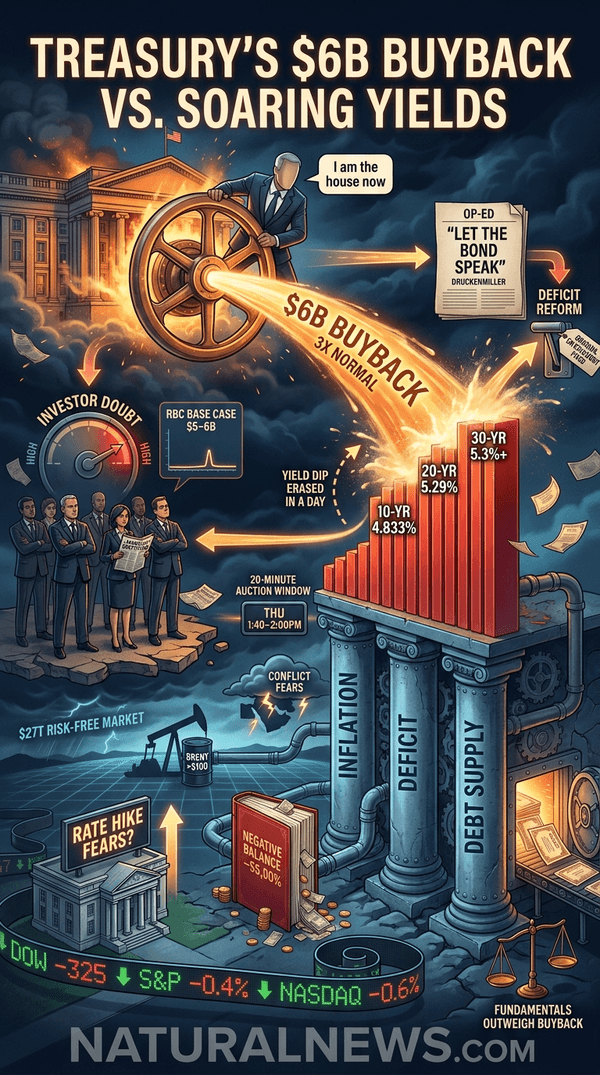
Bessent on addressed traders directly on Tuesday, Sept. 8. He remarked during a Southern Methodist University event in Texas that day: “I have asymmetric information. I am the house now” [3].
The USDT also said future operations will reach at least $4 billion. The $6 billion level triples the normal buyback amount and is 50 percent more than the department’s plan announced last month [2].
Market Reaction and Rising Yields
The U.S. 10-year Treasury yield hit 4.833% by approximately 1:30 p.m. Eastern Time. The 20-year Treasury yield rose to 5.29%, and the 30-year yield was most recently at 5.289%, after earlier in the day breaking past the closely watched 5.3% level. The Dow Jones Industrial Average fell 325 points, or 0.6%, by approximately 2:30 p.m. Eastern Time, while the S&P 500 and Nasdaq slumped 0.4% and 0.6%, respectively.
Analysts at RBC Capital Markets had said Tuesday that a buyback operation of $5 billion to $6 billion was their base case, so the department’s announcement was not much of a surprise to markets. A $4 billion operation would have been even more disappointing, and quadrupling the buybacks to $8 billion or more likely would not have satisfied investors because it would have been a major shift from Bessent’s announcement just two weeks ago [1].
Investors remained doubtful the buybacks would meaningfully lower yields, according to market reaction described in the report. The initial decline in yields following the Aug. 19 buyback announcement was erased within a day, with the 10-year yield moving back above where it was before the Treasury’s press release [4].
Analyst and Investor Criticism
Mark White, wealth advisor at Mark White Wealth Advisors, told the New York Post that Wednesday’s market reaction shows investors are doubtful the buybacks will meaningfully lower yields.
“While a $6 billion buyback can improve liquidity and provide some support at the margin, it’s simply not large enough to meaningfully change the fundamental forces driving long-term yields,” White said. “Inflation concerns, rising deficits and the supply of Treasury debt are ultimately going to have a much greater influence on yields than a single buyback operation.”
Billionaire investor Stanley Druckenmiller emerged as a prominent critic, penning a Wall Street Journal op-ed titled “Let the Bond Speak.” He argued that the USDT should “do the only thing that durably lowers long-term yields: address the primary deficit.”
He called for reforming entitlements gradually through means testing, indexing changes and eligibility adjustments phased in over decades. Druckenmiller also made headlines after he admitted he used AI to help write the opinion piece [5].
Broader Market Context
Global bond markets have been selling off as investors fear a prolonged Middle East conflict could keep energy prices elevated and drive inflation higher [6]. Brent crude futures broke through $100 per barrel after a series of attacks in the Middle East raised concerns that the conflict could intensify again, according to Rabobank [6].
Traders have grown increasingly concerned that the Federal Reserve could hike interest rates at its meeting next week, which would raise short-term borrowing costs on credit cards and home-equity lines of credit [7]. Treasury yields are the annual interest rates investors are paid for holding government debt, and they are inversely linked to prices.
The buyback plan has faced backlash, with critics questioning whether the operation will have a noticeable impact on such a massive market. The U.S. Treasury market is widely described as the deepest and most liquid in the world, with a corollary assumption that Treasury bonds are “risk-free” [8].
Outlook and Unresolved Questions
The Treasury’s buyback operation happened on Thursday, and market participants watched whether yields stabilize. The department has also been involved in efforts to prop up the Japanese yen and Argentine peso, according to the report. Japan sold almost $90 billion in Treasuries to fund a record yen intervention, according to market analysis [9].
Analysts said a $4 billion operation would have been even more disappointing, while quadrupling buybacks to $8 billion or more likely would not have satisfied investors because it would have been a major shift from Bessent’s announcement two weeks ago [1].
Further Fed policy and energy prices remain key factors for bond and stock markets. The U.S. national debt surpassed $40 trillion for the first time, after jumping by over $60 billion in one day and surging by $1 trillion in just over three months, according to Treasury data [10].
Economist Peter Schiff warned that “higher interest rates, whenever they arrive, are going to do to the housing market and the cost of government” [11]. For individuals seeking to protect their savings, alternatives such as gold, silver and other hard assets continue to draw interest [12].
References
- ZeroHedge. “Treasury Yields Surge After Bessent Disappoints Market With Small Buyback Size”. ZeroHedge. September 9, 2026.
- NTD. “Treasury to Buy Back $6 Billion in Long-Dated US Government Debt”. NTD. September 9, 2026.
- ZeroHedge. “I Am The House Now”: Bessent Goes Full Judge Dredd On Yen Bears”. ZeroHedge. September 9, 2026.
- ZeroHedge. “Futures Slide As Treasury Yields Surge, Erasing Bessent Intervention, Driven By Oil Spike”. ZeroHedge. August 20, 2026.
- ZeroHedge. “Druckenmiller Warning: The Bond Market Already Priced It”. ZeroHedge. August 30, 2026.
- ZeroHedge. “Betting Against The House?”. ZeroHedge. September 10, 2026.
- ZeroHedge. “Rate-Hike Odds Spike As Chair Warsh Tilts Hawkish, Questions AI Productivity Timing, Prefers “Quieter” Fed”. ZeroHedge. August 28, 2026.
- NaturalNews.com. “Terrorist economy_ Washington is prepared to create a new financial disaster for the whole world”. NaturalNews.com. November 10, 2023.
- ZeroHedge. “Japan Sold Almost $90 Billion In Treasuries To Fund Record Yen Intervention”. ZeroHedge. September 7, 2026.
- ZeroHedge. “”Doom Loop” Engaged: US Debt Hits $40 Trillion As Treasury Enters The Endgame”. ZeroHedge. August 20, 2026.
- Peter Schiff. “The Real Crash”.
- NaturalNews.com. “Gold, Silver and Mining Shares Rally After Treasury Doubles Long-Dated Bond Buybacks”. NaturalNews.com. August 21, 2026.
Explainer Infographic
Submit a correction >>
Tagged Under:
big government, Brent crude, currency crash, currency reset, debt bomb, debt buyback, debt collapse, department of the treasury, dollar demise, economic riot, economics, economy, finance, finance riot, government debt, Mark White, money supply, oil futures, Scott Bessent, Stanley Druckenmiller, Treasury Yields, White House
This article may contain statements that reflect the opinion of the author
RECENT NEWS & ARTICLES