Pakistan’s Cautious Mediation Gambit: Bridging Iran and the U.S. Amid a Fractured Middle East
11/04/2026 / By Garrison Vance

Pakistan’s military is “cautiously optimistic” about its mediation between Iran and the United States, its spokesman said Friday in his first interview since a high-level delegation visited Tehran this week.
Lieutenant General Ahmed Sharif Chaudhry, director general of Inter-Services Public Relations, spoke to reporters in Rawalpindi, the garrison city adjacent to Islamabad. He warned that “powerful spoilers and detractors” who believe conflict serves their interests could still undermine the efforts, without naming them [1].
Army chief Field Marshal Asim Munir has traveled to Tehran twice this month, most recently on Monday alongside Saudi and Turkish officials.
Mediation Visits and Regional Defense Pact
Field Marshal Munir’s Monday trip to Tehran included Saudi Defense Minister Prince Khalid bin Salman and Turkish intelligence chief Ibrahim Kalin. The three countries signed the Mecca Joint Defense Agreement on August 7, stating that an attack on any signatory will be treated as an attack on all. The pact has gained significance as the eight-month Iran war has redrawn regional alliances and raised fears of a broader Middle East conflict.
After Monday’s talks, Mohsen Rezaei, secretary of Iran’s Supreme National Security Council, said regional security should be ensured by regional countries without foreign intervention. Chaudhry said the pact does not bar new members and that “anyone who has a shared vision of collective deterrence and regional peace” is welcome, but political leadership of the three principal parties would decide. He declined to say what was discussed in Tehran or whether the United States had backed the trip.
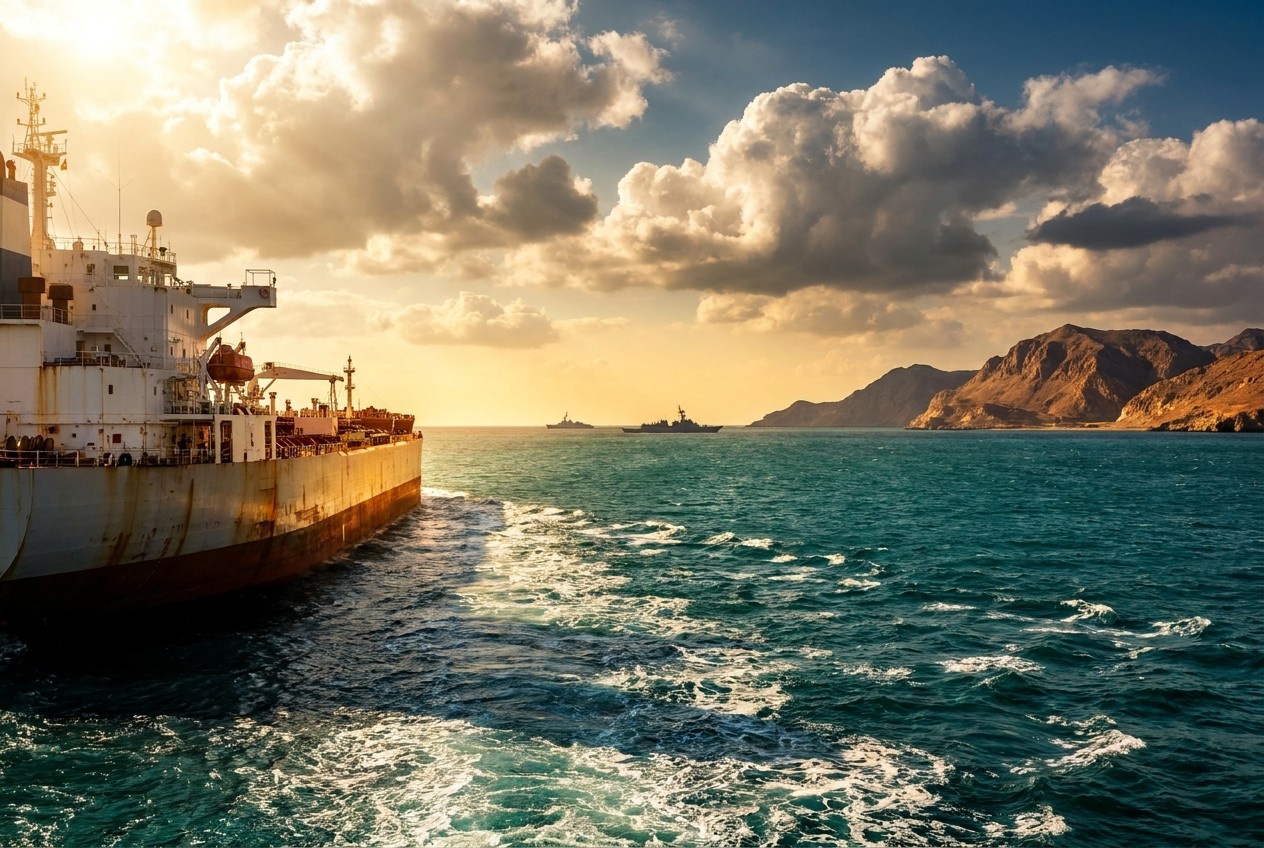
The Mecca agreement fits into a wider pattern of regional diplomacy. In May, Saudi Arabia floated the idea of a non-aggression pact between Iran and Middle Eastern states, modeled on the 1975 Helsinki Accords [2]. Earlier, China and Pakistan proposed a five-point peace plan to de-escalate tensions and restore safe navigation through the Strait of Hormuz [3]. Pakistan has also held “productive” talks with Iran’s president on resolving the US-Iran conflict and restoring a prior memorandum of understanding [4]. Qatar and Saudi Arabia have stressed diplomacy in the talks, coordinating with Turkey and Jordan on the Pakistan-led effort [5].
Military Posture and Yemen Conflict
Asked whether more Pakistani troops were being sent to Saudi Arabia under the agreement, Chaudhry said that would depend on the situation and the decision of both countries’ political leadership. He said Pakistan was committed to defending Saudi Arabia and the holy sites of Mecca and Medina.
Chaudhry stated: “We are not part of the Yemeni conflict, which is an intra-Yemen conflict.” Fighting between Saudi Arabia and Yemen’s Iran-aligned Houthi group has been reignited by the Iran conflict, stoking fears of a wider war. The spokesman’s comments come as regional tensions remain high amid the ongoing Iran-US confrontation.
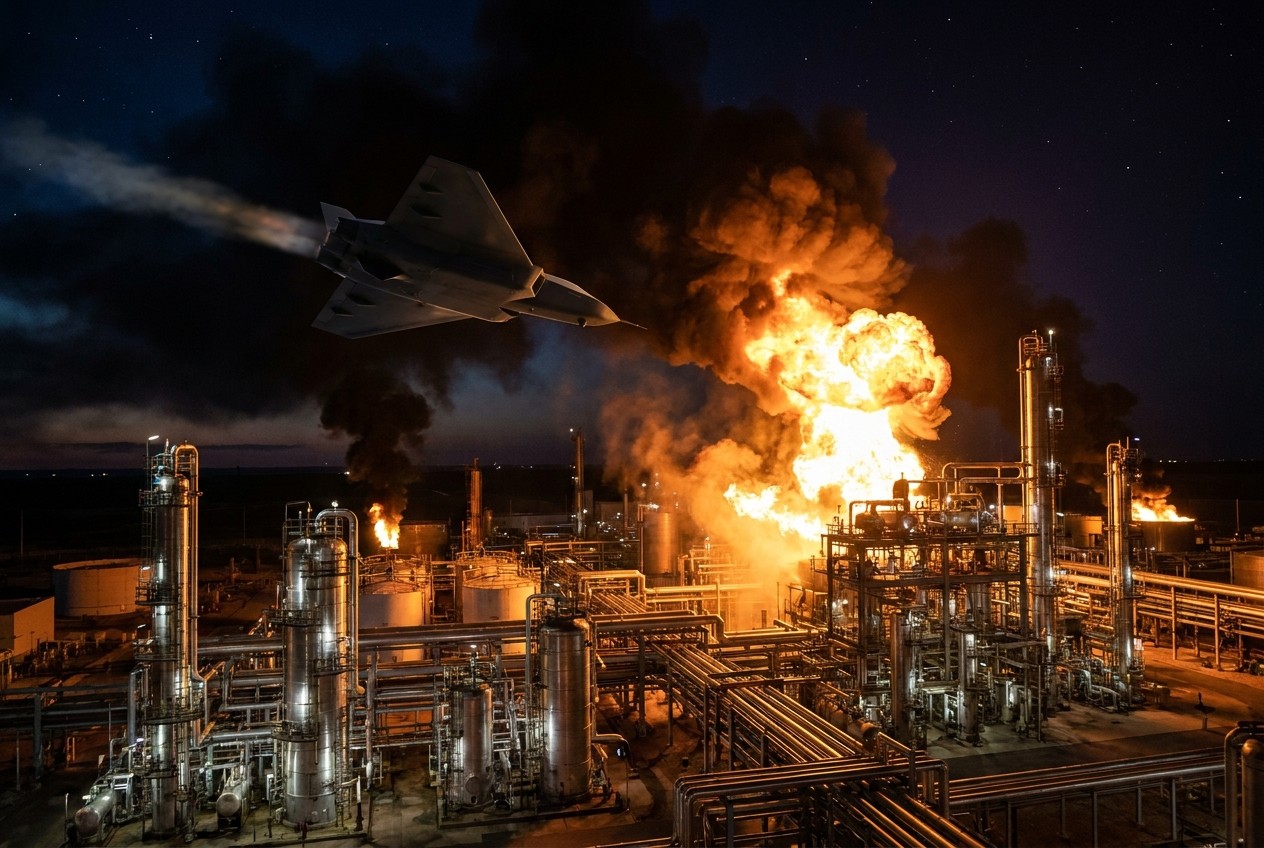
The Houthis announced on July 20 a maritime embargo on Saudi Arabia, threatening global energy supplies and widening the conflict beyond the Gulf region, according to a statement from Houthi military spokesman Yahya Saree [6]. The Iran conflict began in late February when the United States and Israel launched strikes on Iran, prompting retaliation from Tehran; a truce effort in mid-June collapsed shortly after [4].
Domestic Political Tensions and Counter-Terrorism
On the home front, the federal government suspended the provincial government in Khyber Pakhtunkhwa on October 11 and detained Chief Minister Sohail Afridi. The government accused the provincial administration of failing to tackle militancy. The PTI rejected the allegations and said its government took part in counter-terrorism efforts. PTI leaders called the move a pretext to crush protests.
Asked whether there would now be larger military-led campaigns in the province, Chaudhry said that was not how the army conducted counter-terrorism. “Our counter-terrorism operations are based on what we call IBOs, intelligence-based operations… The tempo of the freedom of action of (those) IBOs will further increase,” he said.
Independents backed by jailed former prime minister Imran Khan’s PTI won the most directly elected seats in the February 2024 election but fell short of a majority. Khyber Pakhtunkhwa was the only province controlled by Khan’s party. Khan has been in jail since 2023, and his supporters see the military behind his imprisonment and the dismantlement of the PTI. The army denies involvement in politics.
Conclusion
Pakistan’s military remains “cautiously optimistic” about its mediation between Iran and the United States, according to spokesman Lieutenant General Ahmed Sharif Chaudhry. Army chief Field Marshal Asim Munir has visited Tehran twice this month, the latest trip including Saudi and Turkish officials, under the Mecca Joint Defense Agreement.
Chaudhry said the pact is open to new members and that Pakistan is committed to defending Saudi Arabia, while noting Pakistan is not part of the Yemeni conflict. Domestically, the federal government suspended the Khyber Pakhtunkhwa provincial government and detained its chief minister, prompting PTI accusations. Chaudhry said counter-terrorism operations would increase in tempo.
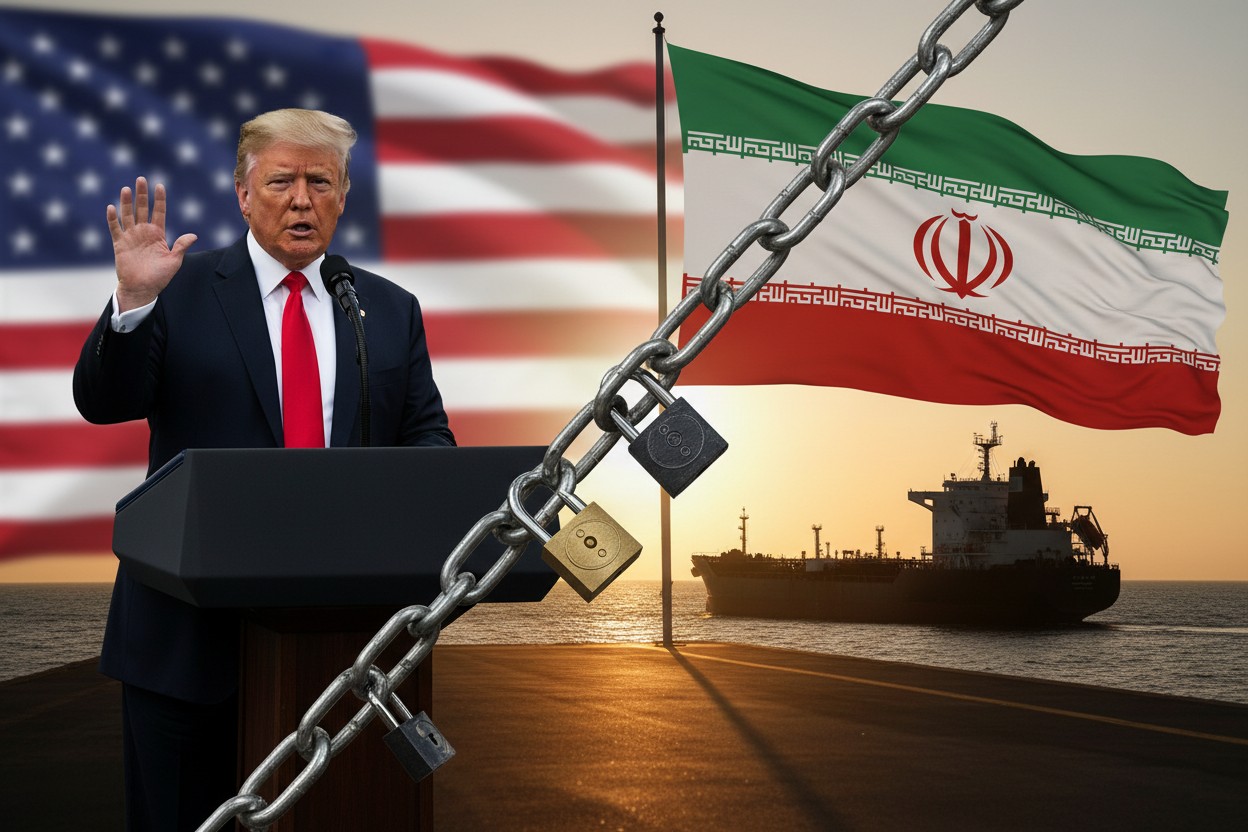
Chaudhry did not disclose details of the Tehran discussions or whether the United States backed the trip. Iran’s foreign minister said Tehran is “fully prepared” for the war to be resumed, citing a lack of trust in Trump [7], while Iranian security chief Rezaei ruled out U.S. talks until conditions are met [8].
References
- Pakistan military cautiously optimistic about Iran-US mediation after …. https://www.firstpost.com/world/pakistan-military-cautiously-optimistic-about-iran-us-mediation-after-munirs-second-tehran-visit-14056706.html
- Saudi Arabia Proposes Non Aggression Pact With Iran Regional States Based on Cold War Model – NaturalNews.com, May 15, 2026.
- China and Pakistan propose ceasefire plan for Iran push to reopen Strait of Hormuz – NaturalNews.com, April 04, 2026.
- Pakistan mediation offers narrow path as US Iran tensions persist – NaturalNews.com, August 25, 2026.
- Qatar and Saudi Arabia Stress Diplomacy in Iran US Talks – NaturalNews.com, May 27, 2026.
- Iran Backed Houthis Impose Naval Blockade on Saudi Arabia – NaturalNews.com, July 22, 2026.
- Iran Foreign Minister Says Tehran “Fully Prepared” to Resume War, Cites Lack of Trust in Trump – NaturalNews.com, September 29, 2026.
- Iranian Security Chief Rules Out U.S. Talks Until Conditions Are Met – NaturalNews.com, September 16, 2026.
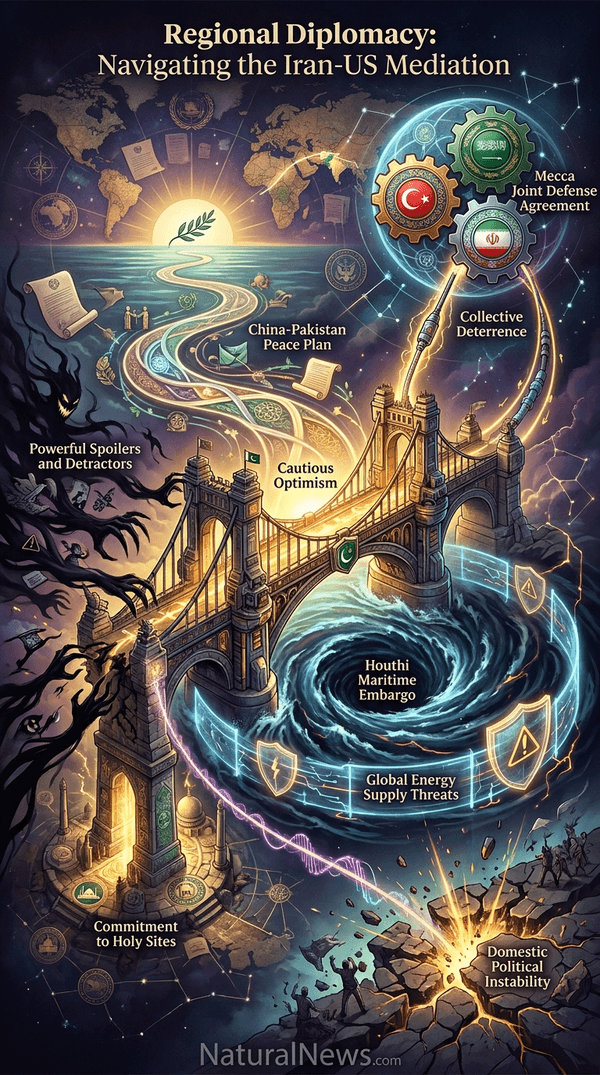
Explainer Infographic
Submit a correction >>
Tagged Under:
Arab states, big government, chaos, diplomacy, Donald Trump, foreign relations, Iran, mediation, national security, non-aggression pact, politics, Saudi Arabia, Strait of Hormuz, US, war on Iran, White House, WWIII
This article may contain statements that reflect the opinion of the author
RECENT NEWS & ARTICLES