Trump’s Push for Russian Diesel Runs Into Shipping and Buyer Hurdles
11/15/2026 / By Sterling Ashworth
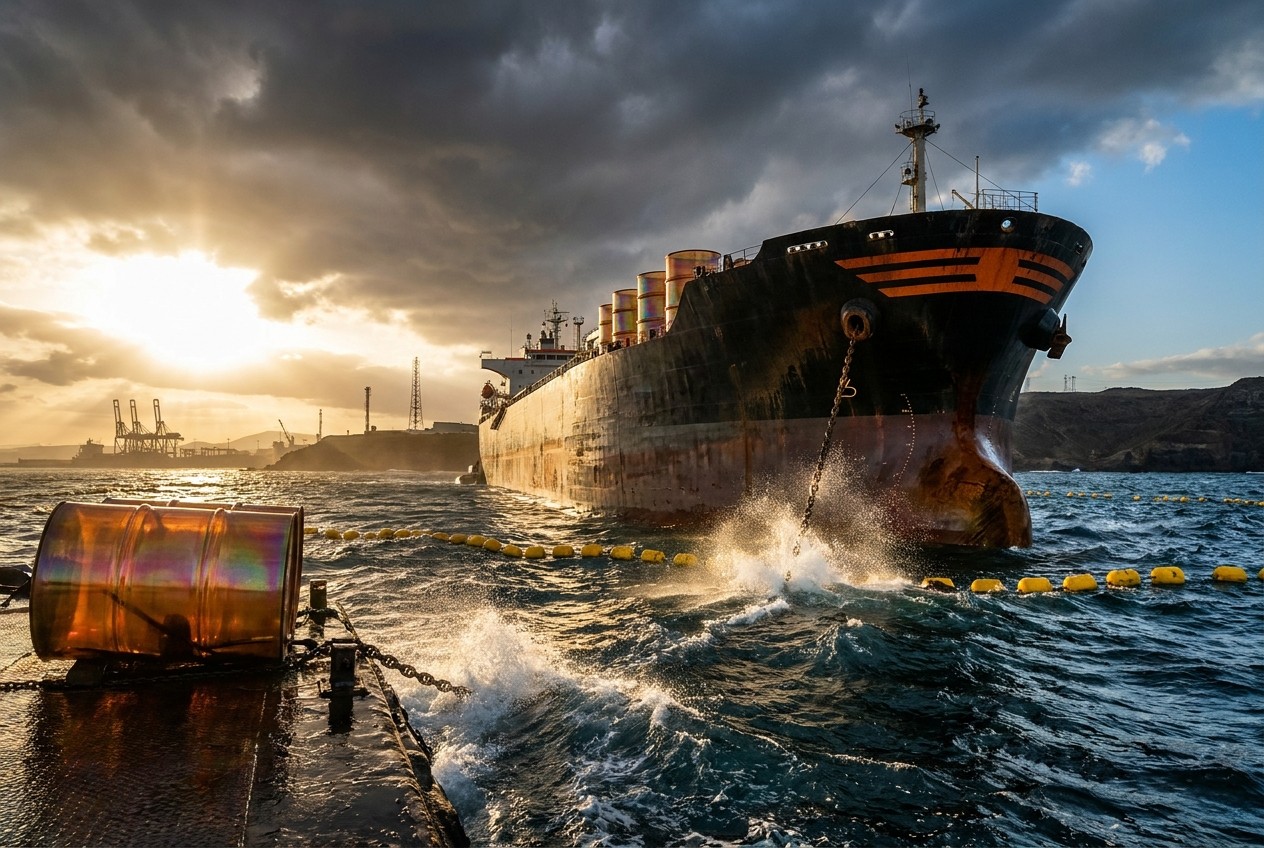
President Donald Trump’s plan to supply the U.S. with Russian diesel has stalled, with several tankers bound for American ports changing course after difficulties finding buyers willing to accept the cargoes, according to a Wall Street Journal (WSJ) report.
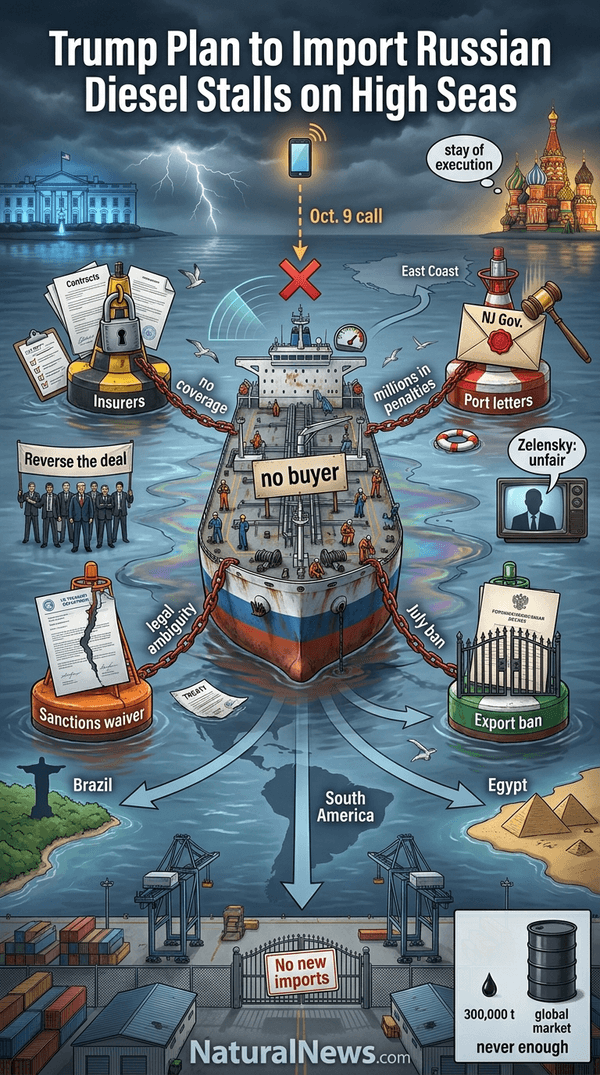
Per the outlet, no new imports had entered the country at the time of the report, and cargoes that had been tracked heading toward the U.S. East Coast remained at sea or were diverted elsewhere, according to the report [1]. Shipping data cited in news accounts showed four tankers that departed Russia declaring U.S. destinations had turned away.
Two were headed to Brazil, one had reached Egypt, and the fourth was listed for South America, according to Kpler data cited by the WSJ. The report, which cited people familiar with the matter, did not indicate a final delivery timeline and described the status of the shipments as unresolved.
The stalled shipments involve Russian-origin diesel and U.S.-bound buyers, according to the WSJ account. The report described the situation as a practical setback for a plan the administration had presented as a way to increase fuel supplies and lower prices ahead of the midterm elections [2]. Reuters reported separately that U.S. companies were unlikely to import Russian diesel as a tanker full of the fuel idled off the U.S. Eastern Seaboard, despite Trump’s temporary waiver of some sanctions [3].
Background: Sanctions and Russian Fuel Exports
The diesel plan announced Oct. 9 followed a phone call between Trump and Russian President Vladimir Putin. Trump said on Truth Social that Russia would immediately supply more than 300,000 tons of diesel fuel to the American and global marketplace, with another 500,000 tons during November and 1,000,000 tons immediately thereafter [4].
Reporting at the time said the arrangement permitted Russia to supply more than 300,000 metric tons of diesel, equivalent to about 2.25 million barrels, according to terms described by Trump [5]. The move came after the administration had taken a different posture on Russian energy.
Despite criticism, officials described the diesel sanctions relief as temporary and as applying specifically to fuel exports rather than the broader sanctions architecture imposed after Russia’s 2022 invasion of Ukraine, according to an account of the announcement [6]. Russia’s fuel trade has been reshaped by Western restrictions since 2022. Moscow also imposed a ban on all diesel exports in July, according to Deputy Prime Minister Alexander Novak [7].
Shipping and Insurance Hurdles
Insurance providers were described as reluctant to cover the cargoes without clear paperwork, according to people familiar with the discussions. The WSJ reported that the delays reflected difficulties finding buyers willing to accept what it described as the controversial cargoes [1].
State officials added a separate layer of risk. New Jersey Gov. Mikie Sherrill (D) sent letters to a dozen port and terminal operators warning that accepting shipments from tankers carrying Russian diesel would put them in violation of federal law and could expose them to severe penalties [8].
A report on the letters said Sherrill warned recipients they “could be subject to millions of dollars in penalties” long after Trump leaves office [9]. The warning marked a state-level challenge to a federal authorization issued by the Department of the Treasury on Oct. 9 that was intended to allow Russian diesel to reach global markets [9].
Federal officials have publicly expressed confidence that the fuel would find a market. U.S. Energy Secretary Chris Wright, asked whether he was concerned that a vessel originally signaling it was headed to New York had been turned away, said he had no worries [10].
Outlook: Cargoes Remain in Limbo
Officials declined to comment or did not respond to requests for comment. The episode has left the administration’s fuel-supply initiative dependent on private buyers and intermediaries whose calculations include legal exposure, insurance terms and the threat of penalties from state officials.
The WSJ reported that several tankers bound for the U.S. changed course after difficulties finding buyers [2], and Al Jazeera reported that zero Russian diesel had reached the U.S. under the deal as buyers feared legal action connected to Congress’ ban on Russian energy imports [14].
References
- Trump’s Plan to Import Russian Diesel Stalls on the High Seas. https://similarworlds.com/politics/5697659-Trumps-Plan-to-Import-Russian-Diesel-Stalls-on-the-High-Seas
- Trump’s Plan to Import Russian Diesel Stalls on the High …. https://www.wsj.com/business/energy-oil/trumps-plan-to-import-russian-diesel-stalls-on-the-high-seas-a5b26b66
- US companies shunning Russian diesel as tanker carrying that fuel idles …. https://www.reuters.com/legal/government/us-companies-shunning-russian-diesel-tanker-carrying-that-fuel-idles-off-east-2026-11-11/
- President Trump Announces Agreement With Vladimir Putin To Supply Diesel Fuel. https://100percentfedup.com/president-trump-announces-agreement-vladimir-putin-supply-diesel/
- Zelensky Criticizes Trump Over Russian Diesel Agreement as Allies Push Back. https://www.naturalnews.com/2026-10-13-zelensky-criticizes-trump-over-russian-diesel-agreement.html
- Trump Says Russia Will Export Diesel, Lifts Sanctions. https://www.naturalnews.com/2026-10-12-trump-says-russia-will-export-diesel-lifts-sanctions.html
- Russia Bans Diesel Exports Following Ukrainian Strikes on Refineries – NaturalNews.com, July 13, 2026.
- NJ Gov. Sherrill warns port operators not to take Russian diesel or face severe penalties. https://justthenews.com/politics-policy/energy/nj-gov-sherrill-warns-port-operators-not-take-russian-diesel-or-face-severe?utm_source=justthenews.com&utm_medium=feed&utm_campaign=external-news-aggregators
- Sherrill Defies Trump, Warns NJ Ports Against Russian Diesel Imports. https://www.naturalnews.com/2026-11-06-sherrill-defies-trump-warns-against-russian-diesel-imports.html
- US Energy Secretary Says Russian Diesel Cargo Will Find Buyer Despite Shipping Delay. https://theepochtimes.com/us/us-energy-secretary-says-russian-diesel-cargo-will-find-buyer-despite-shipping-delay-6123573
- Why Trump’s Diesel Deal With Putin to Help Midterms Was … – Newsweek. https://www.newsweek.com/why-trumps-diesel-deal-with-putin-to-help-midterms-was-destined-to-fail-12671440
- Bipartisan Senators Challenge Trump’s Russian Diesel Deal, Claim It Violates Federal Law. https://www.zerohedge.com/political/bipartisan-senators-challenge-trumps-russian-diesel-deal-claim-it-violates-federal-law
- Russia Celebrates ‘Historic Moment’ After Trump Formally Waives Graham Act Sanctions. https://www.zerohedge.com/geopolitical/russia-celebrates-historic-moment-after-trump-formally-waives-graham-act-sanctions
- Why are oil traders refusing to buy Russian diesel after Trump-Putin …. https://www.aljazeera.com/news/2026/11/7/why-are-oil-traders-refusing-to-buy-russian-diesel-after-trump-putin-deal
Explainer Infographic
Submit a correction >>
Tagged Under:
diesel, Donald Trump, economic collapse, energy supply, fuel crisis, fuel prices, Globalism, market crash, midterms, oil prices, oil refineries, products, refining capacity, risk, Russia-Ukraine war, supply chain warning, supply disruptions, transportation, war on Iran, WWIII
This article may contain statements that reflect the opinion of the author
RECENT NEWS & ARTICLES