The narrative that the U.S. controls Iranian airspace is collapsing in real time, as Iran strikes U.S. Airbase
05/29/2026 / By Lance D Johnson

The United States and Israel have spent years assuming they can strike Iranian targets with impunity, violating ceasefire agreements and assassinating officials without consequence. That assumption just exploded along with a U.S. airbase near Bandar Abbas. Iran’s Islamic Revolutionary Guard Corps struck back at 4:50 a.m. Thursday, targeting the American base it identified as the “origin of the aggression.” The IRGC’s warning was stark: Aggression will not go unanswered, and any repeat attack will draw a “more decisive” response.
Key points:
- Iran struck a U.S. airbase in retaliation for a U.S. attack near Bandar Abbas airport.
- The United States and Israel are learning a hard lesson in the Middle East: not every nation will bow to airstrikes and broken agreements.
- The IRGC warned that any repeat aggression will draw a “more decisive” response.
- The attack occurred amid ongoing U.S. ceasefire violations in the region.
- Tensions have been building since Israel’s airstrike on the Iranian embassy in Damascus in April.
- Iran has framed its actions as “legal, rational, and legitimate” self-defense.
- The U.S. and Israel now face a far more capable adversary than in previous conflicts.
The breaking point: Ceasefire violations meet a nation that fights back
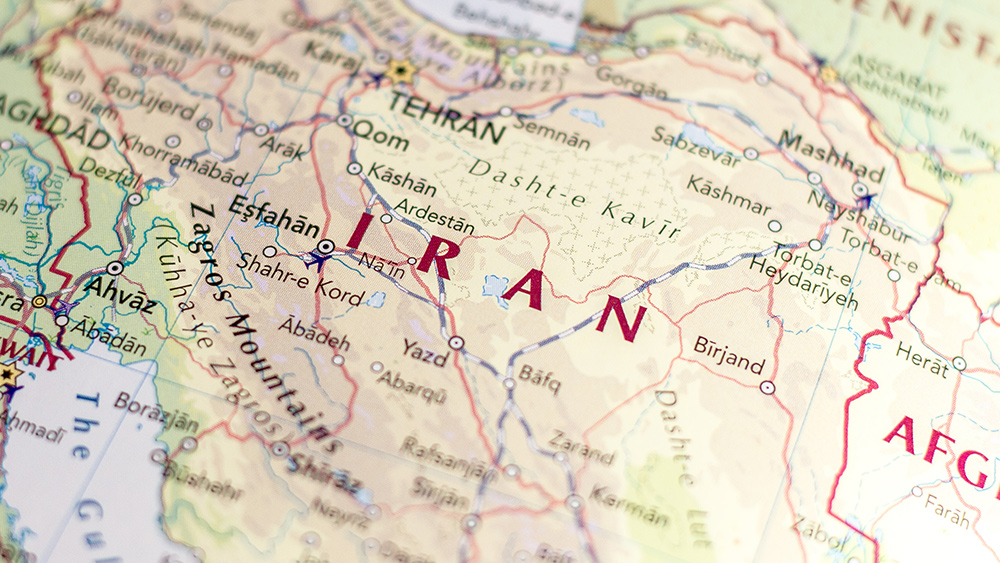
Iran’s Islamic Revolutionary Guard Corps confirmed Thursday that it launched a direct strike on a US airbase, retaliating for what Tehran described as an early morning American attack near Bandar Abbas airport. The strike marks a dramatic escalation in a conflict already inflamed by repeated ceasefire violations.
The backdrop to Thursday’s strike is a pattern of broken promises and escalating violence. The United States, under the current administration, has increasingly mirrored Israel’s tactics of launching preemptive strikes and ignoring ceasefire agreements. But this time, the target is not a poorly armed militia or a fractured state. Iran is a developed nation with a sophisticated military, a unified command structure under the IRGC, and a leadership that has repeatedly demonstrated it will not tolerate attacks on its sovereignty.
The IRGC’s statement, reported by IRNA, was unambiguous: “Aggression will not go unanswered.” The American base was identified as the “origin of the aggression,” and the IRGC placed full responsibility for consequences on the “aggressor.” This is not the language of a nation bluffing. It is the language of a power that has calculated the risks and decided that deterrence requires action.
President Trump’s recent boasts about crippling Iran’s nuclear capabilities and controlling the skies now ring hollow. A US airbase has been struck. The message is clear: Iran can and will hit back, and it will do so at a time and place of its choosing.
Why this time is different: The calculus of a nuclear-threshold state
To understand the gravity of this moment, one must look at the broader context. In April, Israel bombed the Iranian embassy in Damascus, killing seven IRGC officers including a senior Quds Force general. Iran responded with a barrage of approximately 180 ballistic missiles aimed at Israel, an attack it called “legal, rational, and legitimate.” Israel has a long history of violating ceasefire agreements, and the United States has now begun emulating those tactics. But Iran is not Hamas or Hezbollah. It is a nation with a domestic missile industry, a nuclear program that has brought it to the threshold of weapons capability, and a population hardened by decades of sanctions and threats.
The IRGC’s warning that any repeat aggression will draw a “more decisive” response should be taken seriously. A senior IRGC officer previously stated that Tehran possesses the capability to target Israeli nuclear facilities if its own are attacked. That threat now carries added weight. The United States and Israel have spent years assuming they could strike Iran with impunity. Thursday’s strike on the US airbase suggests that assumption is dangerously outdated.
Sources include:
Submit a correction >>
Tagged Under:
aggression, ballistic missile, Bandar Abbas, ceasefire violation, Damascus embassy, deterrence, escalation, Iran, IRGC, Israel, Middle East, missile strike, nuclear threshold, Quds Force, retaliation, Revolutionary Guards, sovereignty, Tehran, US airbase, US military
This article may contain statements that reflect the opinion of the author
RECENT NEWS & ARTICLES