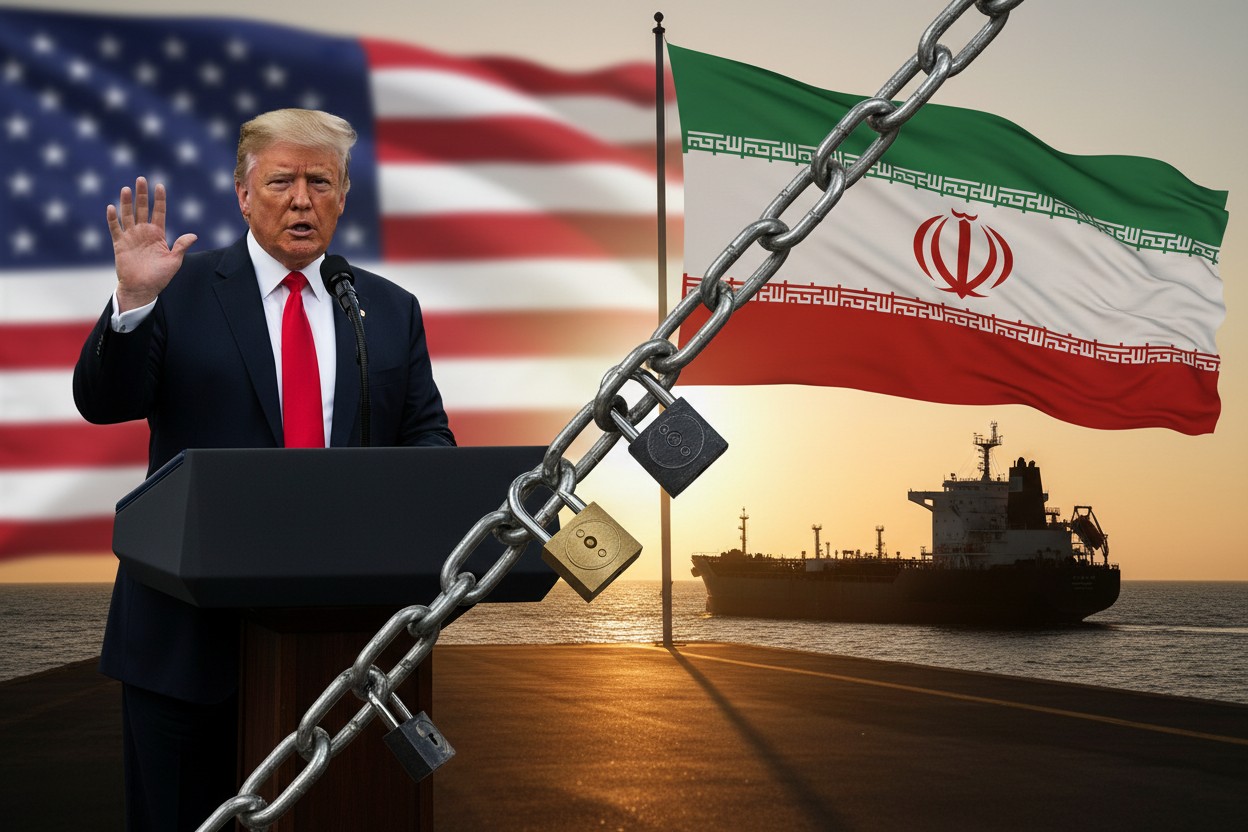
U.S. deported tens of thousands to nations it deems too dangerous to visit, data shows
06/01/2026 / By Douglas Harrington

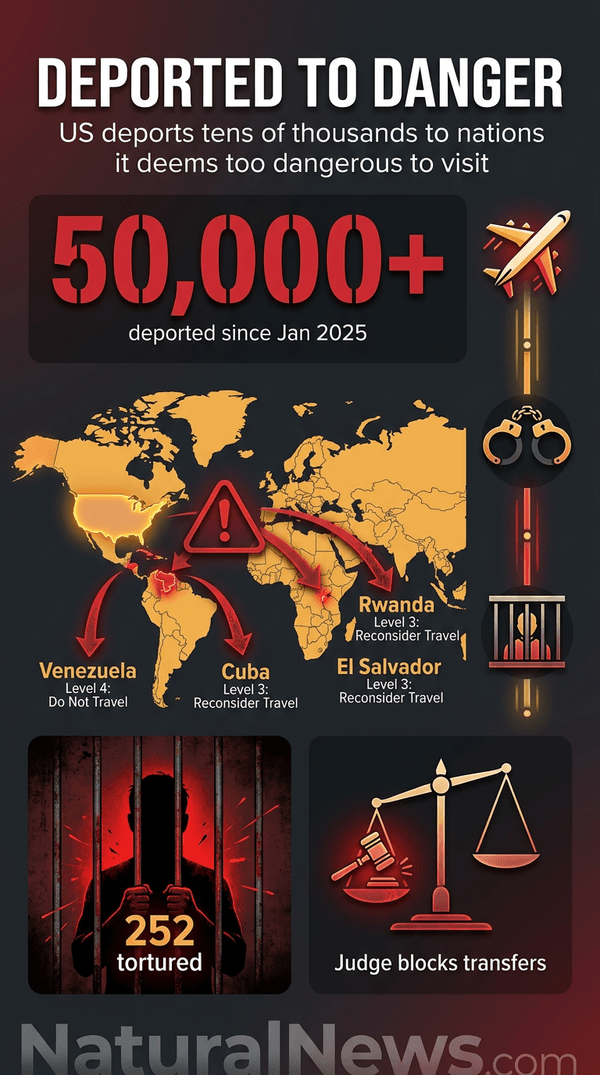
The Trump administration has removed more than 50,000 illegal immigrants since January 2025, with a significant number sent to countries the U.S. State Department has designated as unsafe for travel, according to data from Immigration and Customs Enforcement and reports by congressional committees. [1][2]
The removals include individuals deported to Venezuela, Cuba, and Rwanda, among other nations. A report by the Senate Foreign Relations Committee found that hundreds of migrants were sent to third countries when they could not be returned to their homelands. Critics argue that transferring people to such destinations exposes them to dangers the U.S. government itself warns against.
Deportations to high-risk countries
The State Department maintains travel advisories for numerous countries, urging U.S. citizens to reconsider or avoid travel entirely. Among the nations that have received deportees is Venezuela, which the State Department ranks as a Level 4: Do Not Travel destination due to crime, civil unrest, and arbitrary detention. According to a report from The National Pulse, deportation flights to Venezuela continued even after the arrest of President Nicolás Maduro in early 2026. [3]
Similarly, Cuba resumed accepting deportation flights in February 2026, taking back at least six Cuban nationals convicted of serious crimes, including murder and drug trafficking. The State Department also warns against travel to Cuba, citing health risks and arbitrary enforcement of laws. [4]
Human Rights Watch and Cristosal documented in a November 2025 report that 252 Venezuelan migrants deported to El Salvador were subjected to systematic torture and starvation inside a maximum-security prison, despite many having no criminal record. [5]
Broader deportations to dangerous countries
The Trump administration has expanded its use of “safe third country” agreements to reroute asylum seekers to nations with which the U.S. has limited diplomatic ties. In August 2025, the first group of seven migrants was deported to Rwanda under a Trump-era agreement, making Rwanda the third African nation after South Sudan and Eswatini to accept deportees. [6]
According to a NaturalNews.com report, the administration also proposed reallocating $250 million in foreign aid to fund voluntary deportations of Ukrainians and Haitians, both groups originating from countries with ongoing conflict or instability. [7]
A federal judge in Massachusetts blocked part of this policy in February 2026, ruling that deporting migrants to countries where they have no prior ties violates constitutional due process. [8] The ruling drew sharp criticism from Secretary of State Marco Rubio, who called it a threat to U.S. foreign policy. [9]
Venezuela deportations spike around military raid
Deportation flights to Venezuela increased notably in the weeks before and after U.S. Special Forces raided Caracas and captured President Maduro in January 2026, according to ICE data cited by multiple outlets. The National Pulse reported that Homeland Security Assistant Secretary Tricia McLaughlin confirmed the continuation of flights, stating, “The great news for those who are here from Venezuela is that they are going back.” [3]
Critics contend that Venezuela remains unsafe for returnees. Juan Pappier of Human Rights Watch said conditions in the country have not stabilized, citing ongoing influence of criminal gangs such as Tren de Aragua, which the U.S. government has designated as a significant security threat. [10] The State Department has maintained its highest travel advisory for Venezuela due to kidnapping, wrongful detention, and crime.
Approximately 200 of the deportees were not Venezuelan citizens, raising questions about the legality of transfers to a third country with no prior connection. [3]
Conclusion
The pattern of deporting individuals to countries the U.S. government itself warns against travel has drawn legal challenges and criticism from human rights organizations. Susan Akram of Boston University’s International Human Rights Clinic said such removals violate both U.S. and international laws that prohibit sending asylum seekers to places where their life or freedom would be threatened. [11]
The Trump administration has defended its enforcement surge as necessary to deter illegal immigration and address a backlog of nearly 3.75 million cases. [11] The White House did not respond to requests for comment on the specific findings regarding deportations to high-risk countries.
Judicial rulings have created a complex legal landscape. While a federal judge blocked the third-country deportation policy, the administration continues to pursue removals to nations like Venezuela and Cuba under existing agreements. The issue is expected to remain a flashpoint in the ongoing immigration debate.
References
- Ava Grace. “Trump admin surpasses 50,000 MIGRANT REMOVALS, targets long evasive illegals”. NaturalNews.com. March 10, 2025.
- The National Pulse. “Hundreds of Migrants Deported to Third Countries: Report”. February 13, 2026.
- The National Pulse. “Venezuela Still Taking Deportation Flights From Trump Despite Maduro Arrest”. January 5, 2026.
- The National Pulse. “ICE Has Resumed Deportations to Cuba”. February 19, 2026.
- 21st Century Wire. “America’s Outsourced Cruelty: Venezuelans Tortured in El Salvador’s Prison”. November 12, 2025.
- NaturalNews.com. “First group of US deported migrants arrives in Rwanda under Trump era deal”. August 31, 2025.
- Laura Harris. “Trump administration proposes reallocating $250M in foreign aid to fund deportations of Ukrainian Haitian migrant”. NaturalNews.com. May 27, 2025.
- NaturalNews.com. “Biden-appointed federal judge blocks Trump’s ‘third country’ deportation policy, citing due process violations”. February 26, 2026.
- Willow Tohi. “Judicial interference in deportations sparks foreign policy crisis, Rubio warns”. NaturalNews.com. May 27, 2025.
- Kevin Hughes. “Health Ranger Report: Security expert HiCap reveals potential CHAOS triggered by weaponized migration and terror cells”. NaturalNews.com. February 10, 2025.
- NaturalNews.com. “Trump administration seeks to reroute asylum seekers to a safe third country”. January 02, 2026.
Explainer Infographic
Submit a correction >>
Tagged Under:
big government, Border Patrol, border security, chaos, Cuba, Dangerous, dangerous nations, deportation, foreign policies, Globalism, human rights, humanitarian, ICE, Immigration, invasion usa, migrants, national security, Open border, Rwanda, safe third countries, starvation, State Department, Torture, Trump, Venezuela, violence
This article may contain statements that reflect the opinion of the author
RECENT NEWS & ARTICLES