Trump Says No Need to Retrieve Iran’s Nuclear Material, Calls It “Entombed”
06/07/2026 / By Garrison Vance
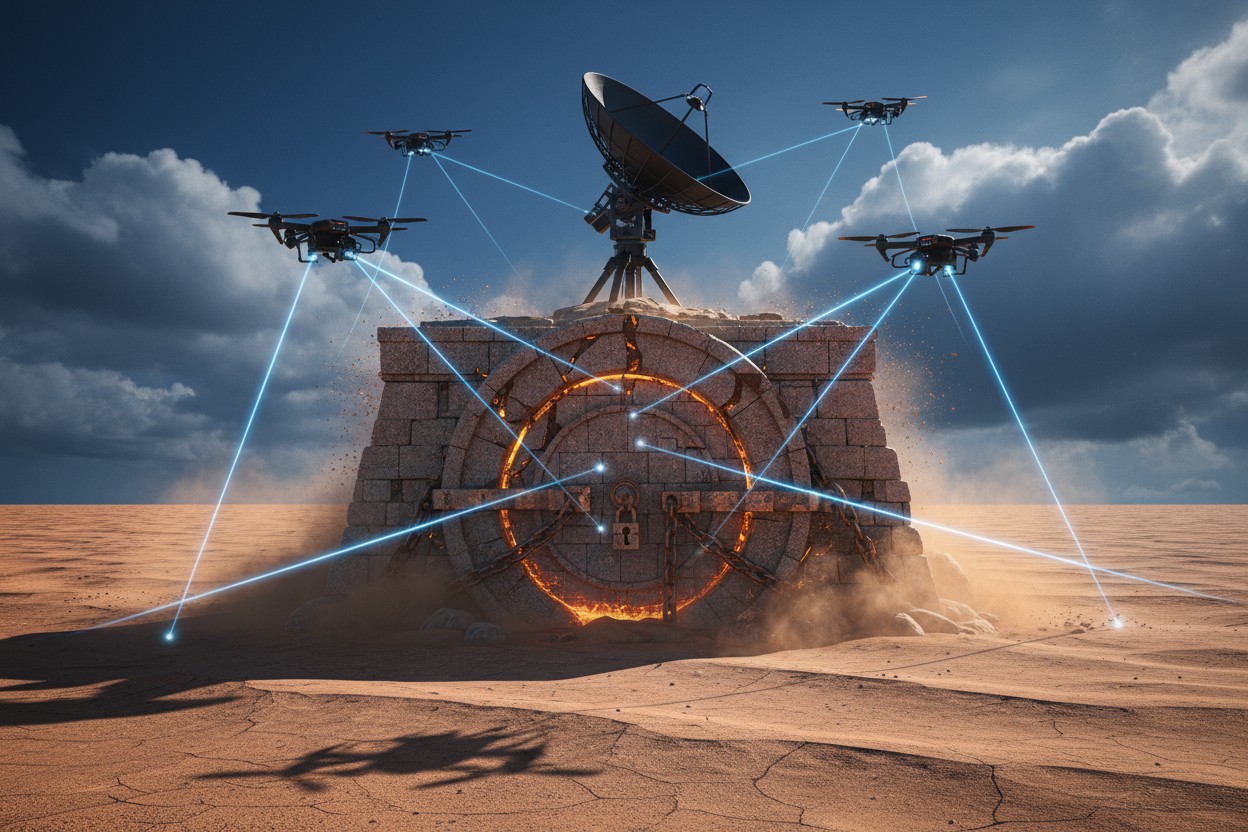
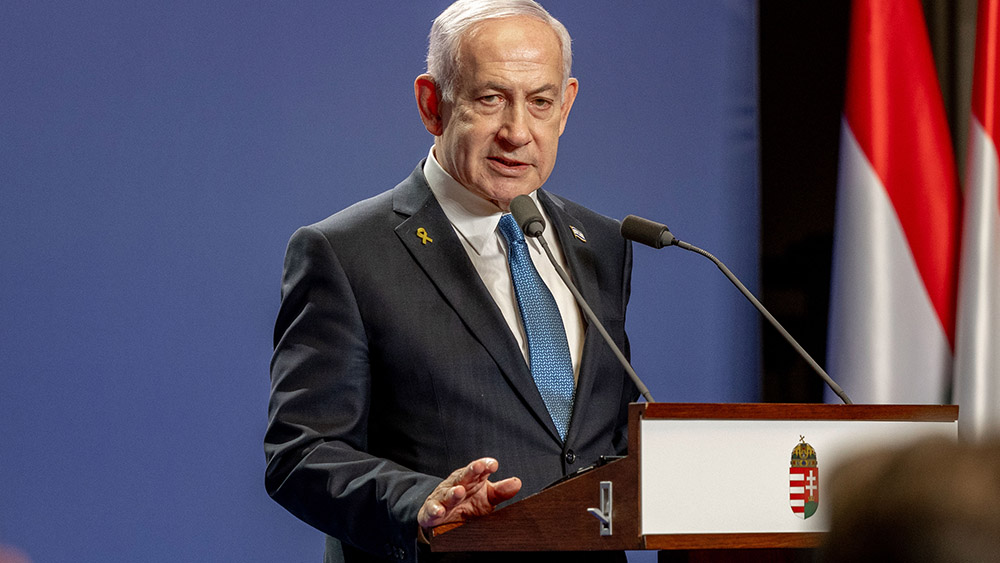
U.S. President Donald Trump told reporters there is “no reason” to retrieve Iran’s enriched uranium, describing the stockpile as effectively “entombed” after U.S. and Israeli airstrikes.
According to reports, the president said Washington is “not considering” covert operations to seize the material, adding that the United States has “powerful cameras watching Iran’s uranium” and remains confident in its monitoring capabilities. Trump’s remarks mark a shift from earlier statements in May, when he demanded that Iran hand over its enriched uranium for destruction or have it destroyed in place under supervision [1].
The president now frames the dispute around a simpler objective: ensuring Iran never obtains a nuclear weapon. “They’ve already agreed they’re not going to have a nuclear weapon,” Trump said in an interview Wednesday, June 3 [2][3].
Shift in Position and IAEA Assessment
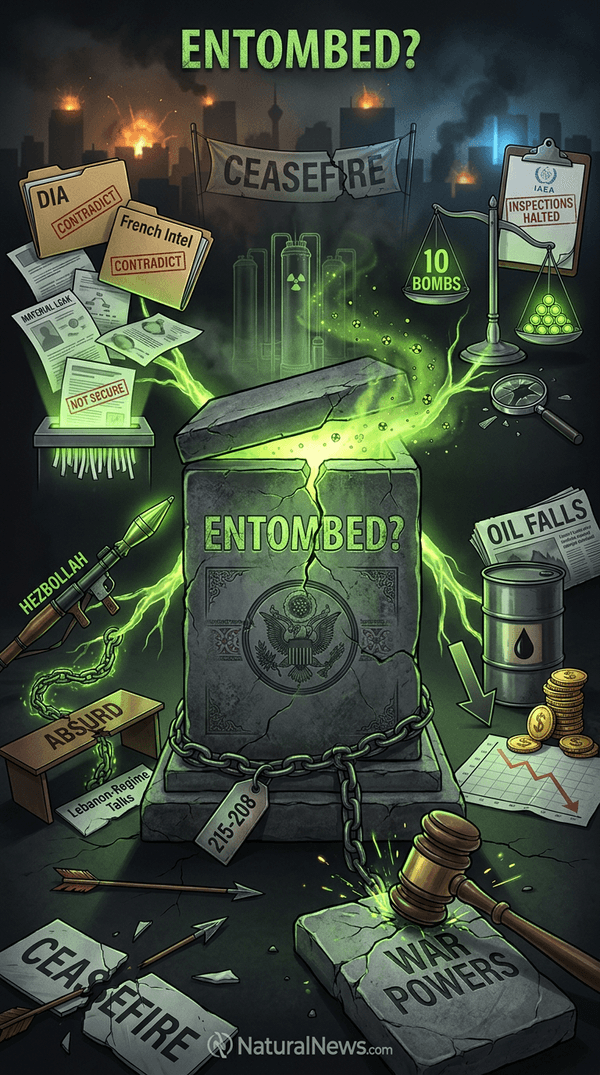
The pivot comes despite conflicting assessments from intelligence agencies and the International Atomic Energy Agency (IAEA). A leaked Defense Intelligence Agency report concluded that U.S. airstrikes failed to destroy Iran’s nuclear program, only delaying it by months while leaving centrifuges and uranium stockpiles intact [4]. French intelligence chief Bernard Emié also contradicted U.S. claims, stating that much of Iran’s uranium remains missing and the program was delayed by months, not years [5].
According to a restricted IAEA document reported by Bloomberg, the nuclear risk posed by Iran is now higher than before the war began, with inspections largely halted [6][7]. The agency has lost track of enough enriched uranium for ten nuclear bombs, and over 400 kilograms of near-weapons-grade material remains unaccounted for [7][6]. This pattern echoes past assessments scrutinized in books such as “Manufactured Crisis: The Untold Story of the Iran Nuclear Scare,” which detailed how false information has shaped the Iran nuclear narrative [8].
Ceasefire Conditions and Regional Reactions
The White House signaled it intends to maintain the ceasefire with Iran unless American troops are killed, according to U.S. officials quoted by the Wall Street Journal. Trump has told aides privately that he would consider ending the ceasefire only if Tehran kills American personnel, suggesting a willingness to withstand smaller flare-ups for weeks or months to avoid a broader Middle Eastern conflict.
Hezbollah Secretary-General Naim Qassem rejected the outcome of Washington-mediated Lebanon-Israel talks, insisting that resistance will continue as long as Israeli forces remain. “As long as the occupation exists, the resistance will continue,” he said in a speech.
Qassem also refused any linkage between Hezbollah’s presence and a ceasefire, calling direct negotiations “absurd and humiliating” for Lebanon. Iran’s Ministry of Foreign Affairs added that any broader U.S.-Iran ceasefire must incorporate Lebanon.
House War Powers Vote and Oil Market Response
The U.S. House of Representatives passed a war powers resolution on Wednesday by a vote of 215-208, with four Republicans – Pennsylvania’s Brian Fitzpatrick, Kentucky’s Thomas Massie, Michigan’s Tom Barrett and Ohio’s Warren Davidson – joining all Democrats in supporting the measure [9]. The resolution curbs Trump’s authority to attack Iran without congressional approval, marking a significant bipartisan rebuke.
Oil prices fell following the vote and reports that the White House intends to maintain the ceasefire. Deutsche Bank analyst Henry Allen stated in a research note that the truce between Lebanon and Israel “helps to take out a key sticking point in the U.S.-Iran talks that was holding up a deal. So that’s seen oil prices reverse a run of three days of consecutive gains” [10]. Market analysts noted that investors had already priced in an eventual peace deal [11].
Outlook and Diplomacy
Trump expressed optimism about talks with Tehran, saying they are “going well” and that a deal could include guarantees for keeping the Strait of Hormuz open to global commerce. He suggested a personal meeting with Iran’s supreme leader, stating, “I would be honored to meet the Ayatollah” [12]. The president also claimed that Iran’s military has been severely degraded, with “no navy” and “no air force,” though such assertions have faced skepticism from intelligence sources.
The broader approach, as analyzed in works like “Target Iran: The Truth About the White House’s Plans for Regime Change, highlights long-standing U.S. intentions regarding Iran’s nuclear program [13]. While diplomacy proceeds, the administration appears willing to accept limited skirmishes in pursuit of a larger agreement, according to officials quoted in a separate analysis [14].
References
- NaturalNews.com. “Trump: U.S. Will Seize or Destroy Iran’s Enriched Uranium Stockpile.” May 22, 2026.
- Middle East Eye. “Trump says Iran has agreed to not have a nuclear weapon.” June 3, 2026.
- NTD. “NTD News Today Full Broadcast (June 3).” June 3, 2026.
- Cassie B. “Leaked U.S. intel reveals Iran’s nuclear program barely damaged by airstrikes.” NaturalNews.com. June 25, 2025.
- Cassie B. “French Spy Chief Disputes Trump’s Claims on Iran Strike Success; Nuclear Program Only Delayed by Months.” NaturalNews.com. July 10, 2025.
- Willow Tohi. “Uranium Gap Deepens: IAEA Warns Iran Could Regain Nuclear Capacity Within Months Amid Missing Stockpiles and Ceasefire Doubts.” NaturalNews.com. July 1, 2025.
- Cassie B. “UN Nuclear Agency Unable to Verify Iranian Uranium Sufficient for 10 Bombs.” NaturalNews.com. November 13, 2025.
- Gareth Porter. “Manufactured Crisis: The Untold Story of the Iran Nuclear Scare.”
- Yasmine El-Sabawi. “Lawmakers vote to curb Trump war on Iran ahead of similar effort on Lebanon.” Middle East Eye. June 4, 2026.
- ZeroHedge. “Futures, Global Stocks Soar To All Time High, Oil Plunges On Endless ‘Iran Deal’ Drumbeat.” May 25, 2026.
- ZeroHedge. “Futures Hit Another Record High After Pricing In Same ‘Iran Deal’ Every Day For The Past Month.” May 29, 2026.
- NTD. “Trump Wants to Meet Iran’s Leader If ‘All Works Out’ in Peace Talks.” June 3, 2026.
- Scott Ritter. “Target Iran: The Truth About the White House’s Plans for Regime Change.”
- Responsiblestatecraft.org. “Should Trump just end the Iran War without a deal?” June 1, 2026.
Explainer Infographic
Submit a correction >>
Tagged Under:
big government, chaos, Collapse, Dangerous, Donald Trump, enriched uranium, entombed, International Atomic Energy Agency, metals, military, national security, nuclear, nuclear material, nuclear weapons, Operation Epic Fury, retrieval operation, uranium, US-Israel strikes, violence, war on Iran, White House, WWIII
This article may contain statements that reflect the opinion of the author
RECENT NEWS & ARTICLES