Hezbollah Chief Declares Lebanon-Israel Agreement Null and Void, Vows Continued Resistance
06/30/2026 / By Garrison Vance
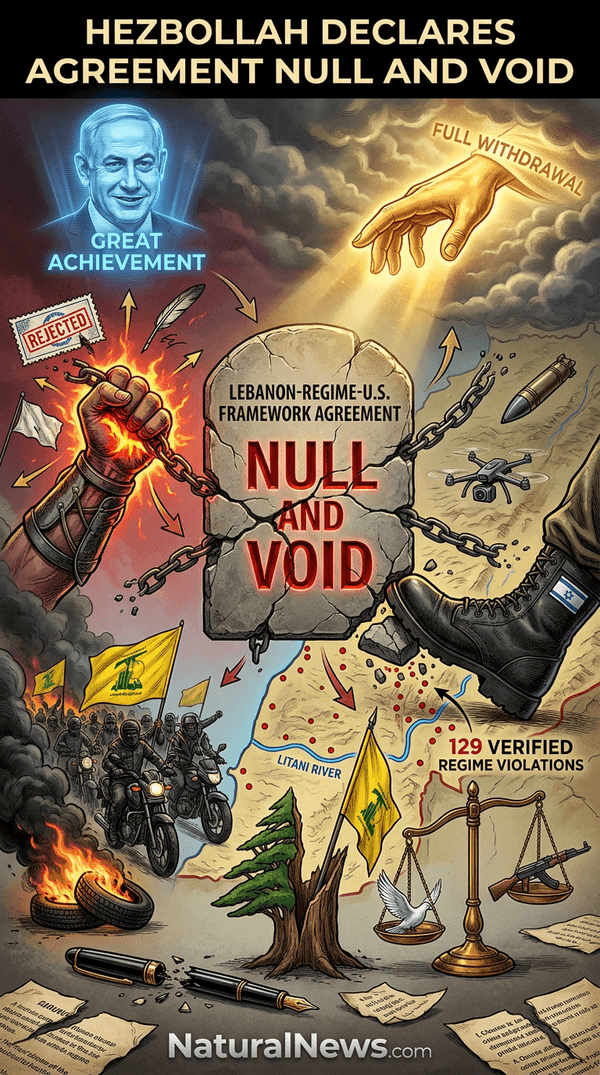
Hezbollah Secretary-General Naim Qassem on June 27 declared the U.S.-brokered Lebanon-Israel framework agreement “null and void,” according to a statement reported by multiple outlets [1][2][3]. The agreement, signed in Washington on June 26 by Israeli and Lebanese delegations with U.S. mediation, aims to establish a framework for security arrangements along the border and eventual normalization of relations [4][5]. Qassem accused the Lebanese government of granting Israel through diplomacy what it failed to achieve militarily, characterizing the deal as a “humiliation” and a surrender of sovereignty [3].
The 14-point trilateral framework affirms the right of each state to exist in peace and provides for the Lebanese Army to assume control of all Lebanese territory after non-state armed groups, including Hezbollah, are disarmed and disabled [4][6]. Israeli forces are to withdraw from Lebanese territory on condition that Hezbollah disarms, but the agreement does not specify a timeline for full withdrawal [1][7]. Lebanese Parliament Speaker Nabih Berri, a Hezbollah ally, stated on June 28 that the agreement “will not pass” and “will not be implemented in its current form,” calling it “an agreement of dictates, not an agreement that preserves Lebanon’s rights” [8].
Qassem’s Statements and Objections
In a televised statement on June 27, Qassem asserted that the agreement legitimizes Israeli occupation of Lebanese territory and violates Lebanon’s constitutional law, according to a report from Sputnik [2]. He criticized the Beirut government for abandoning “cards of strength” and ignoring the Iran-U.S. Memorandum of Understanding that halted the war in June 2026 [1][9]. Qassem vowed that Hezbollah “will continue as a resistance in the field to defeat the occupation” until Israeli forces fully withdraw from southern Lebanon [3]. He rejected any linkage between Israel’s withdrawal and Hezbollah’s disarmament, a position the group has maintained consistently [3][10].
Earlier, in August 2025, Qassem issued a televised threat asserting that any attempt by the Lebanese government to disarm Hezbollah would plunge the country into chaos, evoking fears of a return to civil war [11]. Hezbollah lawmaker Hassan Fadlallah warned on June 26 that Lebanese authorities would not be able to enforce the agreement unless “they go to civil war” with U.S. support, and said Hezbollah would confront any measure taken by the government [12]. Iranian Parliament Speaker Mohammad Bagher Ghalibaf reaffirmed on June 28 that Tehran would continue pushing for full Israeli withdrawal from southern Lebanon, stating that Iran’s goal is to “end the war in Lebanon, return of refugees to their homes, end the occupation and secure withdrawal of the Zionist regime” [13].
Reactions from Lebanese Lawmaker and Military Sources
Lebanese MP Halima el Kaakour questioned clauses in the agreement that prohibit hostile measures in international forums, calling it a denial of justice for victims of war crimes, as reported by Middle East Eye [6]. She described the agreement as an “experimental peace” in which Israel grants a “certificate of good conduct” for each phase, without a binding commitment to full withdrawal. The agreement’s fine print confirms that Israel will remain in southern Lebanon as long as Hezbollah does not disarm, and that Israel retains the right to maintain a “security zone” [14][15]. Israeli Defense Minister Israel Katz instructed the military on June 27 to prepare for a prolonged occupation of the security zone [16].
On the ground, the Israeli military claimed control of Ali al-Taher Hill, a strategic point in southern Lebanon, but Hezbollah dismissed this as propaganda, according to reports [17]. A Lebanese military source told Al Jazeera that no advance by Israeli forces was detected at the hill [17]. Israeli airstrikes on June 27 struck the town of Nabatieh al-Fawqa, the day after the framework was signed, with the IDF stating the drone strike targeted an individual posing a threat to its forces [18]. Israeli army chief Eyal Zamir praised the deal on June 28 as “historic and of great significance,” adding, “the real test now is how both sides behave on the ground” [19].
Israeli Violations and Protests
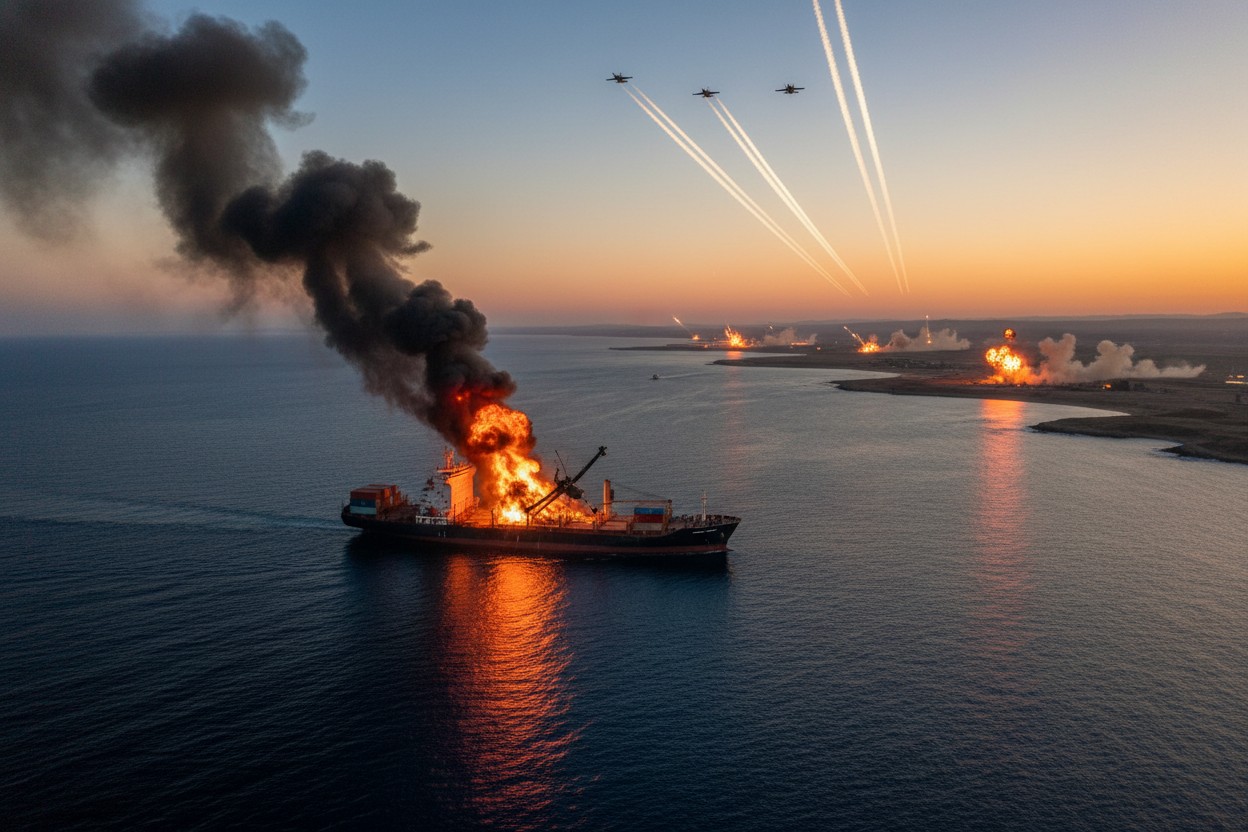
Since the November 2024 ceasefire agreement, Israel has committed repeated military violations, including artillery shelling, drone strikes, and ground incursions in southern Lebanon, according to Lebanese reports and independent analyses [20][21][22]. The Trends Journal reported that the ceasefire arrangement gave Tel Aviv “a lot of latitude to carry out new strikes inside the country” [23]. Lebanese reports accused the Israeli military of carrying out at least 129 attacks since the deal was reached, with 12 violations recorded in a single day [20]. In March 2026, Israel announced plans for a full military occupation of southern Lebanon up to the Litani River, barring displaced civilians from returning until Hezbollah is removed [24]. Satellite analysis by BBC Verify found more than 1,400 buildings destroyed in southern Lebanon in the first six weeks of Israel’s ground offensive that began March 2, 2026 [25].
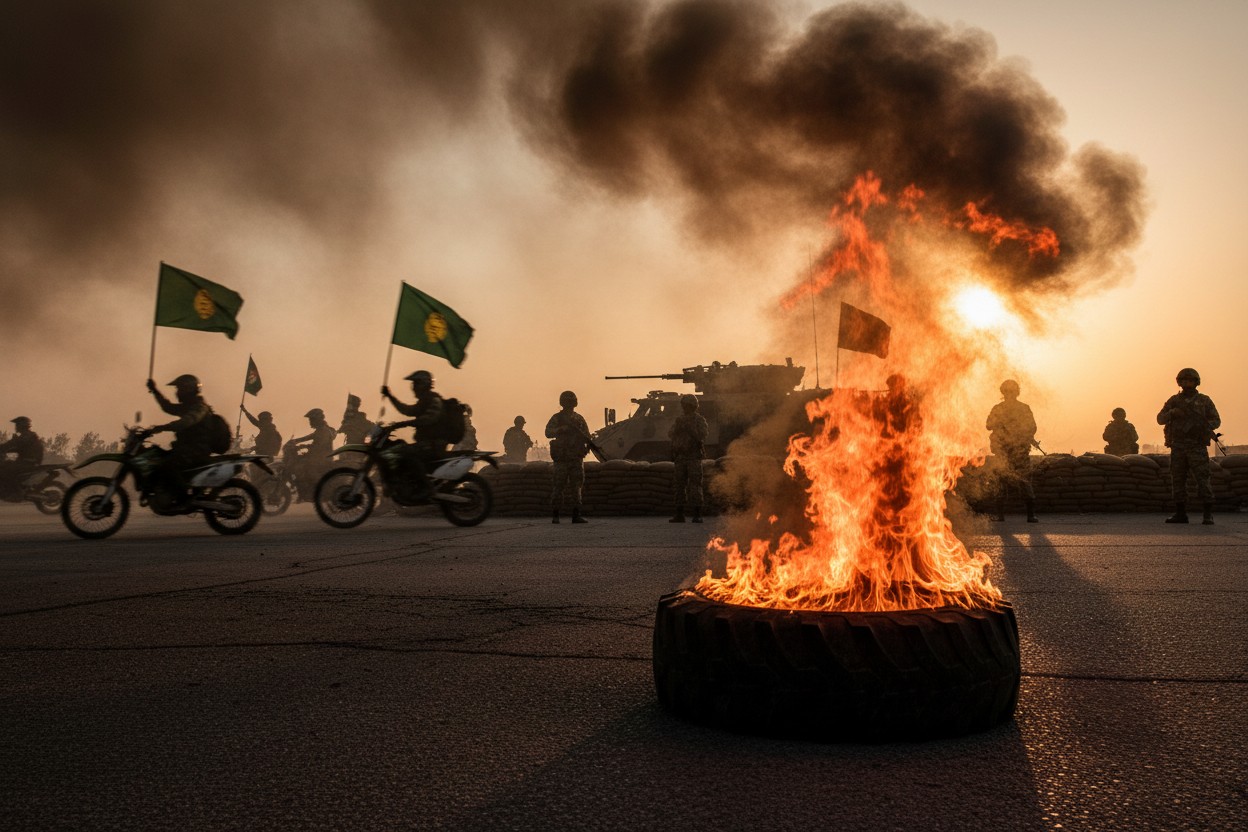
Mass protests erupted in Beirut on June 26 and June 27, with hundreds of Hezbollah supporters blocking roads, burning tires, and chanting slogans against the agreement [26][27][28][29]. The state-run National News Agency reported that “Hezbollah supporters rode motorbikes through the streets of Beirut,” including near the parliament and along the road to the airport [27]. Government troops were deployed across the capital and set up checkpoints [28]. In contrast, Israeli Prime Minister Benjamin Netanyahu welcomed the framework deal on June 27 as a “great achievement” and “a blow to Iran and Hezbollah,” stating that Israeli forces would remain in southern Lebanon until Hezbollah disarms [7][30][15]. Israeli far-right National Security Minister Itamar Ben-Gvir attacked the deal, calling it “a big mistake” and predicting that Lebanon would not disarm Hezbollah [31].
Conclusion: Stalemate and Continued Resistance
Hezbollah maintains its position that the agreement is void and has vowed to continue armed resistance against what it terms Israeli occupation of Lebanese territory [2][3]. The group has refused to disarm while Israeli forces remain in southern Lebanon, proposing instead to integrate its arsenal into Lebanon’s national defense — a demand Israel has rejected [10]. Israeli forces remain in southern Lebanon under the framework’s “security zones” with no clear timeline for full withdrawal, and Defense Minister Katz has instructed the military to prepare for an extended stay [15][16].
The standoff underscores unresolved tensions despite the U.S.-brokered deal. Both sides accuse each other of violations [32]. Israel continues to carry out strikes in southern Lebanon, while Hezbollah has launched projectiles at Israeli troops, accusing Israel of violating ceasefires [33][17][32]. The conflict has already interrupted planned U.S.-Iran negotiations in Switzerland, and the broader regional implications remain significant [34]. With the Lebanese parliament speaker declaring the agreement will not pass and Hezbollah vowing continued resistance, the path to peace remains blocked [8].
References
- “Hezbollah rejects ‘humiliating’ Israel-Lebanon deal.” RT. June 28, 2026.
- “Hezbollah Rejects Israel-Lebanon Agreement, Calls It Invalid – Leader.” Sputnik. June 27, 2026.
- “Hezbollah chief says it will continue pressure until Israel withdraws from Lebanon.” Middle East Eye. June 27, 2026.
- “Israel-Lebanon Sign U.S.-Brokered Peace ‘Framework’.” The New American. June 28, 2026.
- “Israel-Lebanon Peace Framework Lays Out Roadmap to End Conflict, Disarm Hezbollah.” The Epoch Times. June 27, 2026.
- “What the 14-point Lebanon-Israel framework agreement actually says.” Middle East Eye. June 27, 2026.
- “Video: Netanyahu says Israel will remain in southern Lebanon until Hezbollah ‘disarm’.” Middle East Eye. June 27, 2026.
- “Lebanon Parliament speaker says framework agreement ‘will not pass’.” Middle East Eye. June 28, 2026.
- “US and Iran trade strikes, Hezbollah warns of ‘civil war’ over Israel-Lebanon deal.” RT. June 27, 2026.
- Patrick Lewis. “Hezbollah Defies Disarmament Demands as Israel Threatens Escalation.” NaturalNews.com. January 10, 2026.
- Ramon Tomey. “Hezbollah Warns: ‘Lebanon Will Have No Life’ If Group Is Disarmed, Raising Fears of Civil War.” NaturalNews.com. August 20, 2025.
- “Lebanon’s Hezbollah lawmaker warns Lebanese authorities against enforcing agreement with Israel.” Middle East Eye. June 26, 2026.
- “Ghalibaf Says Iran Won’t Stop Pushing for Full Israeli Withdrawal from Lebanon.” Antiwar.com. June 28, 2026.
- “‘Historic’ Ceasefire Deal Reached By Israel & Lebanon, But Fine Print Confirms Fragile Reality.” Zerohedge. June 26, 2026.
- “Netanyahu calls Lebanon deal a ‘massive blow’ to Iran.” Middle East Eye. June 28, 2026.
- “Israel says troops will occupy southern Lebanon.” Middle East Eye. June 27, 2026.
- “Israel and Hezbollah agree ceasefire after escalation threatens US-Iran deal.” Middle East Eye. June 19, 2026.
- “Israel strikes southern Lebanon as Hezbollah condemns new deal.” BBC. June 27, 2026.
- “Israeli army chief says ‘we will honour’ Lebanon agreement.” Middle East Eye. June 28, 2026.
- “Trends-Journal-2024-12-10.”
- Willow Tohi. “Broken Promises: As Israeli Jets Strike Again, Southern Lebanon’s ‘Peace’ Deal Collapses.” NaturalNews.com. April 28, 2026.
- Cassie B. “Israel’s Relentless Attacks on Lebanon Defy Ceasefire, Killing Civilians and Soldiers.” NaturalNews.com. April 22, 2025.
- “Trends-Journal-2025-01-07.”
- Kevin Hughes. “Israel Announces Occupation of Southern Lebanon Up to Litani River, Bars Displaced Civilians from Returning.” NaturalNews.com. March 26, 2026.
- “Israeli Bulldozers Flatten Southern Lebanese Villages, Satellite Analysis Shows Over 1,400 Buildings Destroyed.” NaturalNews.com. April 17, 2026.
- “Hezbollah supporters protest in Beirut against Israel deal.” Middle East Eye. June 27, 2026.
- “Hezbollah supporters block Beirut road to protest Israel-Lebanon agreement.” Middle East Eye. June 26, 2026.
- “Protests erupt in Beirut over deal with Israel (VIDEOS).” RT. June 26, 2026.
- “Hezbollah Supporters Block Roads, Encircle Govt Buildings In Beirut Over Israel Deal: ‘They Sold Us Out’.” Zerohedge. June 27, 2026.
- “Netanyahu hails Lebanon deal as ‘blow’ to Iran and Hezbollah.” Middle East Eye. June 27, 2026.
- “Israeli far-right minister Ben-Gvir attacks Lebanon deal.” Middle East Eye. June 27, 2026.
- “Israel and Hezbollah trade accusations of ceasefire violations, attacks in Lebanon.” Just The News. June 20, 2026.
- “Israeli troops kill two in south Lebanon after lull in fighting, authorities say.” BBC. June 23, 2026.
- “Opening Round Of US-Iran Nuclear Talks Postponed After Israel-Lebanon Clashes Erupt.” Zerohedge. June 19, 2026.
- Khatchadourian Haig. “The quest for peace between the Palestinians and the Israelis.”
Explainer Infographic
Submit a correction >>
Tagged Under:
agreement, big government, chaos, Collapse, Dangerous, disarmament, experimental peace, Hezbollah, Israel, Lebanon, Naim Qassem, national security, null, peace deal, protests, Resist, revolt, terrorism, uprising, Void, War crimes, WWIII
This article may contain statements that reflect the opinion of the author
RECENT NEWS & ARTICLES