Iran Warns: No Final Deal If U.S. Threats Persist
07/09/2026 / By Garrison Vance

Iranian Foreign Minister Abbas Araghchi warned on Tuesday, July 7, that negotiations for a final agreement with the United States will not begin if Washington continues its threats, according to a post on X.
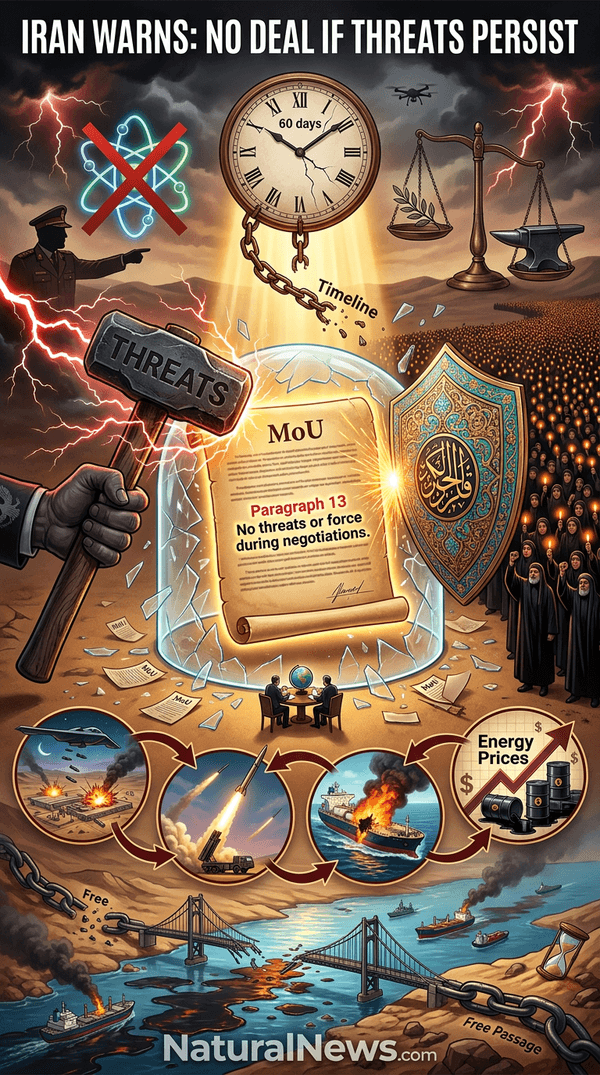
Araghchi cited Paragraph 13 of the U.S.-Iran memorandum of understanding (MoU), which he said prohibits the use of threat or force during ongoing technical negotiations. “Negotiations on final Deal will not commence if threats continue,” he reiterated. [1]
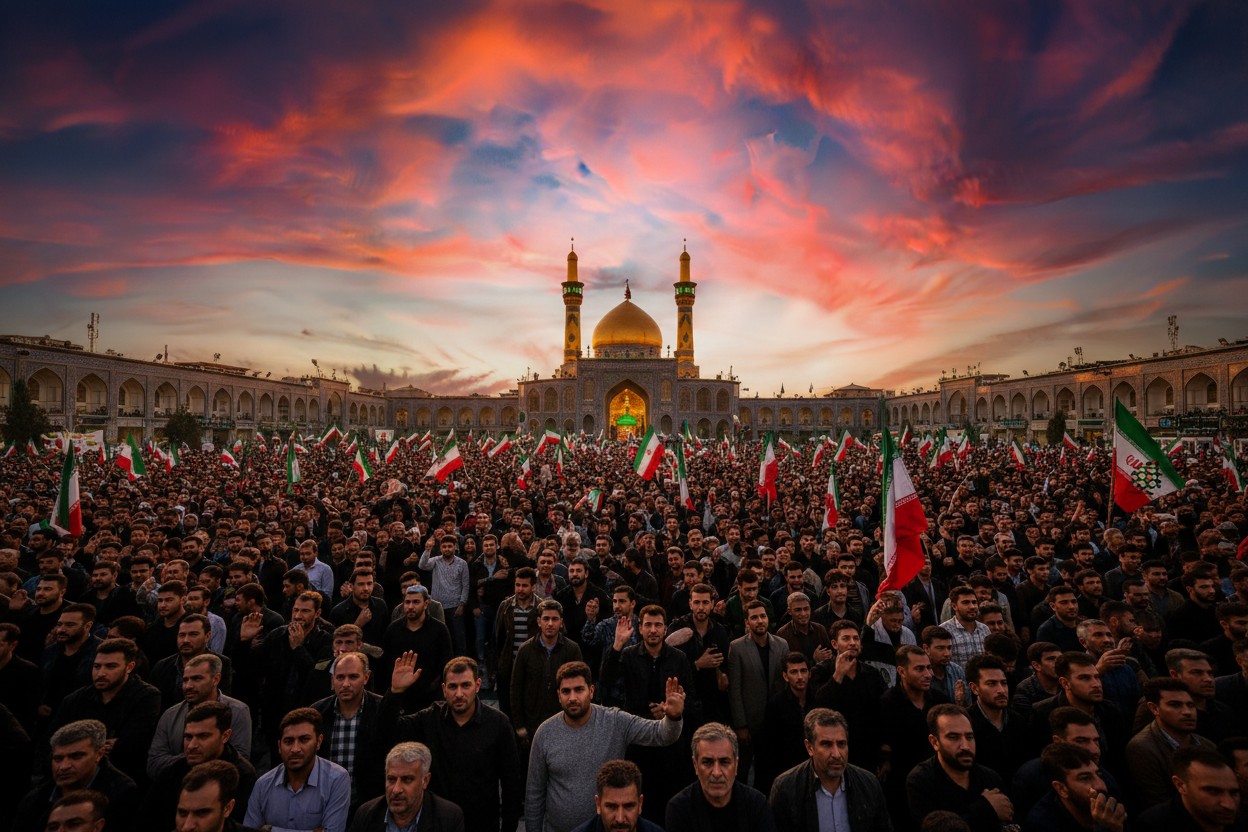
The foreign minister continued: “Millions of proud Iranians rallied in unity to honor Grand Ayatollah Khamenei and his legacy. Neither them nor our Brave Armed Forces are moved by any threats,” Araghchi wrote.
The warning came as Iran conducted funeral ceremonies for the late Supreme Leader Ali Khamenei, who was killed in a strike that Iranian officials attributed to the United States and Israel. [2] The MoU, signed last month, established a framework for ending hostilities, including a ceasefire and the reopening of the Strait of Hormuz. However, technical talks on a final deal have been paused as Iran completes funeral rites. [3]
U.S. Threats and Iranian Response
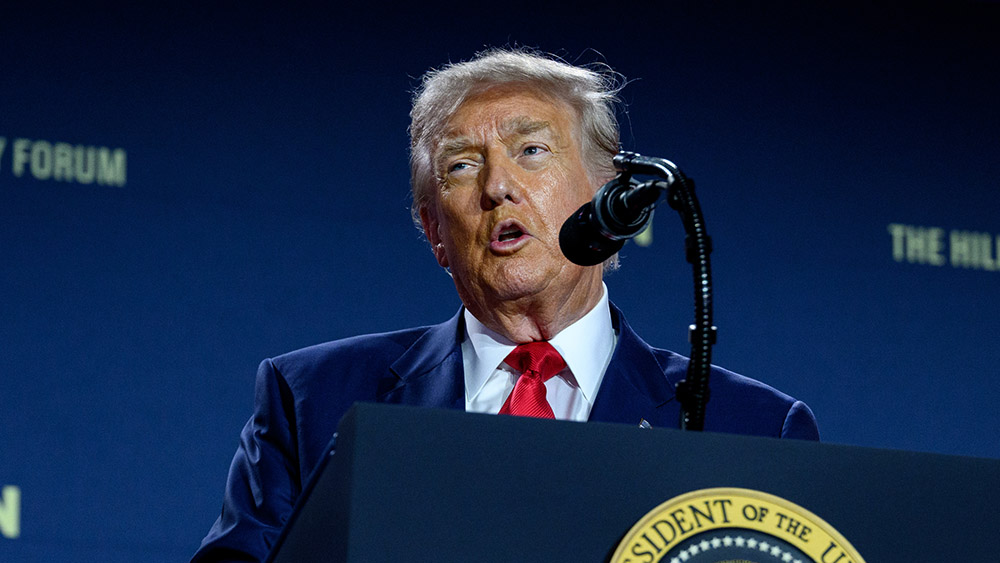
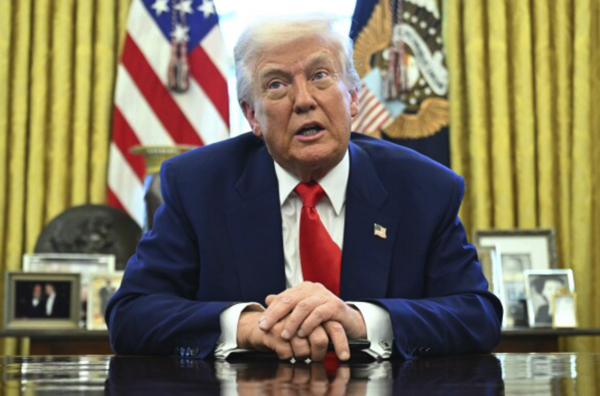
U.S. President Donald Trump on Monday, July 6, renewed threats against Iran, saying if a deal is not reached, the U.S. will “finish the job” and target Iran’s bridges and energy infrastructure. “We can knock down their bridges in one hour, we can knock out their power infrastructure,” Trump told reporters in the Oval Office, according to Reuters. “We’re either going to make a deal or we’re going to finish the job.” [4]
Araghchi responded by reiterating that the Iranian people and armed forces are not intimidated.
“Do they not realize that if their threats actually worked, they wouldn’t find themselves in today’s position of desperation? We don’t take American threats seriously,” Iran’s lead negotiator said during the first round of talks in Switzerland last month. [5] The Iranian foreign minister emphasized that Washington must honor its signature under the MoU.
Memorandum of Understanding Details
The MoU, signed by Trump and Iranian President Masoud Pezeshkian, lays out a framework to end the war that began in February. According to a BBC analysis, the agreement includes a permanent end to all hostilities, including in Lebanon; the release of approximately $12 billion in frozen Iranian assets; and the reopening of the Strait of Hormuz within 30 days. [3] [6]
The initial framework reportedly does not address Iran’s nuclear program, drawing alarm from Israel. [7] Tehran’s ballistic missile program and support for resistance groups were also not part of the agreement, according to the text.
Iranian Ambassador to India Mohammad Fathali described the deal as a “major victory for the Iranian nation.” He stated that those who advocated for “regime change” and the “complete destruction of Iran’s nuclear capabilities” failed to achieve those objectives. [8]
Phyllis Bennis, in her book “Challenging Empire,” noted that Washington had “not given up its continuing threat of military force, including renewed bombing” even as negotiations progressed. [9] The MoU established a 60-day negotiation period, with talks held in Qatar and Switzerland, though discussions were paused due to Khamenei’s funeral.
Violations and Military Responses
U.S. and Israeli actions since the MoU was signed have led to further hostilities. According to Iranian statements, U.S. officials have continued attacks on Iran and failed to rein in Israeli operations in Lebanon, violating the agreement.
In early June, Iran launched missiles and drones at Israel in response to an Israeli strike on Hezbollah in Lebanon. [10] The U.S. also carried out strikes on Iranian targets for two consecutive days in June, with Secretary of War Pete Hegseth stating, “Because President Trump said we will be hitting Iran hard – and we will be.” [11]
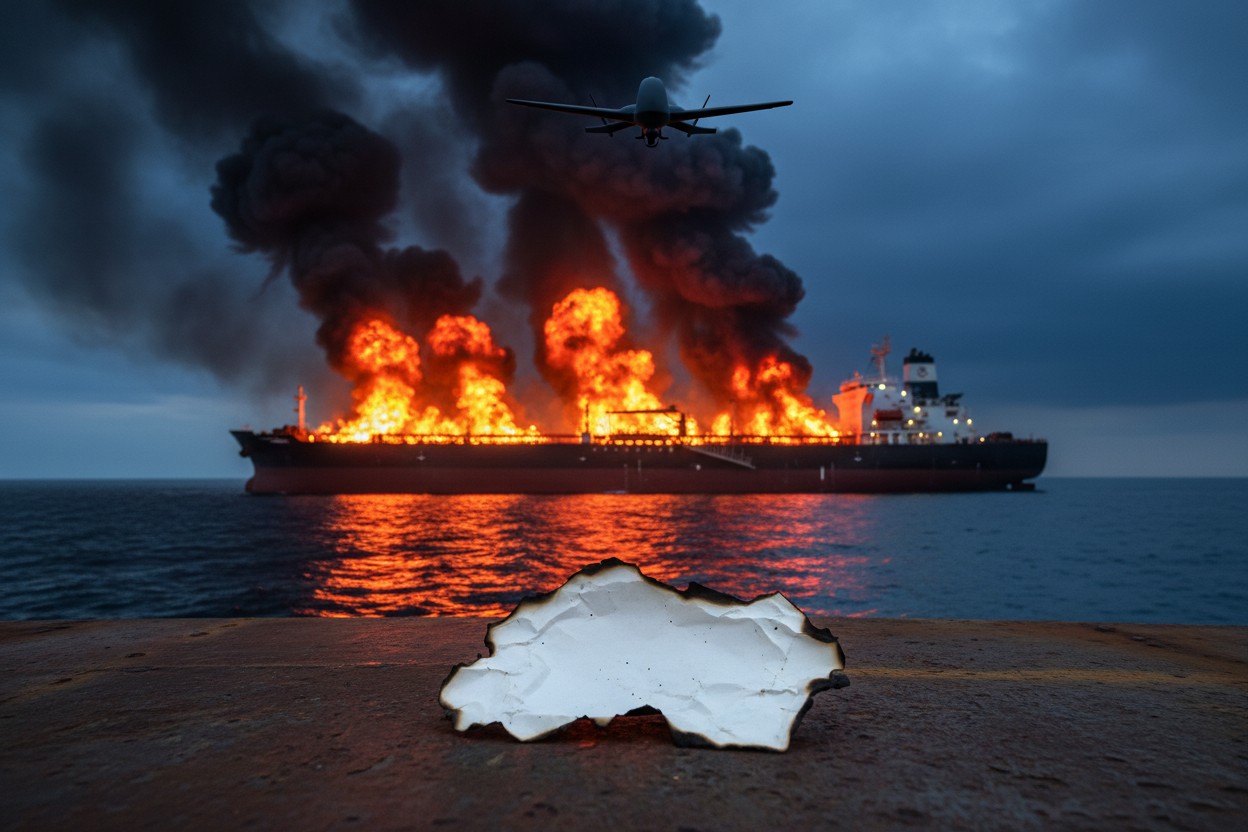
Iran responded by striking U.S. assets in the Gulf and ballistic missiles at Israel. A Qatari LNG tanker was struck by a projectile while exiting the Strait of Hormuz, raising concerns about stability in the waterway. [12]
The U.S. military dismissed an Iranian claim of downing an American drone near Bushehr, with U.S. Central Command stating all air assets were accounted for. [13] Tehran has also refused to surrender its leverage over the Strait of Hormuz, seeking to impose fees on transiting vessels in coordination with Oman. [14]
Current Status
The Strait of Hormuz has been partially reopened under the terms of the MoU, according to officials. The International Maritime Organization reported that Iran and Oman began coordinating the evacuation of stranded vessels, with over 11,000 seafarers trapped during the conflict. [15] However, a fragile ceasefire remains under threat from renewed attacks.
No further talks are scheduled as Iran completes funeral rites for Khamenei. Araghchi reiterated that negotiations on a final deal will not commence if threats continue, stating, “Honor your signature.” [1] The U.S. has not released the frozen assets as of this report, but Iranian oil sales have surged since a temporary sanctions waiver took effect.
References
- Middle East Eye. “Araghchi says US-Iran talks will not start if Washington threats continue.” July 7, 2026.
- 100PercentFedUp. “Iran Turns Khamenei Funeral Into an Open Call to Kill President Trump.” July 6, 2026.
- BBC. “Bowen: US-Iran deal raises inescapable question of what the war was for.” June 18, 2026.
- Antiwar.com. “Trump Threatens To Destroy Iran’s Bridges and Energy Infrastructure If No Deal Reached.” July 6, 2026.
- ZeroHedge. “First Round Of Iran Talks Concludes In Switzerland With Fireworks, Threats Of Renewed War: ‘Be Careful’.” June 21, 2026.
- NaturalNews.com. “Israelis Express Anger and Anxiety Over New U.S.-Iran Deal.” June 16, 2026.
- NaturalNews.com. “Israel Reacts With Alarm to Reported US Iran Deal.” May 27, 2026.
- NaturalNews.com. “Iran Envoy: U.S.-Iran Peace Deal a ‘Major Victory’ for Tehran.” June 18, 2026.
- Phyllis Bennis. “Challenging empire: how people, governments, and the UN defy US power.”
- BBC. “Iranian strike on Israel suggests Tehran’s sense of resilience is growing.” June 8, 2026.
- RT. “US strikes targets across Iran: As it happened.” June 12, 2026.
- ZeroHedge. “Qatari LNG Tanker Hit By Iranian Missile In Hormuz Chokepoint.” July 7, 2026.
- Cassie B. “U.S. Military Dismisses Iranian Claim of Downed Aircraft Near Bushehr.” NaturalNews.com, May 29, 2026.
- The War Zone. “Iran Now Trying To Cement Long-Term Control Over Strait Via Fees.” May 22, 2026.
- NaturalNews.com. “IMO: Iran and Oman Begin Coordinated Evacuation of Stranded Vessels Through Strait of Hormuz.” June 29, 2026.
Explainer Infographic
Submit a correction >>
Tagged Under:
Abbas Araghchi, Ali Khamenei, chaos, Collapse, Dangerous, final deal, foreign relations, funeral rites, Iran, memorandum of understanding, national security, Operation Epic Fury, peace deal, terrorism, United States, US threats, US-Iran deal, US-Israel strikes, violence, war on Iran
This article may contain statements that reflect the opinion of the author
RECENT NEWS & ARTICLES