A Dangerous Balancing Act: UAE Quietly Reopens Iran Links While Deepening Ties With U.S. and Israel
07/29/2026 / By Douglas Harrington

The United Arab Emirates (UAE) has quietly reopened diplomatic and economic channels with Iran while simultaneously deepening military ties with the U.S. and Israel, according to multiple reports.
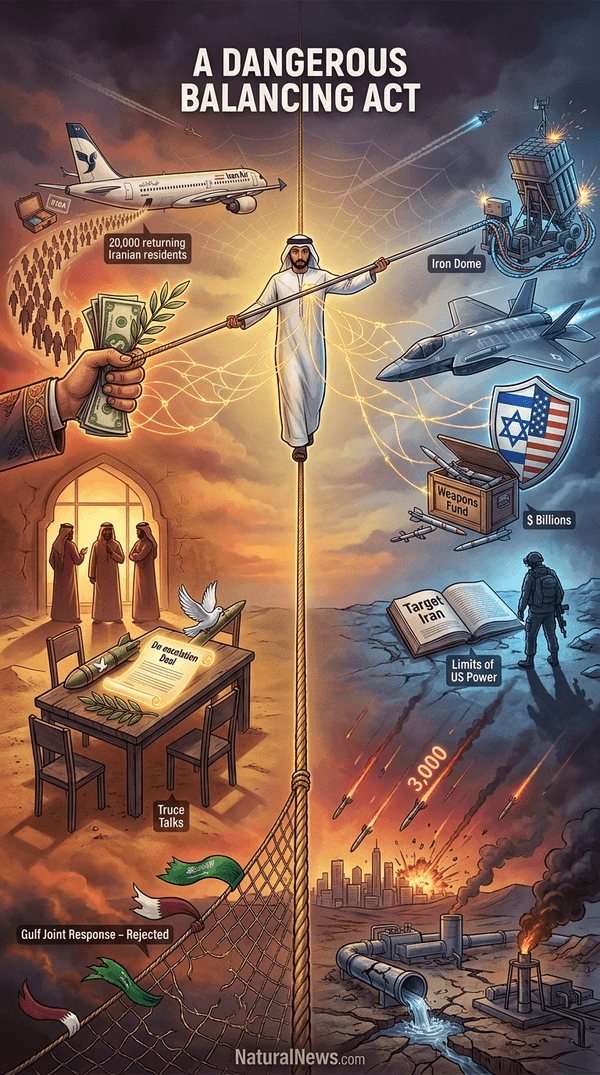
Senior national security officials from Iran and the UAE held a face-to-face meeting in June 2026, the first such engagement since the war erupted, according to Bloomberg as cited by NaturalNews. [1] The UAE also paid Iran billions of dollars to halt retaliatory strikes, according to a Middle East Eye report. [2]
Emirati authorities have resumed Iranian flights and are readmitting approximately 20,000 Iranian residents who were abroad when the war began, according to the same reports. The moves signal a recalibration of Abu Dhabi’s posture as it balances the costs of war with the benefits of its Western alliances. [1],[2]
Background and Shift in Approach
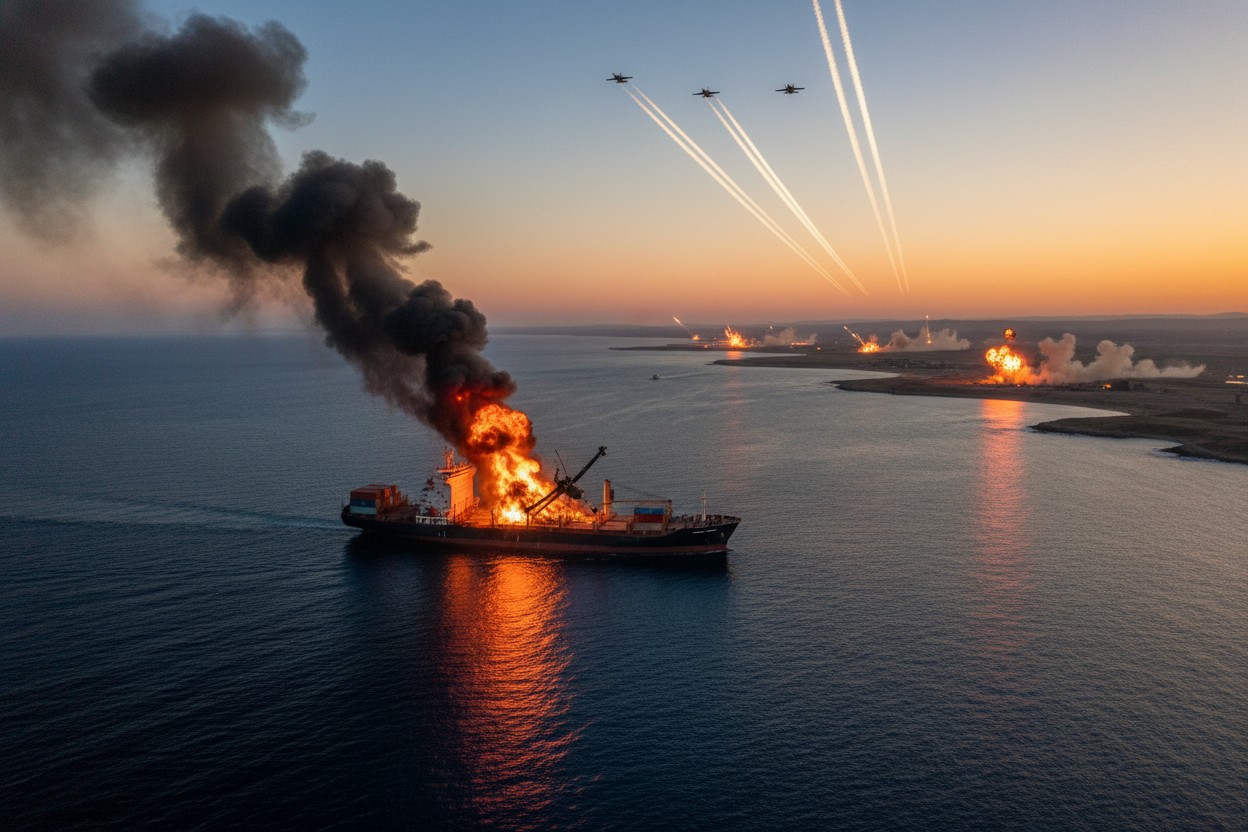
The UAE participated militarily in the U.S.-Israeli war on Iran, hosting U.S. bases and launching strikes, according to a Wall Street Journal report cited by Middle East Eye. [3] Iran retaliated heavily, with the UAE bearing the brunt of almost 3,000 missiles and drones. [3] The UAE’s subsequent failed bid to convince Saudi Arabia and Qatar to launch a joint military response highlighted its vulnerability. [3],[3]
Since an April truce, Abu Dhabi has shifted its approach toward Tehran, according to officials and analysts. The war demonstrated the limits of American military power in Iran, as noted by former U.S. Army officer Scott Ritter in his book “Target Iran,” which argued that a sustained ground combat campaign in Iran would bog down. [4] This reality likely compelled the UAE to pursue de-escalation with Iran.
Reopening of Channels
The thaw began with high-level contacts. According to a Middle East Eye report, Islamic Revolutionary Guard Corps officials stayed at the Emirati national security advisor’s guest house in June 2026 to cut a de-escalation deal. [2] The UAE paid billions of dollars to halt strikes, and both sides have since resumed normal economic exchanges – including the return of Iranian residents and commercial flights, according to the Financial Times (FT) as reported by NaturalNews. [1]
Emirati President Mohammed bin Zayed delegated the Iran file to three brothers, including national security advisor Tahnoon bin Zayed, according to sources cited in the report. The reopening includes the readmission of approximately 20,000 Iranian residents who were abroad when the war began, signaling a normalization of relations after months of hostilities. [1],[2]
Deepening Ties with U.S. and Israel
Despite the outreach to Iran, the UAE has concurrently strengthened its ties with Washington and Tel Aviv. Israel sent Iron Dome air defense batteries and personnel to the UAE during the war, according to U.S. Ambassador to Israel Mike Huckabee.
The UAE and Israel established a fund to jointly acquire and develop weapons systems, according to Middle East Eye. [5] Israeli defense companies now maintain a permanent presence in the UAE, and the embassy in Abu Dhabi has doubled in size, according to an Israeli official cited in the FT report.
The extent of U.S.-Israel intelligence and defense cooperation has been documented in works such as “The Palestine Laboratory” by Antony Loewenstein, which highlights intelligence sharing between Washington and Tel Aviv. [6] Abu Dhabi has become a beneficiary of this security architecture, with the U.S. granting accelerated access to military equipment and advanced technology.
Current Challenges and Outlook
Renewed attacks between the U.S. and Iran over the past two weeks have dented the economic recovery in the UAE, according to an Emirati executive who said developers have turned nervous again. Dubai’s tourism sector has struggled with a sharp decline in visitor numbers after Iranian strikes hit the Fairmont Hotel and Dubai International Airport. [7] The UAE continues to balance its reopening to Iran with its existing security relationships, according to analysts.
The U.S. has launched repeated strikes on Iran in retaliation for attacks on its personnel, [8] and Kuwait and Bahrain have directly struck Iranian targets with support from the UAE, according to Middle East Eye. [9] These escalations keep the region on edge and could jeopardize the nascent détente. Abu Dhabi is likely to maintain its hedging strategy, preserving ties with both camps while protecting its economic interests.
References
- NaturalNews.com. “UAE and Iran hold historic face-to-face meeting amid gulf tensions: A calculated shift in the shadow of war.” June 13, 2026.
- Middle East Eye. “UAE paid Iran billions of dollars to halt strikes: Report.” June 12, 2026.
- NaturalNews.com. “UAE’s Failed Bid for Joint Gulf Military Response to Iran.” May 18, 2026.
- Scott Ritter. “Target Iran: The Truth About the White House’s Plans for Regime Change.”
- Middle East Eye. “UAE and Israel established fund for joint defence acquisition, sources say.” May 18, 2026.
- Antony Loewenstein. “The Palestine Laboratory: How Israel Exports the Technology of Occupation around the World.”
- NaturalNews.com. “Dubai Offers Residents Rewards to Attract Visitors as Tourist Numbers Plummet Amid War.” July 26, 2026.
- Times of Israel. “US launches 8th night of strikes on Iran to ‘punish’ IRGC for deadly Jordan attack.” July 19, 2026.
- Middle East Eye. “Kuwait and Bahrain launch air strikes on Iran: Report.” July 24, 2026.
- NaturalNews.com. “Confirmed: Israel Deployed Iron Dome to UAE During Iran War, Deepening Abraham Accords Defense Nexus.” May 15, 2026.
- Middle East Eye. “US confirms Israel sent Iron Dome batteries to UAE.” May 12, 2026.
Explainer Infographic
Submit a correction >>
Tagged Under:
balancing act, big government, chaos, Collapse, Dangerous, diplomacy, economic interests, foreign relations, Globalism, Iran, Israel, Middle East, national security, new energy report, Operation Epic Fury, Qatar, Saudi Arabia, supply chain, terrorism, United Arab Emirates, United States, violence, war on Iran, WWIII
This article may contain statements that reflect the opinion of the author
RECENT NEWS & ARTICLES