Lebanon summoned to a U.S. military headquarters: disarm Hezbollah or the occupation drags on, as U.N. peacekeepers head for the exit
10/22/2026 / By Lance D Johnson
When a country is invited to negotiate its future at a foreign military headquarters, the venue tells you exactly who holds the pen and the power. This week, Lebanese and Israeli military delegations convened at U.S. Central Command headquarters in Tampa, Florida, for three days of Washington-brokered talks. The agenda is a framework that ties Hezbollah’s disarmament to a phased Israeli withdrawal, while the U.N. force that has stood between the two countries since 1978 is slated to disappear on Dec. 31. Beirut asks for peacekeepers and an end to Israeli strikes. Israel demands total disarmament. Washington sets the table and has rejected extending the mandate of the one international buffer that might restrain either side.
Key points:
- Military delegations from Lebanon, Israel and the United States opened three days of talks at CENTCOM headquarters in Tampa on Oct. 20, with political negotiations excluded.
- Israel demands full Hezbollah disarmament, while Lebanon seeks a halt to Israeli attacks, a phased withdrawal and an extension of the U.N. mission.
- Lebanon rejects direct military coordination with Israel, and officials expect little progress before Israeli elections at month’s end.
- A Lebanese ministerial source says Netanyahu accepted the framework under U.S. pressure but has avoided implementing it before the vote.
Sputnik, a Russian state outlet, reported that a Lebanese military delegation would seek to halt Israeli attacks and secure arrangements for the south consistent with the framework agreement, and would also seek to extend the U.N. mission’s mandate. Israel was expected to demand the full disarmament of Hezbollah, which it believes has yet to occur in southern Lebanon. Ynetnews describes the talks as unfolding amid low expectations in Beirut, continued Israeli operations in the south and Israeli accusations that Lebanon has failed to dismantle Hezbollah infrastructure. A central question on the table, according to Jewish Feed, is which party will verify that Hezbollah weapons have been removed.
Disarmament first, withdrawal later
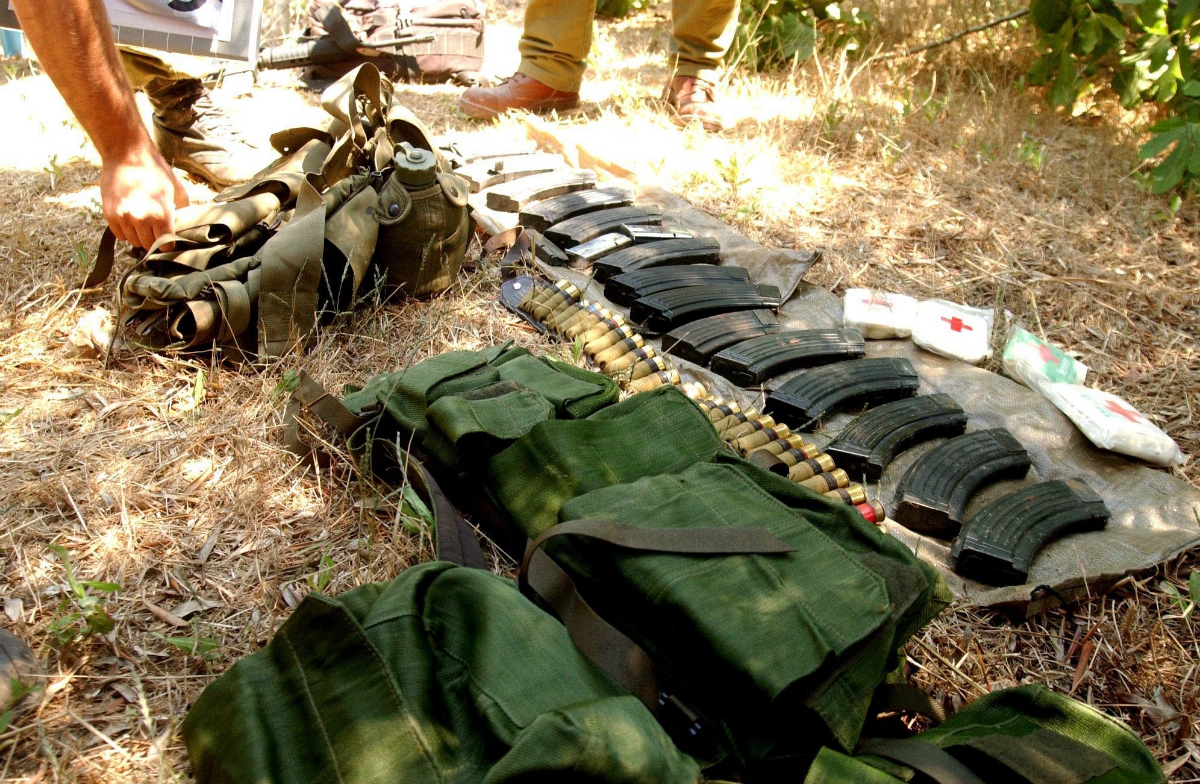
The framework at the heart of the talks, signed in late June according to most accounts and in July according to Sputnik, links three things: Hezbollah’s disarmament, a gradual Israeli pullback and the deployment of the Lebanese army, beginning in test areas called pilot zones. Violence in the south eased after a U.S.-Iran understanding in June, but the process has largely stalled, the Times of Israel reports. Hezbollah insists on keeping its weapons and rejects the framework. Israel’s latest assault on Lebanon began in March, about a month after U.S. and Israeli strikes on Iran, and Israeli forces continue to occupy areas in the south. Prime Minister Benjamin Netanyahu has said he does not trust the Lebanese government to disarm Hezbollah, which he uses to justify the continued Israeli presence.
Lebanon, for its part, is rejecting U.S.-backed proposals for its troops to coordinate directly with the Israeli army, The National reports. One source acknowledged mounting pressure on Beirut to “do more to show movement on expanding the authority of the state.” Lebanese officials expect little movement before Israel’s legislative elections at the end of the month. A Lebanese ministerial source told Asharq Al-Awsat that Netanyahu accepted the framework under American pressure but has avoided implementing it ahead of the vote. That is a claim, not a proven fact, yet it explains why Beirut fears a negotiation that never ends.
Skeptics ask the obvious question. The National’s coverage has asked whether the talks are a path to peace or a pretext for continued occupation, and one outlet quotes observers who worry the Florida sessions risk becoming a “managed containment exercise.” The asymmetry is hard to miss. Demands flow in one direction, disarmament first, while the guarantees run through a process that depends on Israeli political timing and American goodwill.
The vacuum clock
Then there is the calendar. The U.N. Security Council voted in August 2025, under U.S. pressure, to end the U.N. Interim Force in Lebanon’s mandate on Dec. 31, 2026. UNIFIL was created in 1978 after Israel’s first invasion of Lebanon, and its job expanded after the 2006 war under Resolution 1701, which called for Hezbollah to be disarmed and its presence in the south ended. Washington and Israel view the mission as a failure for never achieving that goal. Lebanese President Joseph Aoun has requested a temporary extension, and 86 Lebanese lawmakers signed a letter in July urging the Security Council to keep troops in place with an expanded mandate. France has sponsored the request, and EU foreign policy chief Kaja Kallas has warned against a security vacuum. L’Orient Today reports that the United States categorically rejected the idea. France and Italy have proposed a European force to assist the Lebanese army, though they must still agree on a legal framework.
Right now, the only international monitors leave on Dec. 31. The Lebanese army is asked to confront the best-armed non-state force in the country, which refuses to disarm. Israel keeps its positions until disarmament is verified, and the question of who does the verifying is still being negotiated in a Florida conference room. Each step is reasonable on its own terms. Together they create a clock that runs out before the mechanism exists. Meanwhile, Aoun has acknowledged that Lebanon faces difficulties carrying out the framework but says Beirut will not retreat, hoping for breakthroughs on prisoners, borders, the pilot area and the ceasefire.
Sources include:
Submit a correction >>
Tagged Under:
big government, ceasefire, CENTCOM, chaos, Collapse, Dangerous, disarmament, framework agreement, Globalism, government debt, Hezbollah, Israel, Israeli elections, Joseph Aoun, Lebanese army, Lebanon, Middle East, national security, Netanyahu, occupation, peacekeepers, pilot zones, Resolution 1701, southern Lebanon, Sputnik, Tampa talks, terrorism, Trump, Tyranny, UNIFIL, WWIII
This article may contain statements that reflect the opinion of the author
RECENT NEWS & ARTICLES