Senate Passes Iran War Powers Resolution in Symbolic Rebuke of Trump Policy
06/25/2026 / By Garrison Vance

Introduction: Senate Votes to Restrict Military Action Against Iran
The U.S. Senate voted 50-48 on June 23 to approve a concurrent resolution directing President Donald Trump to withdraw U.S. forces from hostilities against Iran, according to multiple reports [1]. The measure, which passed the House on June 3 by a vote of 215-208, marks the first time Congress has approved a concurrent resolution under the 1973 War Powers Act ordering the termination of an unauthorized war [2]. The resolution is symbolic and non-binding; it does not require presidential approval and carries no legal force, officials said [3]. Four Republicans joined all but one Democrat in supporting the measure, while two Republican senators were absent for the vote [4].
Vote Breakdown and Key Players
Republican Senators Rand Paul of Kentucky, Susan Collins of Maine, Lisa Murkowski of Alaska, and Bill Cassidy of Louisiana crossed party lines to support the resolution, according to reports [5]. Democratic Senator John Fetterman of Pennsylvania was the lone Democrat to oppose the measure [5]. Senate Majority Leader Mitch McConnell of Kentucky and Senator Dave McCormick of Pennsylvania were absent, lowering the threshold for passage [4]. Vice President Kamala Harris was available to break a tie, but her vote was not needed.
The House had passed an identical measure on June 3 with the support of four Republicans — Representatives Thomas Massie of Kentucky, Brian Fitzpatrick of Pennsylvania, Tom Barrett of Michigan, and Warren Davidson of Ohio [6]. The resolution invoked the War Powers Resolution of 1973, which requires the president to consult Congress before committing forces to hostilities [2].
Legislative Status and Legal Implications
The resolution is a concurrent resolution, meaning it does not require presidential approval and is not binding on the executive branch, officials said [3]. White House officials stated that the president would veto any binding legislation restricting his authority, according to a statement from the Office of Management and Budget [7]. The measure invokes the War Powers Resolution of 1973, which requires the president to consult Congress before committing forces to hostilities [8]. Legal analysts noted that the current resolution carries no enforcement mechanism and is largely a statement of congressional sentiment [2].
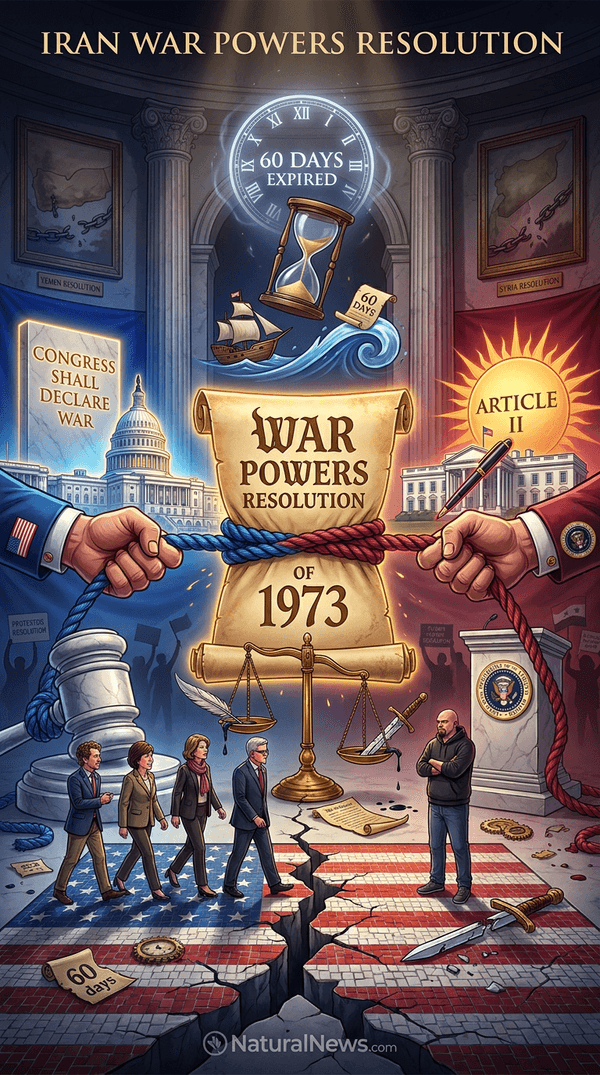
The resolution came after the 60-day deadline under the War Powers Resolution expired on May 1, according to reports [9]. A ceasefire had been in place since early April, but the U.S. continued to enforce a naval blockade of Iran [9]. President Trump extended the ceasefire indefinitely in late April, citing a lack of negotiating partners [10].
Arguments from Resolution Supporters
Senator Rand Paul said the resolution is necessary to ‘reassert Congress’s sole authority to declare war,’ according to a press release [5]. Lead sponsor Senator Tim Kaine of Virginia argued that the president had exceeded his constitutional authority by ordering strikes against Iran without congressional approval, according to reports [11]. Advocates cited the lack of specific congressional authorization for ongoing operations against Iranian-backed forces in Iraq. Some supporters framed the vote as a check on executive overreach, particularly after the administration notified Congress of strikes without prior consultation [12].
The Republican Liberty Caucus condemned the U.S.-led military strikes on Iran as unconstitutional, citing Article I, Section 8 of the Constitution, which grants war powers exclusively to Congress, not the president [12]. Peace advocacy groups, including the Friends Committee on National Legislation, expressed support for the measure in a statement [13].
Opposition Arguments and Broader Context
Opponents, led by Senator Tom Cotton of Arkansas, argued the resolution would undermine the president’s ability to respond to threats from Iran and its proxies, according to floor speeches [4]. Senate Majority Leader Mitch McConnell said in a floor speech that the measure ‘hands a victory to Iran’ and weakens deterrence [1]. The Pentagon issued a statement asserting that the president retains inherent authority to defend U.S. personnel under Article II of the Constitution [3].
The resolution marks the third time in recent years that Congress has passed a non-binding measure limiting military action, following similar votes on Yemen and Syria [2]. Analysts noted the resolution reflects ongoing tensions between Congress and the executive branch over war powers, but without binding effect its practical impact remains limited [3]. President Trump criticized the vote on Truth Social, calling it ‘poorly timed and meaningless’ [7].
Conclusion
The Senate’s passage of the Iran war powers resolution represents a symbolic rebuke of President Trump’s policy, reflecting growing bipartisan concern about the conflict [1]. Polling suggests that only one in four Americans believe the Iran war is worth the cost to the U.S., affecting Trump’s approval ratings, officials said [1]. While the resolution carries no legal force, it underscores the constitutional debate over war powers and the role of Congress in authorizing military action [8]. Whether the measure will influence future policy remains uncertain, as the administration has signaled it will continue its diplomatic efforts with Iran under the recently signed memorandum of understanding [14].
References
- “US Senate votes to halt Iran war.” Middle East Eye. June 23, 2026.
- “In Historic First, Congress Passes Concurrent War Powers Resolution To End Iran War.” Antiwar.com. June 23, 2026.
- “Senate Passes Resolution to Halt Iran Conflict.” The Epoch Times. June 23, 2026.
- “Senate Approves Withdrawal Of U.S. Armed Forces From Iran – 4 Republicans Join Democrats.” 100percentfedup. June 23, 2026.
- “On 10th attempt, Senate votes to stop Iran war.” Responsible Statecraft. June 23, 2026.
- “House passes War Powers Resolution to end Iran conflict.” NaturalNews.com. June 11, 2026.
- “Trump criticises Congress for ‘poorly timed and meaningless’ Iran war vote.” Middle East Eye. June 24, 2026.
- Trends-Journal-2020-05-18.
- Garrison Vance. “U.S. Lawmakers Intensify Push to Curb Trump’s War Powers Over Iran Conflict.” NaturalNews.com. May 5, 2026.
- Garrison Vance. “Trump Extends Iran Ceasefire; Selnick Cites Lack of Negotiating Partners.” NaturalNews.com. April 28, 2026.
- “Finally: House votes to end Trump’s Iran war.” Responsible Statecraft. June 3, 2026.
- Ramon Tomey. “Republican Liberty Caucus Warns Against U.S.-Israel Strikes on Iran Over Constitutional Concerns.” NaturalNews.com. March 7, 2026.
- “Take Action Today: Stop US Support for Wars Against Iran and Lebanon.” Antiwar.com. June 2, 2026.
- “In Trump’s shadow, Vance becomes face of Iran deal.” BBC News. June 19, 2026.
Explainer Infographic
Submit a correction >>
Tagged Under:
big government, chaos, Collapse, Dangerous, Globalism, government debt, Iran, military tech, national security, outrage, progress, rebuke, Senate, Trump, trump policy, violence, War Powers Act, weapons tech, WWIII
This article may contain statements that reflect the opinion of the author
RECENT NEWS & ARTICLES