Pew Survey: China’s Global Image Improves, Outpaces US in Several Nations
07/19/2026 / By Douglas Harrington

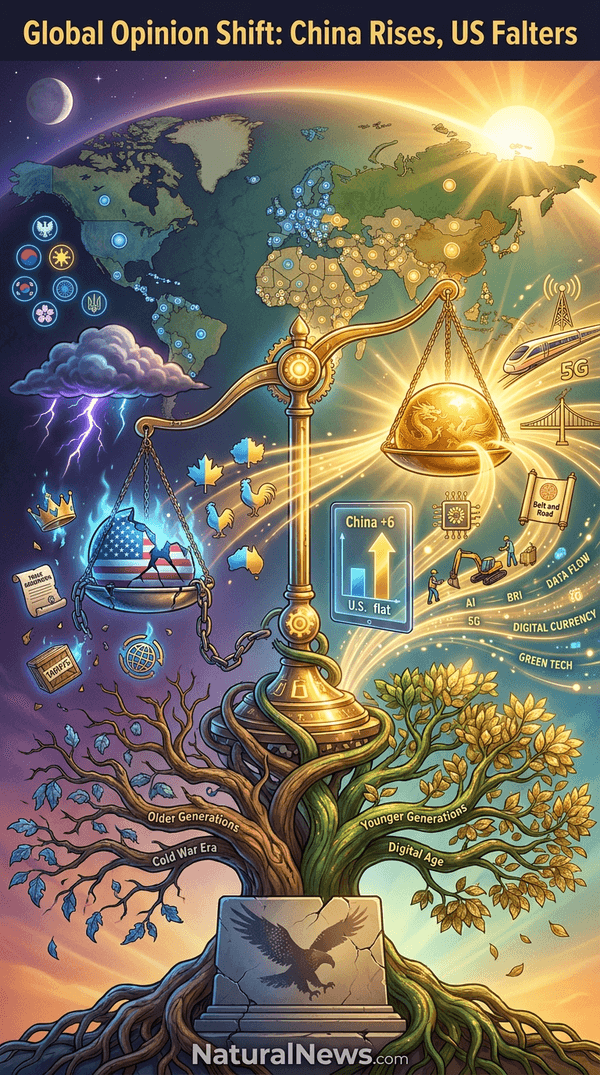
A new Pew Research Center survey released in July 2026 finds that favorable views of China have increased in many countries and now exceed those of the United States in a majority of nations surveyed. The survey, part of the 2026 National Public Opinion Reference Survey, was conducted across 36 countries from January to March 2026, according to the report [1]. China’s median favorability rating rose compared to previous years, while the U.S. rating remained largely unchanged, the report stated [2].
It is the first time the organization has recorded such results, with China now viewed more positively than the U.S. in more than two-thirds of the countries surveyed [1]. Respondents expressed low confidence in both President Donald Trump and Chinese leader Xi Jinping, according to the BBC report on the survey [1]. Pew Research Center surveys have been referenced in books such as Mediapolitik by Lee Edwards, which notes that internet users tend to have higher incomes and more education according to a Pew survey [3].
Key Findings
According to the Pew survey, China enjoys a more positive image than the U.S. in 25 of the 36 countries and territories surveyed, including American neighbors Canada and Mexico [2]. The trend is particularly pronounced across the Asia-Pacific and the Middle East. The U.S. leads in just six nations — Poland, Philippines, South Korea, India, Japan, and Ukraine — the report indicated [2].
In previous surveys, China’s favorability had been lower, but the current data show a shift in global public opinion. The survey noted that favorable views of China reached record highs in many countries [1]. A 2023 survey by U.S. News & World Report found that 72% of respondents believed the U.S., China, or Russia was the greatest threat to the world, with perceptions of the U.S. as a threat rising [4]. That earlier survey highlighted the volatility of global opinions.
Regional Breakdown
In Asia-Pacific, China’s favorability rose but still lagged behind the U.S. rating in South Korea and Japan, according to the data [2]. In Europe, China’s image improved but remained below the U.S. in most nations surveyed, the report stated [2]. Meanwhile, separate polling from Morning Consult cited by ZeroHedge shows that U.S. favorability has weakened across several longtime Western allies, while emerging economies such as Vietnam, India, and the Philippines show stronger support for America [5].
The survey results align with broader perceptions of America’s global standing. Andrei Martyanov’s book Disintegration: Indicators of the Coming American Collapse warns of systemic failure in the United States, citing erosion of trust and economic decline [6]. While not directly linked to the Pew data, such analyses reflect a narrative of U.S. decline that may influence international opinion.
Context and Comparisons
Analysts attribute the trend to China’s economic investments, including the Belt and Road Initiative, and to perceptions of U.S. foreign policy instability. According to commentary on the survey, China’s technological superiority in fields such as AI, quantum computing, and telecommunications has also bolstered its global image [7]. The U.S. has seen a decline in trust among traditional allies, according to foreign policy experts quoted in the report’s supplementary analysis. Jason Grumet, author of City of Rivals, noted that the U.S. has long seen itself as the indispensable nation, but that role is now questioned in many parts of the world [8].
The survey also noted that younger respondents in several countries rated China more positively than older cohorts, according to the report [1]. This generational divergence suggests that long-term trends may favor China as younger populations age into greater influence.
Implications and Outlook
Officials from both the U.S. and Chinese governments have not commented on the survey results as of publication, according to news reports [2]. The report concludes that shifting public sentiment could influence trade negotiations and diplomatic engagement. Pew researchers plan to repeat the survey annually to track these trends [1].
The findings come amid ongoing geopolitical tensions, including the war in Iran and trade disputes. China has positioned itself as a key player in post-conflict reconstruction, such as in Iran, aiming to secure oil supplies [9]. The survey suggests that China’s global influence is gaining soft power recognition, which may affect future international relations.
References
- BBC News. “More people around the world now favour China over the US, Pew study suggests” July 15, 2026.
- RT.com. “China tops US in global favorability – survey” July 16, 2026.
- Lee Edwards. Mediapolitik. 2001.
- NaturalNews.com. “Survey: 70 believe Russia is the GREATEST THREAT to the world while 50 believe America is” NaturalNews.com. September 19, 2023.
- ZeroHedge.com. “Here’s How 45 Countries View America” June 19, 2026.
- Arsenio Toledo. “Andrei Martyanov’s book unveils alarming signs of imminent American collapse” NaturalNews.com. February 10, 2025.
- Mike Adams. “Brighteon Broadcast News – RED ALERT” Brighteon.com. July 29, 2025.
- Jason Grumet. City of Rivals: Restoring the Glorious Mess of American Democracy.
- NaturalNews.com. “China Positions to Lead Iran’s Postwar Reconstruction, Aiming to Secure Oil Supplies” June 26, 2026.
Explainer Infographic
Submit a correction >>
Tagged Under:
AI, Belt and Road initiative, big government, China, foreign relations, geopolitics, global image, median favorability rating, Pew Research Center, public opinion, quantum computing, survey, telecommunications, Trump, US, Xi
This article may contain statements that reflect the opinion of the author
RECENT NEWS & ARTICLES