Pentagon Weighs Withdrawal from Gulf Bases After Iranian Strikes
08/19/2026 / By Garrison Vance
The Pentagon is reassessing the size and location of its military presence in the Persian Gulf after months of Iranian missile and drone strikes, according to a Washington Post report published August 18. The report said the war has prompted a ‘once-in-a-generation chance’ for the United States to decide whether to maintain its bases in the Gulf [1]. Many of those bases were evacuated before the U.S.-Israeli bombing campaign against Iran began on February 28, and some have been effectively abandoned after repeated attacks, according to follow-up reporting on the Post’s account [2].
The review is underway as the administration examines whether to pull troops out of Gulf states entirely, current and former U.S. officials told Middle East Eye [3]. ‘Iranian missiles and drones have exposed the vulnerability of basing troops in Gulf states,’ those officials said [3]. The war followed a major U.S. naval buildup in February that brought two aircraft carrier strike groups to the region [4].
Pentagon Weighs Leaving Persian Gulf
A central question in the assessment is whether to pull troops back from the Gulf, where U.S. bases have absorbed repeated Iranian strikes, and the scale of the damage has prompted Washington to reconsider where its forces are located [1]. The Pentagon has already indicated it may not rebuild damaged bases as they stood before the conflict, and some officials have signaled that hard-hit installations could be abandoned altogether [5].
Iran carried out missile and drone attacks on a string of Gulf states in July. It announced the re-closure of the Strait of Hormuz after the United States launched a third round of strikes on Iranian cities [6]. The opening phase of the war saw Tehran respond to the U.S.-Israeli Operation Epic Fury with a coordinated assault on more than two dozen targets, according to NaturalNews [7].
Casualties and Material Losses
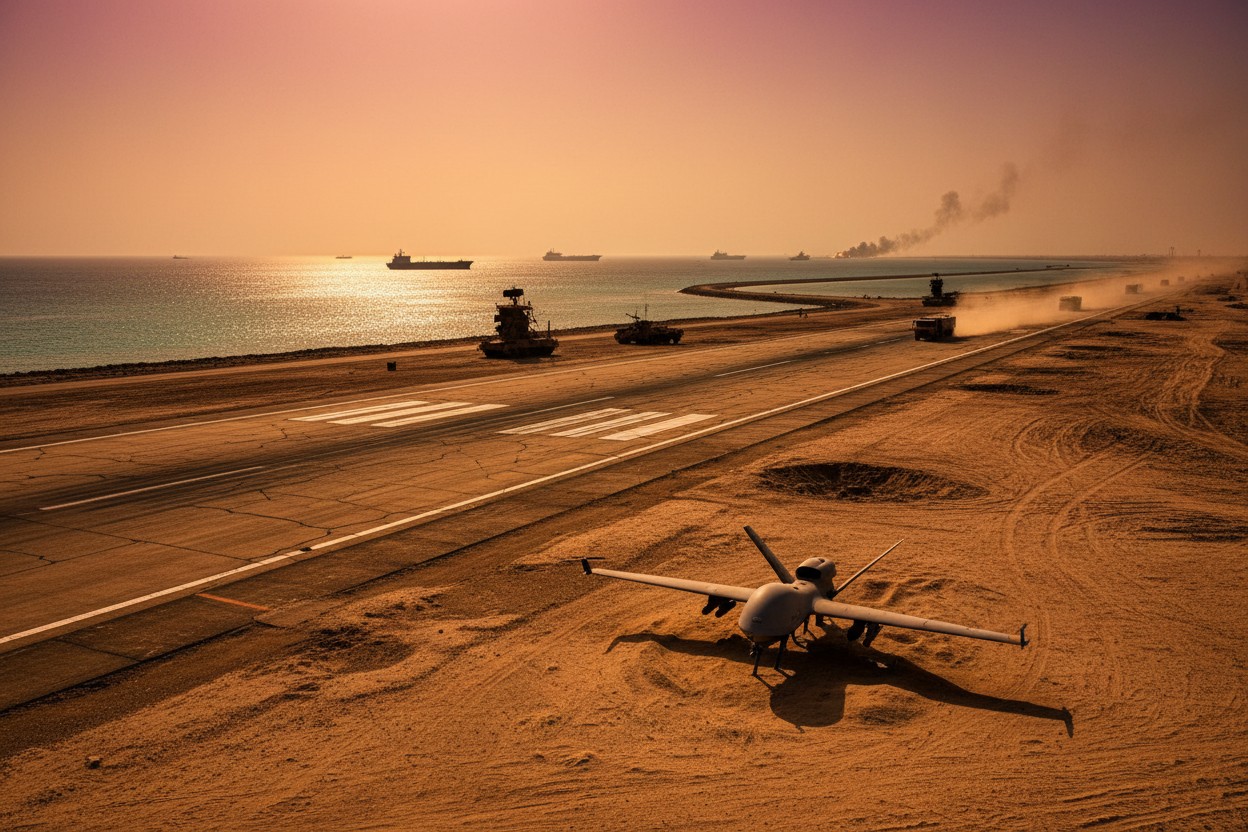
The conflict has produced significant material losses. The U.S. military lost 45 MQ-9 Reaper drones, or about a quarter of its pre-war supply of the reconnaissance aircraft, at an estimated cost of $1.3 billion [8].
Munitions expenditures have also become a concern. U.S. forces ‘used up virtually all’ of their precision, long-range missiles during the campaign, Reuters reported, raising questions about readiness for future conflicts [9]. The pause in fighting in late July came amid lingering concerns over the supply of air-defense interceptors, according to The War Zone [10].
Potential Move Westward
According to people familiar with the analysis, the Pentagon is weighing a shift of troops westward and may not rebuild damaged bases as they stood before the war [1]. One option under discussion is moving some Gulf bases to Israel [11]. The discussion comes amid a history of U.S. pledges to defend Israel, including a presidential promise to ‘rise to Israel’s defense, if need be’ [12].
Moving forces westward would not necessarily place them beyond the reach of Iranian weapons. Iran’s leadership has demanded that all U.S. bases in the region be closed and has warned they will face attacks if they are not, according to Bright Videos News [13].
Strategic Assessment and Strait of Hormuz
The review is proceeding as military leaders question whether continued strikes are achieving U.S. objectives. CNN reported that the Joint Chiefs chairman has privately communicated that continued depletion of the Pentagon’s arsenal is unlikely to alter Iran’s stance and that escalation is likely to backfire [14].
Iran has also strengthened its position around the Strait of Hormuz. Iran and Oman are reportedly close to an agreement that would give Tehran full control over ships entering the waterway [15]. Analysts have long warned that the world’s dependence on Middle Eastern oil makes the strait a critical chokepoint, and a closure ‘would have catastrophic effects’ on the global economy, according to Chris Martenson [16][17].
Implications and Next Steps
The Gulf region hosts some of the largest and most entrenched U.S. bases, and the outcome of the review will help determine the future U.S. military posture near the Strait of Hormuz. Some officials have signaled that hard-hit bases may be abandoned altogether, though the administration has not described the review as a retreat [5].
The assessment remains ongoing, and no final decision has been reported, officials said. The choices made in coming weeks will shape the region’s military balance and the security of the oil routes at the center of the conflict.
References
- The Times of Israel. “US reportedly weighing major troop pullback from Gulf following damage in Iran war”. The Times of Israel. August 18, 2026.
- Antiwar.com. “Report: US Considers Reducing Persian Gulf Military Presence After Iran War”. Antiwar.com. August 18, 2026.
- Middle East Eye staff. “US mulls shrinking military footprint in Gulf as a result of war on Iran: Report”. Middle East Eye. August 18, 2026.
- NaturalNews.com. “The Domino Effect: How a U.S. Attack on Iran Could Unleash Global Catastrophe”. NaturalNews.com. February 20, 2026.
- Zero Hedge. “Pentagon Weighing Permanent Smaller US Presence In Gulf (Just Don’t Call It Retreat)”. Zero Hedge. August 18, 2026.
- Middle East Eye staff. “Iran strikes American military assets in Gulf and Jordan, after US hits Iranian cities”. Middle East Eye. July 12, 2026.
- NaturalNews.com. “Iran’s Retaliatory Strikes: A Devastating Multi-Nation Assault on U.S. Allies and Infrastructure”. NaturalNews.com. March 2, 2026.
- RT. “US lost quarter of its Reaper drones in Iran war – WaPo”. RT. August 13, 2026.
- Zero Hedge. “Fresh Panic As Pentagon Has Used ‘Virtually All’ Its Long-Range Precision Missiles On Iran”. Zero Hedge. August 6, 2026.
- The War Zone. “Uneasy Pause In U.S.-Iran Fighting Holds Amidst Growing Concerns Over Interceptor Stockpiles”. The War Zone. July 27, 2026.
- Middle East Eye staff. “US considering moving Gulf bases damaged by Iran to Israel”. Middle East Eye. June 26, 2026.
- John J. Mearsheimer and Stephen M. Walt. “The Israel Lobby and US Foreign Policy”.
- Mike Adams. “2026-03-13-BVN-GLOBAL FAMINE NOW CERTAIN”. Bright Videos Network. March 13, 2026.
- Zero Hedge. “Joint Chiefs Chair Pushing For Iran War Off-Ramp, Warning Escalation Will Backfire”. Zero Hedge. August 8, 2026.
- The War Zone. “Iran And Oman Working To Control Strait Of Hormuz, Shaky Ceasefire Still Holding”. The War Zone. August 4, 2026.
- Gerald McNerney. “Clean Energy Nation: Freeing America from the Tyranny of Fossil Fuels”.
- Chris Martenson. “Closing This Global Oil Chokepoint Crashes the Worlds Economy”. PeakProsperity.com. June 23, 2025.
Explainer Infographic

Submit a correction >>
Tagged Under:
assessment, big government, blockade, bombing campaign, chaos, Collapse, debt bomb, debt collapse, defense, Epic Fury, Globalism, government debt, Iran, military tech, national security, Pentagon, Persian Gulf, Strait of Hormuz, Trump, us bases, violence, weapons tech, White House, WWIII
This article may contain statements that reflect the opinion of the author
RECENT NEWS & ARTICLES