US Ambassador condemns Israel’s strikes on Syria as Netanyahu isolates Israel further on the global stage
08/20/2026 / By Lance D Johnson
Israel’s air campaign against Syria has crossed a new threshold, and this time, it is not just Damascus objecting. The United States, through its own ambassador, is now publicly rebuking Netanyahu’s government for strikes that Washington itself was reportedly not consulted on. When America’s top diplomat in the region calls an ally’s military action an “unnecessary escalation,” the alliance itself comes into question. The question worth asking is whether Netanyahu is fighting wars that serve Israel’s security, or wars that serve his own righteous indignation, his paranoia, his bloodlust, and perhaps his political survival ahead of October’s elections.
Key points:
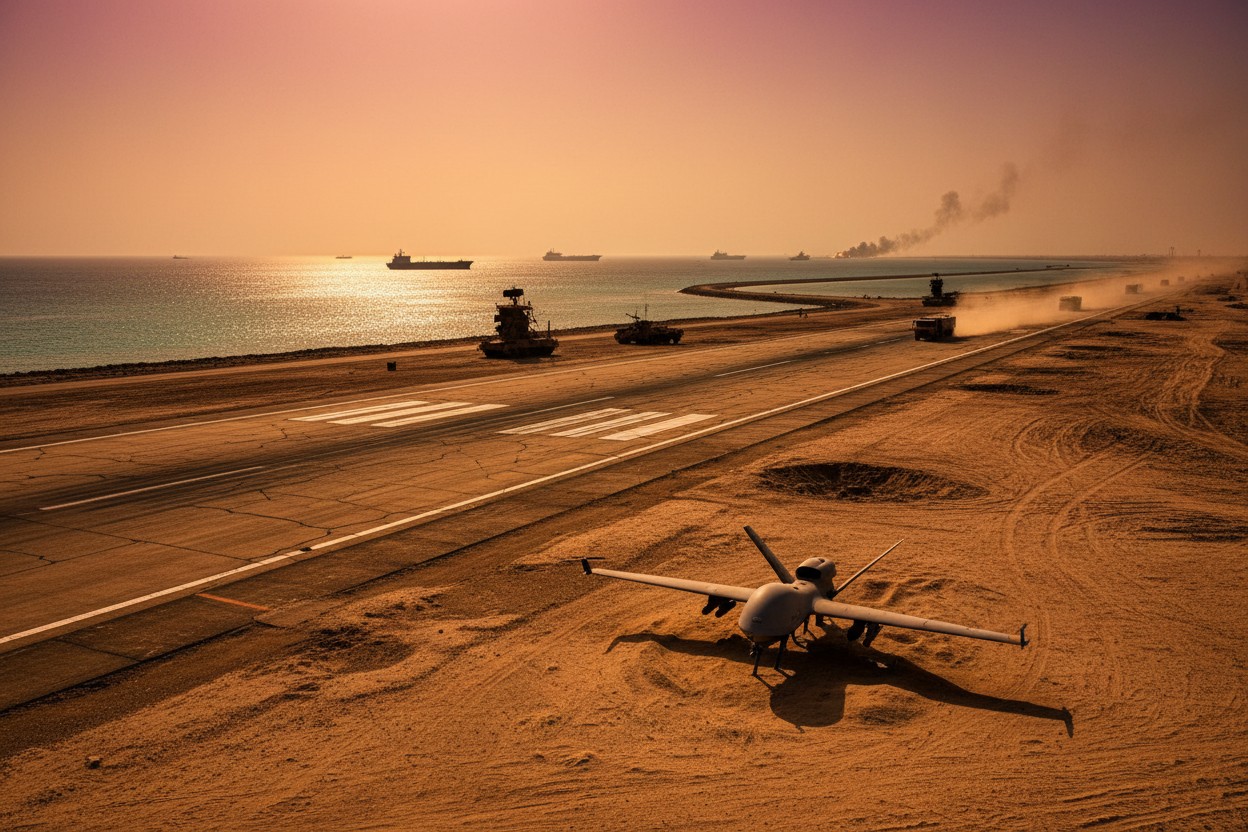
- Israeli forces struck the Abu al-Duhur airbase in Syria’s Idlib province on Tuesday, damaging runways but causing no reported casualties.
- US Ambassador to Türkiye and special envoy Tom Barrack publicly condemned the strikes as an “unnecessary escalation” that does not advance regional stability.
- Netanyahu’s office justified the attack by claiming Syria was allowing Turkish troops near Aleppo, a claim both Damascus and Ankara deny.
- The strikes come amid a broader pattern of friction between Trump and Netanyahu, including Israel’s rejection of Trump’s Gaza disarmament plan.
- Trump has separately condemned Israeli strikes in Lebanon and paused negotiations with Iran, further complicating the US-Israel relationship.
- Netanyahu’s rogue actions continues to isolate Israel further, putting a target on their own backs.
A base struck without Washington’s blessing
On Tuesday, Israeli warplanes carried out multiple strikes on the Abu al-Duhur base in northwestern Syria, roughly 70 kilometers from the Turkish border. Regional news sources reported the base’s runway and storage facilities were hit, with Syrian military sources cited as the origin of that account. No casualties were reported, but the damage to newly built runways sent a clear signal that Israel intends to police Syrian airspace and infrastructure on its own terms, regardless of who else has a stake in the outcome.
Netanyahu’s office framed the strike as enforcement of an unwritten understanding, claiming Syria had allowed Turkish forces to move toward an airbase near Aleppo. Damascus and Ankara both denied this outright, and Syrian Foreign Minister Asaad al-Shaibani told Axios that his government had no intention of hosting a permanent Turkish military presence at the site. The Turkish Foreign Ministry went further, accusing Israel of manufacturing pretexts to justify its bombing campaign. When two governments accused of wrongdoing flatly deny the accusation, and the accusing government offers no independent verification, the burden of proof does not disappear. It simply gets ignored.
What makes this strike different from Israel’s prior actions in Syria is the response from Washington itself. Barrack, who also serves as Trump’s envoy to Syria and Iraq, did not merely express mild concern. He stated plainly that the government of Syrian President Ahmed al-Sharaa “has neither adopted a predatory posture nor maintained proxy forces,” directly undercutting the security rationale Netanyahu’s office offered for the attack. A source in Israel’s security establishment told Kan News that Israel had attempted indirect dialogue with al-Sharaa before striking, and only acted once those talks reportedly broke down, though a Syrian diplomatic source disputed that any such outreach occurred.
A pattern of needless violence, not a single incident
This episode does not exist in isolation. It fits a pattern of growing tension between Trump and Netanyahu that has been building for months. Netanyahu, facing parliamentary elections in October, rejected the latest US-brokered Gaza plan, insisting Israeli forces would not withdraw until Hamas fully disarms. Israel has demanded the full disarmament of Hamas before any withdrawal, and Netanyahu has said Israel will “stand our ground even against our best friends when necessary”, an unusually candid admission that Israel’s leadership is prepared to defy Washington’s preferences when convenient.
Trump, for his part, has shown signs of losing patience. He condemned Israeli strikes in southern Lebanon, warning they could jeopardize peace talks with Iran, and this week announced he had suspended those negotiations altogether while pursuing what he called a campaign to cripple Iran’s economy. Just this week, an Israeli strike on a Gaza portside cafe killed at least six people, one day after US envoy Jared Kushner had personally pressed Netanyahu for restraint in the enclave. The optics could hardly be worse for an administration trying to project a unified front.
Netanyahu, meanwhile, remains unapologetic. Speaking on a podcast Wednesday, he defended the Syria strikes bluntly: “The message was conveyed but apparently they didn’t hear it, so we made sure they understood it more clearly,” according to the Times of Israel. That is not the language of a leader coordinating with allies. It is the language of a leader operating on his own timeline, for his own reasons, regardless of who gets caught in the diplomatic crossfire.
The American public deserves a clear-eyed accounting of where this relationship stands, not a reflexive assumption that US and Israeli interests are always identical. When Washington’s own envoy is publicly contradicting Israel’s stated rationale for military action, that is no longer a foreign policy squabble. It is a signal that the alliance itself is being tested, and voters in upcoming Israeli elections need to be aware that they are becoming increasingly isolated due to Netanyahu’s rogue actions and poor judgment calls.
Sources include:
Submit a correction >>
Tagged Under:
Abu al-Duhur, Ahmed al-Sharaa, airstrikes, big government, ceasefire, chaos, Collapse, corruption, Dangerous, diplomacy, elections, erdogan, escalation, Foreign policy, Gaza, Globalism, Hamas, Idlib, Iran, Israel, Middle East, military technology, national security, Netanyahu, Resist, Syria, Tom Barrack, Trump, Turkey, violence, weapons technology, White House, WWIII
This article may contain statements that reflect the opinion of the author
RECENT NEWS & ARTICLES