Iran Sternly Warns Gulf Nations Against Helping America
08/20/2026 / By Garrison Vance

Iran warned Gulf states Wednesday, Aug. 19, that providing assistance to U.S. military operations would amount to participation in the conflict – hours after the United Arab Emirates (UAE) announced it was suspending economic ties with Tehran.
Maj. Gen. Ali Abdollahi, chief of staff of the Iranian Armed Forces, said “any assistance or facilitation provided to the aggressor U.S. military amounts to participation in the U.S. military operation,” according to Iran’s Mehr News Agency as reported by Middle East Eye (MEE). [1]
Abdollahi added that it “seems unlikely that such a large number of military aircraft, particularly refueling aircraft, could be present at regional bases without knowledge of host countries.” He said Gulf countries “should know that we are fully aware of the situation.”
The official’s comments followed an announcement by the UAE suspending economic ties with the Islamic Republic. “All trade, commercial exchanges, and financial transactions with Iran have been halted until further notice,” Emirati Foreign Ministry official Afra al-Hameli said on Tuesday, Aug 18. [1]
Iranian Military Chief Issues Warning to Gulf States
Recent reporting has pointed to Gulf involvement in strikes against Iran. A Wall Street Journal report cited by MEE and Antiwar.com, said the UAE launched military strikes on Iran, including an attack on a refinery on Lavan Island in early April.
Abu Dhabi has not publicly acknowledged the operation. Iran described the incident as an “enemy attack” and responded with missile and drone strikes on the UAE and Kuwait, according to the report. [2]
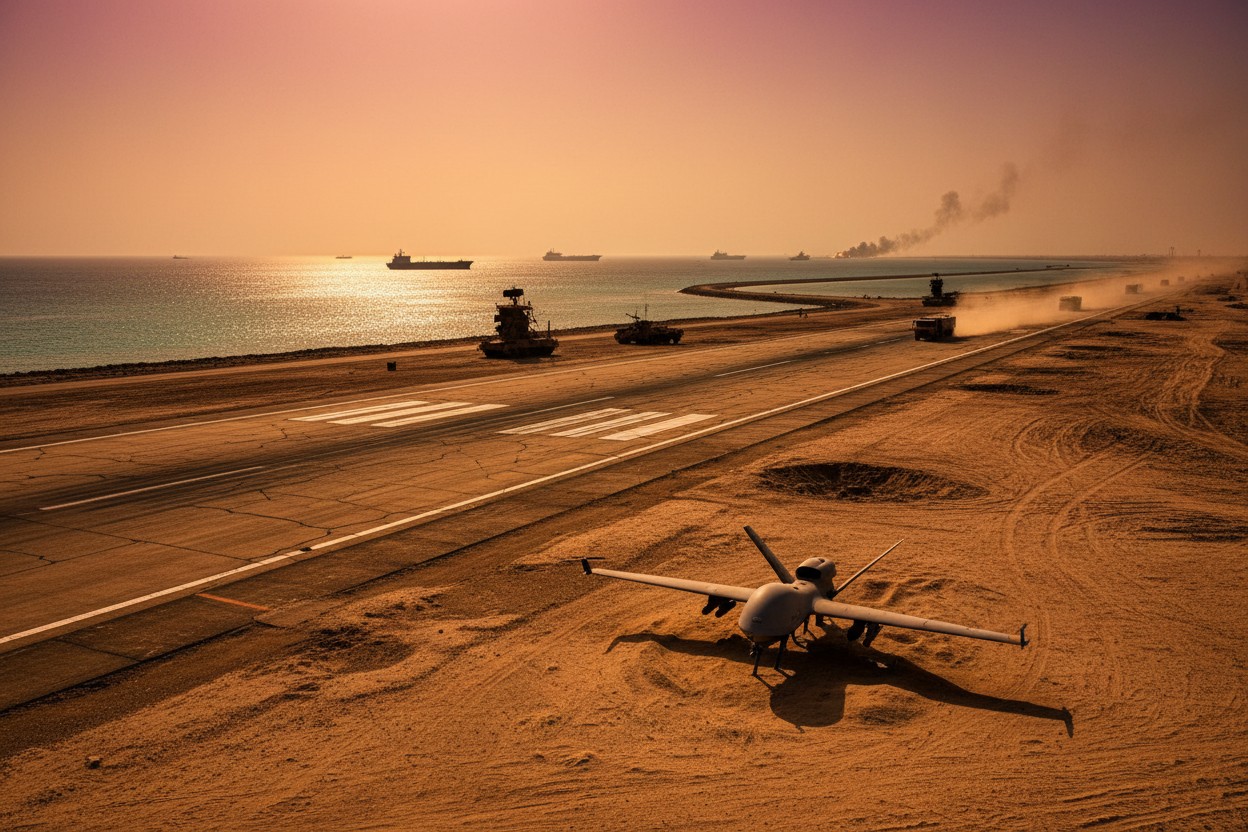
Satellite imagery analysis indicates that Iranian strikes have damaged or destroyed at least 228 structures or pieces of equipment at U.S. military sites across the Middle East since late February, according to an investigation by the Washington Post (WaPo) as reported by MEE. Damage includes hangars, barracks and other infrastructure. [3]
UAE Cites Missile Fire, Suspends Trade With Iran
The Emirati Ministry of Defense said Tuesday that Iran had fired two ballistic missiles at vessels along its coast and that both fell in the sea, one within the UAE’s territorial waters. The missile fire was the first such incident reported since a May 4 strike on Fujairah, and no injuries or damage were reported. [4]
Iranian Ministry of Foreign Affairs spokesman Esmaeil Baghaei “categorically rejected the United Arab Emirates’ claim that Iran had launched a missile towards that country,” according to MEE. The UAE hosts U.S. military bases and had been a major trading partner for U.S.-sanctioned Iran before the conflict. Since the war began, the UAE has recalled its ambassador and closed Iran-linked schools and a hospital. [1]
U.S. Examines Possible Troop Withdrawal From Gulf
WaPo reported Tuesday that the Trump administration is examining whether to pull U.S. troops out of the Gulf, with the Department of War weighing risks to large bases that have come under Iranian drone and missile attack. The War Department’s policy office described the war as “a once-in-a-generation chance for the Pentagon to reconsider its presence in the region,” according to the report. [1]
The report said the U.S. has signaled that it might not rebuild bases attacked by Iran to pre-war status. Retired Gen. Frank McKenzie, former head of U.S. Central Command, said the war has shown that the current Gulf basing system is outdated and needs to be reconsidered. [5] Iran has said it seeks full American military withdrawal from the Persian Gulf. [6]
Strait of Hormuz Becomes Flashpoint After Trump Post
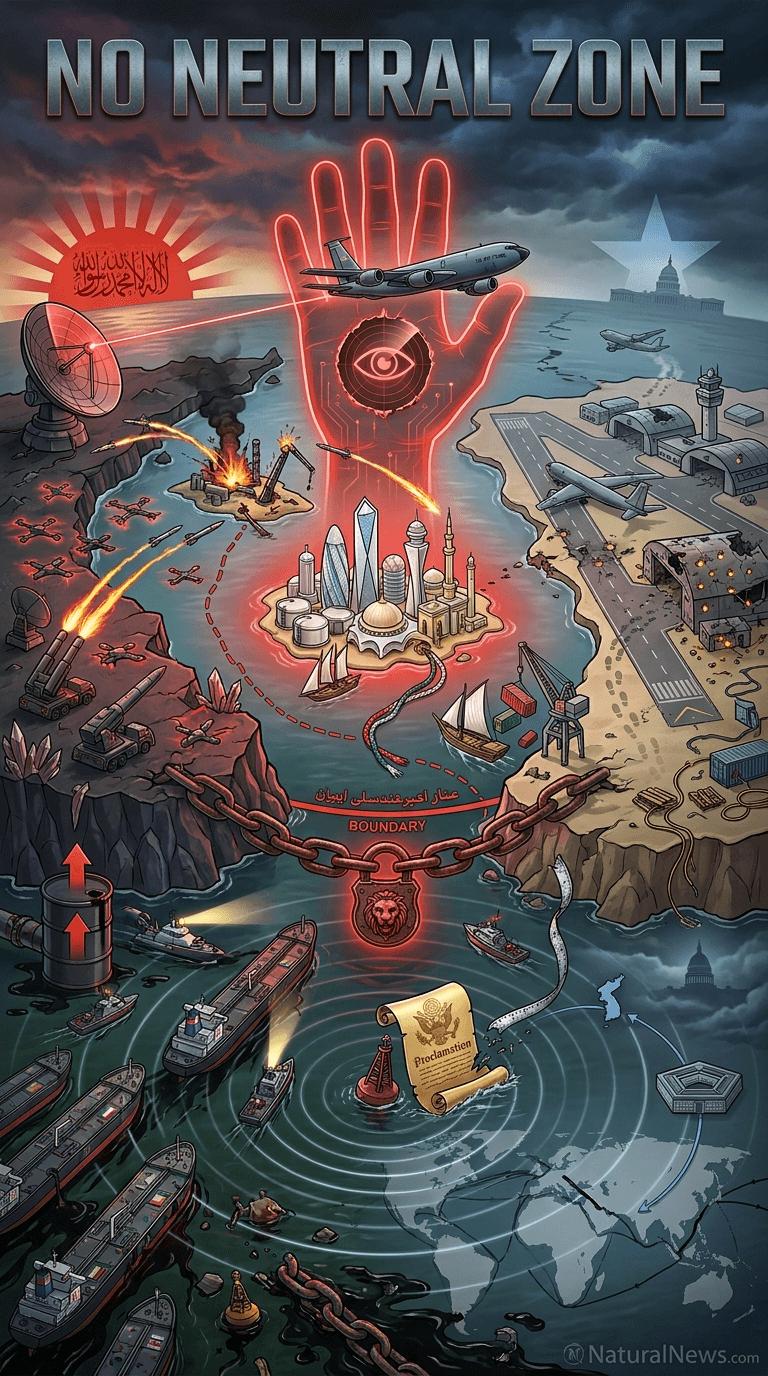
U.S. President Donald Trump has floated making the Strait of Hormuz American territory. [7] He also posted an image on Truth Social labeling the waterway “NEW U.S. Territory.” [1] The waterway carries a fifth of the world’s oil and liquefied natural gas.
Mohsen Rezaei, secretary of Iran’s Supreme National Security Council, wrote on X that “the gap between America’s inability to reopen the Strait of Hormuz and its claim to own it is greater than the 7,000-mile distance between Washington and the Strait itself.” He added: “Welcome to the post-American order in the Persian Gulf.” [1]
Iranian Parliament Speaker Mohammad Bagher Ghalibaf, who also serves as Tehran’s top negotiator, said the Strait would remain closed until U.S. commitments – including lifting its naval blockade – are implemented. [1] Iran has formally tightened its grip on the waterway by defining administrative supervisory boundaries over the 21-mile-wide chokepoint. [8]
South Korea Sees Pressure in U.S. Drill Reduction
South Korean Foreign Minister Cho Hyun said Wednesday that Trump’s order to scale back joint military drills includes pressure on Seoul. Cho said the order sends a message to North Korea and reflects a U.S. intention to break a stalemate in the Iran war.
“I think President Trump’s message includes pressure over several pending issues concerning the South Korean government, as well as a message to North Korea and an intention by the United States to break a stalemate in the Iran war,” Cho said, according to MEE. He said neither South Korean nor U.S. officials had prior knowledge of Trump’s order to reduce joint exercises. [1]
Broader Strategic Context
The rupture between Tehran and Abu Dhabi comes after a 60-day ceasefire expired Monday with no sign of a diplomatic or military off-ramp. Trump announced the U.S. will inflict “TREMENDOUS Economic Consequences” on any country that helps or does business with Iran. [9]
Russia and Iran have signed a 20-year Comprehensive Strategic Partnership Treaty, solidifying military, economic and energy ties. [10] Saudi Arabia has floated a non-aggression pact between Gulf states and Iran, modeled on the 1975 Helsinki Accords, according to the Financial Times. [11]
Historical assessments of U.S. pressure on Iran have cautioned against assumptions of a quick military outcome. Scott Ritter wrote in “Target Iran” that “America simply does not have the conventional combat power to fight a sustained ground combat action in Iran.” [12] The Gulf Cooperation Council – a political and economic union of Saudi Arabia, Bahrain, Kuwait, Oman, Qatar and the UAE – has long been central to U.S. basing arrangements in the region, as described in former Defense Secretary Robert Gates’ memoir “Duty.” [13]
References
- MEE staff. “Iran issues warning against Arab states aiding US, as UAE cuts economic ties”. Middle East Eye. August 19, 2026.
- “UAE Joined U.S. and Israel in Carrying Out Military Strikes on Iran, Report Says”. NaturalNews.com. May 14, 2026.
- Garrison Vance. “Satellite Imagery Shows Extensive Damage to U.S. Assets in Middle East From Iranian Strikes”. NaturalNews.com. May 7, 2026.
- “UAE says Iran fired two missiles at it, both fell in the sea”. The Times of Israel. August 18, 2026.
- Sean Mathews. “US needs to move bases from Gulf to Israel, former Centcom commander says”. Middle East Eye. July 6, 2026.
- Lance D Johnson. “Iran Seeks Full American Military Withdrawal from Persian Gulf as U.S. Allies Retreat”. NaturalNews.com. March 17, 2026.
- “President Trump Suggests Historic New Status For Strait Of Hormuz”. 100percentfedup.com. August 14, 2026.
- Lance D. Johnson. “Iran Formally Tightens Its Grip on the Strait of Hormuz, Making U.S. Military Intervention a Lost Bet for Global Energy Markets”. NaturalNews.com. May 21, 2026.
- “Trump threatens ‘tremendous economic consequences’ on any country helping Iran”. BBC News. August 20, 2026.
- Kevin Hughes. “Russia and Iran Forge 20-Year Defense and Energy Pact, Challenging Western Influence”. NaturalNews.com. January 20, 2025.
- Garrison Vance. “Saudi Arabia Proposes Non-Aggression Pact With Iran and Regional States Based on Cold War Model”. NaturalNews.com. May 15, 2026.
- Scott Ritter. “Target Iran: The Truth About the White House’s Plans for Regime Change”.
- Robert M. Gates. “Duty: Memoirs of a Secretary at War”.
Explainer Infographic
Submit a correction >>
Tagged Under:
Ali Abdollahi, big government, chaos, Collapse, Dangerous, Gulf nations, Iran, Middle East, military aid, military aircraft, military assistance, national security, new energy report, outrage, Strait of Hormuz, supply chain warning, terrorism, Trump, Tyranny, United States, violence, war on Iran, White House, WWIII
This article may contain statements that reflect the opinion of the author
RECENT NEWS & ARTICLES