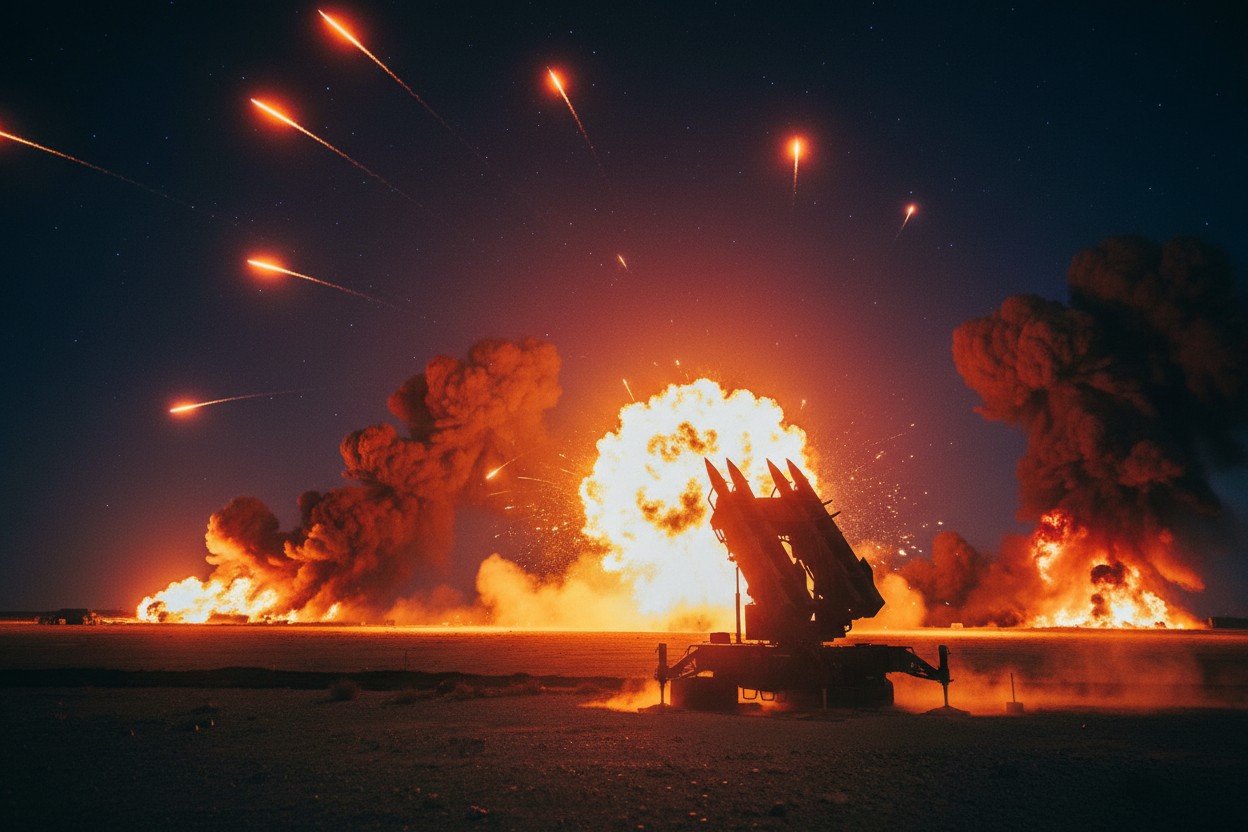
Strait of Hormuz closure tests Iran-Oman alliance as US-Israeli war escalates into regional crisis
07/16/2026 / By Lance D Johnson
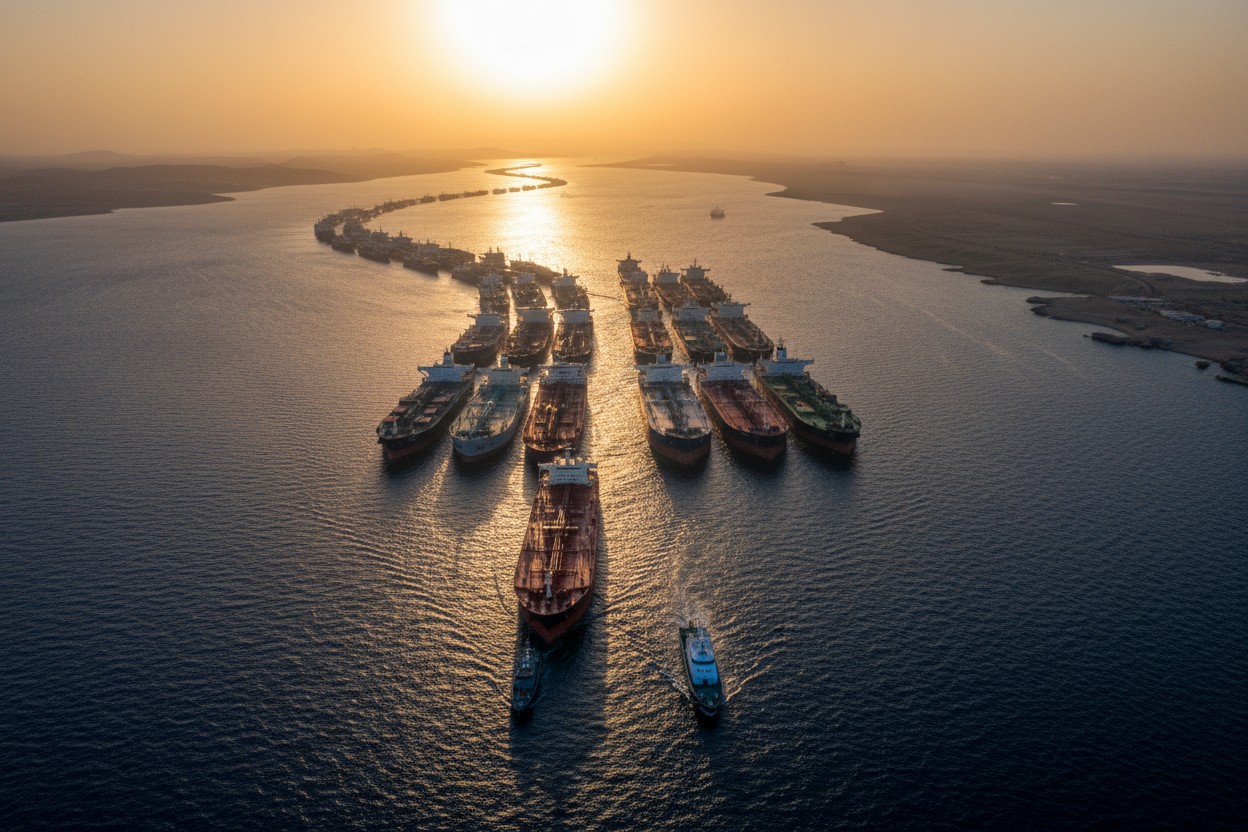
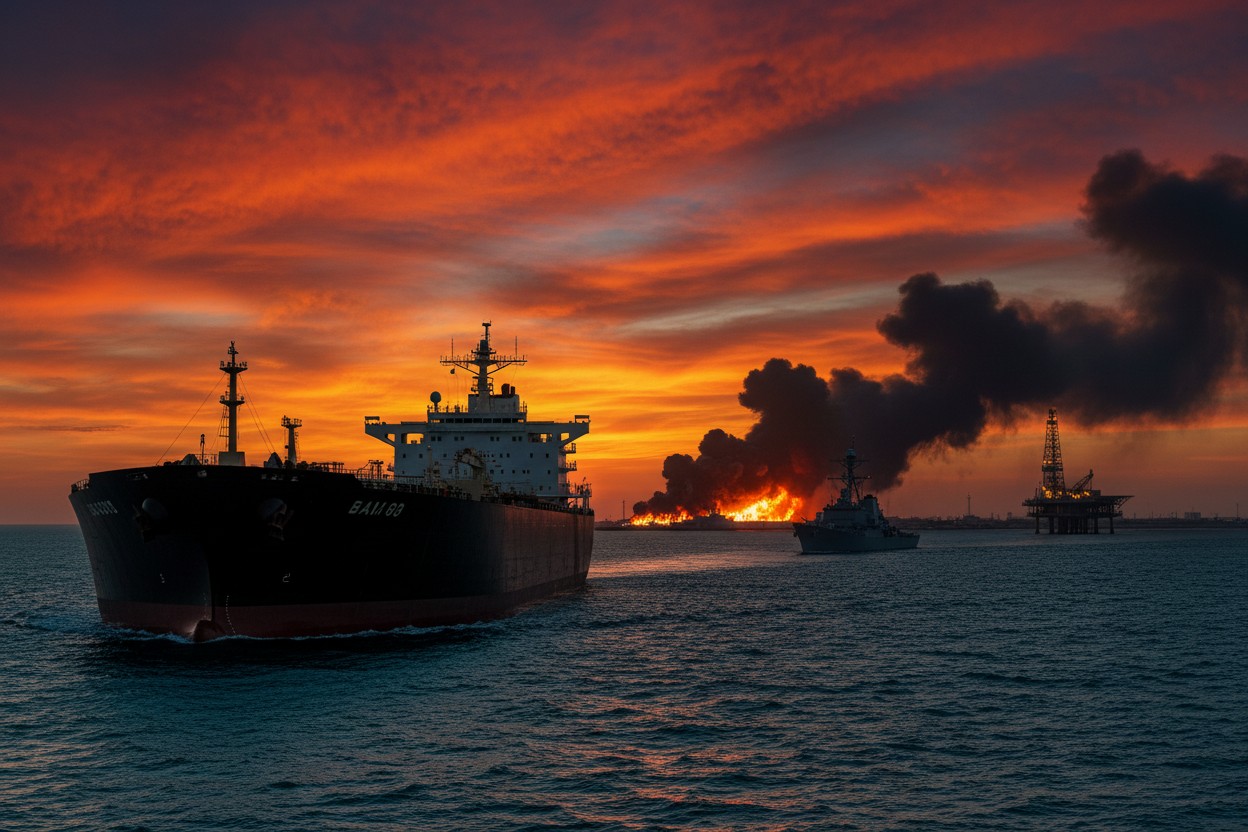
The contentious waters of the Strait of Hormuz have become the epicenter of a widening confrontation that threatens to redraw the geopolitical map of the Middle East. When Iran announced the closure of this strategic waterway on July 12, 2026, it was a calculated response to what Tehran describes as systematic violations of a ceasefire agreement signed just weeks earlier. The decision, framed as a direct consequence of Washington’s failure to honor a 10-point memorandum of understanding brokered by Pakistan, has placed unprecedented strain on Iran’s long-standing alliance with Oman and transformed a regional dispute into a global energy crisis. Behind the headlines of missile strikes and naval confrontations lies a deeper story of broken promises, economic warfare, and a strategic choke-point that controls the fate of one-quarter of the world’s energy supply.
Key points:
- Iran closed the Strait of Hormuz on 12 July 2026 citing US violations of the 18 June 2026 ceasefire agreement.
- The 10-point memorandum of understanding included provisions for Iranian authority over safe passage through the strait.
- US opened an illegal corridor in Omani waters contradicting Article 5 of the agreement.
- Iran struck US military facilities in the UAE, Kuwait, Bahrain, and Jordan after talks with Oman failed.
- Oman protested Iranian drone attacks on its territory including the strategic port of Duqm.
- The crisis threatens to disrupt global energy supplies with up to one-quarter of the world’s oil passing through the strait.
The broken promise that ignited the strait
The ceasefire signed on June 18, 2026 between Iranian President Masoud Pezeshkian and US President Donald Trump was supposed to end 40 days of war imposed by the US and Israel. But the agreement, as Iran’s Foreign Minister Abbas Araghchi discovered during his July 11 visit to Muscat, had already unraveled. Tehran’s grievances were laid out with precision. Contrary to Article 1 of the 10-point MoU, the US failed to halt Israeli attacks on Lebanon. More provocatively, Washington opened what Iranian officials described as an illegal route in the southern belt of the Strait of Hormuz, operating within Omani waters. This directly contradicted Article 5, which granted Iran authority to make arrangements for the safe passage of commercial vessels through the waterway.
The geography of this dispute matters immensely. The Strait of Hormuz narrows to just 13 to 21 miles at its most constrained point, with shipping lanes only two miles wide separated by a buffer zone of roughly two miles. Iran controls islands within this corridor including Hormuz and Abu Musa, where missile launchers have likely been positioned for years. Cities like Bandar Abbas and Jask serve as launching sites for Iran’s arsenal of missiles, seaborne drones, and airborne platforms far more sophisticated than anything deployed by Yemeni rebels. When Iran threatens to close the strait, it is not bluffing from a position of weakness but from one of carefully cultivated strategic advantage.
Oman caught between Tehran and Washington
The dilemma facing Oman has exposed the fragility of its decades-long alliance with Iran. On July 11, Araghchi visited Muscat to discuss coordination between the two Persian Gulf coastal states regarding Article 5 of the MoU. The talks, attended by Qatar as a mediating party, did not yield the outcome Tehran had expected. Oman proposed a third passage through the strait, toll-free, which Araghchi rejected and referred back to Tehran for review. That hesitation soon gave way to escalation as US and Iranian forces resumed attacks on each other’s positions.
Tehran widened its target list dramatically, striking US military facilities in the UAE, Kuwait, Bahrain, and Jordan. The day after Araghchi returned from Muscat, Iran announced it had struck US aircraft carrier support and refueling platforms at the port of Duqm on Oman’s southeastern coast. The attack prompted Oman to summon the Iranian ambassador and deliver a formal note of protest over drone attacks targeting sites in the governorates of Musandam and Al-Wusta. Musandam is particularly significant as an Omani exclave overlooking the Strait of Hormuz, a strategically vital territory that has drawn interest from both the UAE and Israel for years.
The broader context reveals a region bracing for wider conflict. Iran’s decision to close the strait until further notice, presented as a response to Washington’s violation of the Pakistani-mediated agreement, has transformed the waterway from a commercial corridor into a military battleground once more. If Iran can effectively deny access to the Gulf of Oman for energy exporters, the consequences for global markets would be catastrophic. Western Europe, already crippled by self-inflicted energy policies that destroyed Russian pipeline infrastructure and halted domestic exploration, faces the prospect of severe shortages. The United States, which has attempted to prevent conflict through negotiations and concessions, finds itself entangled in a crisis where Iran holds the ultimate leverage.
The next phase of this confrontation will unfold at sea, in ports, and in exchanges between officials trying to manage a crisis that has moved beyond diplomacy. With the Supreme National Security Council and Ayatollah Ali Khamenei holding the final decision on the strait’s closure, the region waits to see whether the narrow waters separating the Persian Gulf from the Gulf of Oman will become the stage for a conflict with far-reaching implications for global energy markets and international security.
At this point, the US is locked in to punish Iran once more, but Iran isn’t the weak and defeated nation that they were made out to be just a few months ago. They aren’t done asserting control over the Strait and terrorizing their Middle East neighbors, and they have geography and proximity on their side, whereas, the US military could be stretched thin if this pattern continues.
Ultimately, economic pressure from partners and countries around the world will be the deciding factor of who makes the final concessions and retreats. But the countries right there within the proximity of Iran’s missile strikes – like Oman – will ultimately choose which nation is the protector and who is worth betraying in the end.
Sources include:
Submit a correction >>
Tagged Under:
Bandar Abbas, ceasefire violation, Duqm port, economic warfare, energy crisis, global oil supply, Globalism, Gulf of Oman, Iran, Jask, Middle East conflict, missile launchers, Musandam, national security, nuclear facilities, Oman, OPEC, Persian Gulf, shipping lanes, Strait of Hormuz, US Navy, US-Israel war, WWIII
This article may contain statements that reflect the opinion of the author
RECENT NEWS & ARTICLES