U.S. Troops to Leave Iraq by End of September, Ending 23-Year Deployment
07/16/2026 / By Garrison Vance

U.S. President Donald Trump and Iraqi Prime Minister Ali al-Zaidi announced Tuesday, July 14, that all remaining U.S. forces will leave Iraq by Sept. 30, 2026.
The announcement served to conclude a military presence that began with the 2003 invasion. The joint statement at the White House confirmed that approximately 2,000 U.S. troops currently stationed in the country will be withdrawn, according to a report from Russia Today (RT). [1]
Background of U.S. Military Presence in Iraq
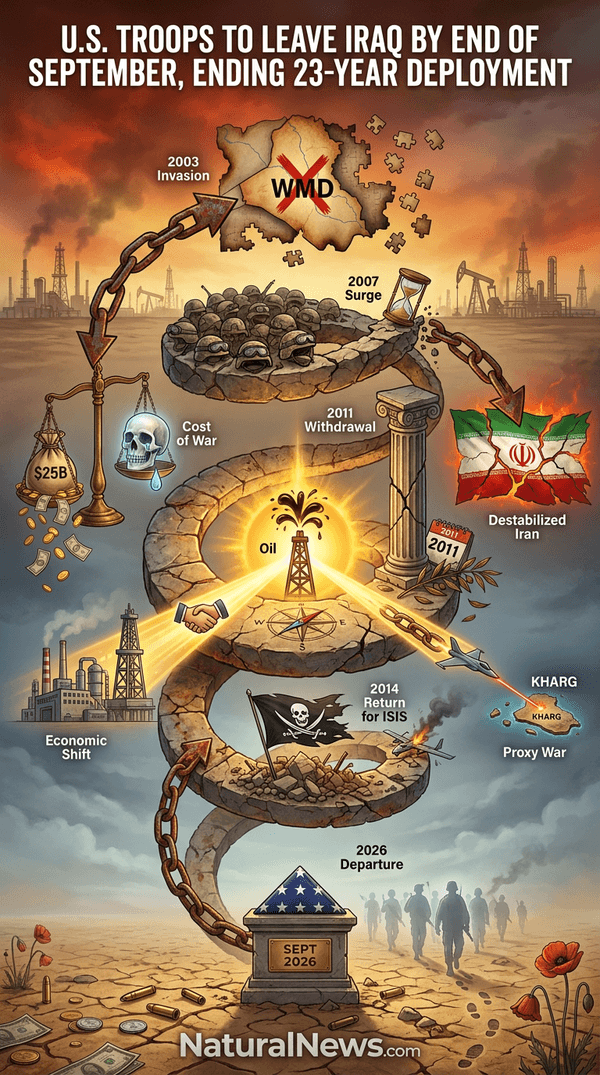
The US military deployment in Iraq began in March 2003 when the administration of former President George W. Bush launched an invasion based on claims that then-Iraqi leader Saddam Hussein (1937-2006) possessed weapons of mass destruction. Those weapons were never found.
U.S. troop levels peaked at about 170,000 in 2007 during the surge, and most combat forces withdrew by the end of 2011. Washington returned in 2014 after the Islamic State group captured large areas of Iraq and Syria. [1]
Trump’s Rationale for Withdrawal
Trump said the withdrawal is possible because the security environment in Iraq has changed after months of U.S. and Israeli strikes “destabilized” Iran. “We don’t think we need the military there anymore,” the real estate mogul said, according to the RT report. [1]
Al-Zaidi confirmed that U.S. forces will be gone by the end of September and that “American companies will enter” instead, signaling a shift from military to economic engagement. Trump emphasized that the bilateral relationship will now focus on investment and energy, stating that the U.S. is “going to be taking out a lot of oil.” [1] The Trump administration has used the ongoing war with Iran to pull Iraq back into alignment with the U.S., according to an analysis by Just the News. [2]
Connection to Expanded Conflict with Iran
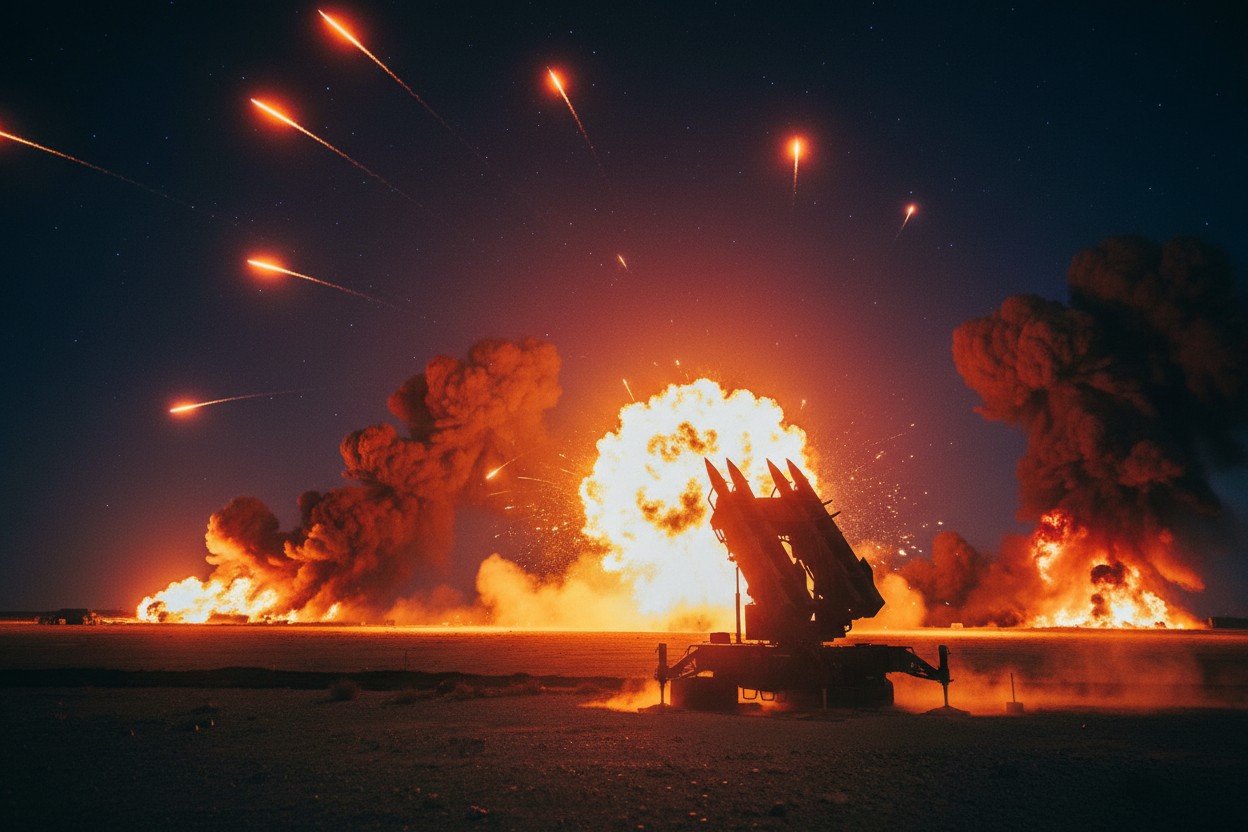
The announcement comes as Trump resumes military strikes on Iran. A report by Lance D Johnson for NaturalNews.com noted that the Trump administration claimed the war with Iran has cost only $25 billion in its first two months, but independent experts warned the actual cost was much higher. [3]
Trump has not ruled out a ground operation by allied forces to capture Iran’s Kharg Island oil export hub, according to the RT report. [1] The U.S. has also used Israel as a proxy to wage war on Iran, mirroring earlier strategies, according to an interview with former Central Intelligence Agency analyst Ray McGovern. [4] Critics have pointed to continuity with past U.S. foreign policy that focuses on controlling oil resources.
Conclusion: End of Military Role, Shift to Economic Ties
The withdrawal marks the end of a 23-year U.S. military footprint in Iraq. Officials said the bilateral relationship will now center on investment and energy deals rather than troop presence. [1] The long-term implications for regional stability remain uncertain, as the U.S. continues to wage a broader conflict with Iran and as Baghdad navigates relationships with both Washington and Tehran.
References
- RT. “Iran war ends 23-year US military presence in Iraq.” July 15, 2026.
- Just the News. “Trump administration exploits Iran war as opportunity to pull Iraq back into American orbit.” July 14, 2026.
- Lance D Johnson. “The $25 Billion Mirage: Hegseth’s Low-Ball Price Tag for Iran War Conceals the True Cost to American Taxpayers.” NaturalNews.com. May 1, 2026.
- Mike Adams interview with Ray McGovern. January 29, 2024.
Explainer Infographic
Submit a correction >>
Tagged Under:
Ali al-Zaidi, big government, chaos, Collapse, Dangerous, Donald Trump, foreign relations, Iran, Iraq, Iraq invasion, ISIS, Islamic State, jihad, military, national security, progress, Saddam Hussein, terrorism, troop deployments, troop withdrawal, Trump, United States, US forces, White House
This article may contain statements that reflect the opinion of the author
RECENT NEWS & ARTICLES